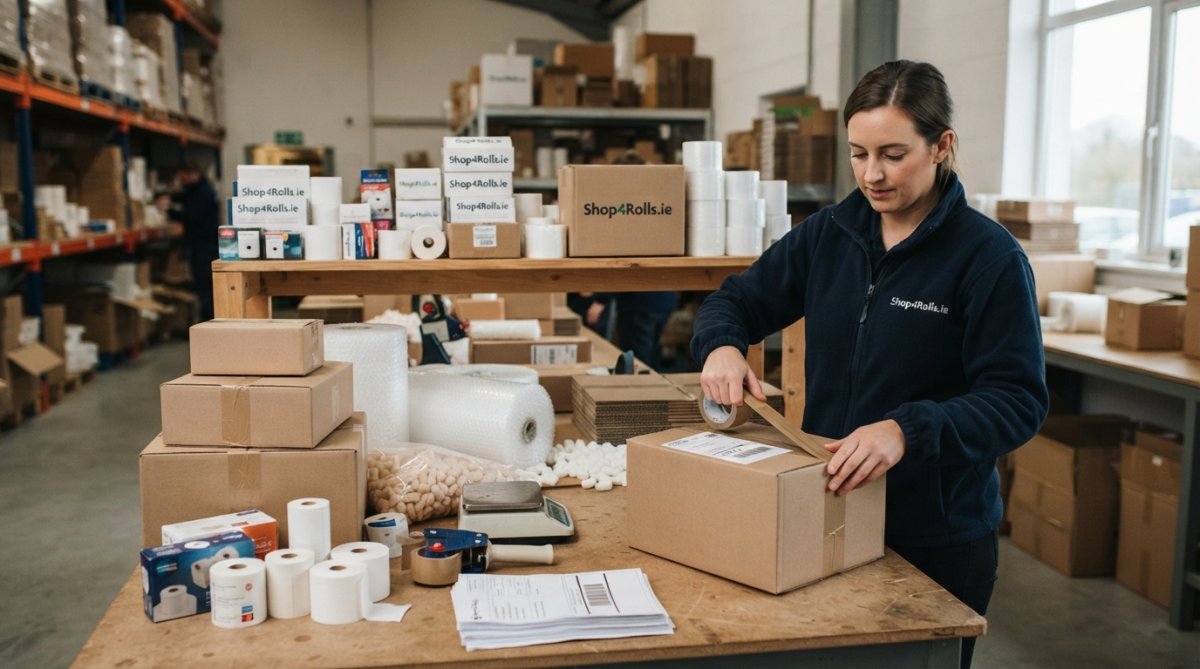
 listicle
7 Benefits of Next Day Delivery Supplies for Retailers
Table of Contents
- What Next Day Delivery Supplies Mean for Your Business
- 1. Reduces the Need for Large On-Site Stock
- 2. Improves Cash Flow and Lowers Storage Costs
- 3. Boosts Customer Satisfaction and Retention
- 4. Enhances Retail Inventory Management Best Practices
- 5. How to Reduce Operational Costs in Retail with Faster Replenishment
- 6. The Environmental Impact of Next Day Delivery
- 7. Is There a Minimum Order Quantity for Fast Supply Delivery?
- Frequently Asked Questions
Last Updated: September 6, 2026
What Next Day Delivery Supplies Mean for Your Business
Retailers often treat next day delivery supplies as a convenience rather than a strategic lever. In practice, a dependable rapid replenishment channel changes how much capital you tie up in stock, how responsive you can be to demand, and how your customers judge your reliability. For independent shops and hospitality businesses across Ireland, the benefits go far beyond avoiding an empty till drawer on a busy Saturday.
At Shop4Rolls.ie, we see daily how a steady supply of operational essentials keeps businesses moving. The core advantage is straightforward: next day delivery supplies is a system where essential items like thermal paper, card machine rolls, and packaging arrive within one business day of ordering. This guide breaks down seven concrete benefits so you can decide whether this model fits your operation.
The most immediate payoff is resilience. When you know stock can arrive tomorrow, you stop over-ordering "just in case" and start buying closer to actual usage. That shift underpins most of the gains discussed below.
1. Reduces the Need for Large On-Site Stock
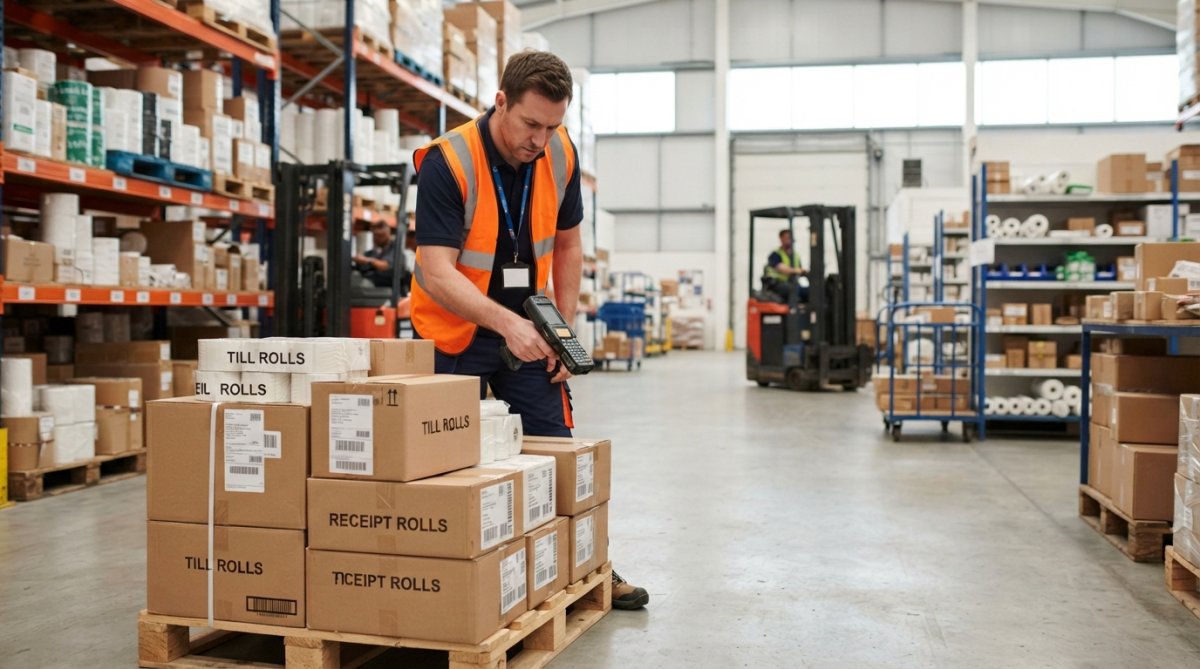
The biggest mistake small retailers make is treating their back room as a warehouse. Every box of receipt rolls on your shelf represents cash that is not earning anything, plus floor space that could hold profitable product.
With reliable next day delivery supplies, you can shrink that buffer dramatically. Instead of holding four to six weeks of thermal paper stock, many businesses find they can operate safely with a week or less on hand. The key is carrier reliability: if your supplier uses a nationwide network with tracking and confirmed delivery windows, the risk of running dry drops sharply. Providers like An Post Commerce and DPD Ireland offer the kind of predictable transit times that make lean stockholding viable.
This is where choosing the right supplier matters. A partner with a purpose-built warehouse and deep stock availability, such as the 3,000-plus product range held by Shop4Rolls.ie, removes the fear that your order will be delayed by an out-of-stock line. When stock is guaranteed, your safety margin can be small.
2. Improves Cash Flow and Lowers Storage Costs
Cash flow in retail is about timing as much as volume. Money sitting in slow-moving inventory cannot pay wages, cover rent, or fund a promotion.
Ordering next day delivery supplies on a weekly or bi-weekly rhythm converts a large, infrequent capital outlay into smaller, more frequent payments that track your actual sales. This matters most for consumables with steady demand, like card machine rolls, where usage is predictable and storage adds no value. By reducing on-site inventory, you also cut the hidden costs of holding stock: insurance, heating, lighting, and the labour spent counting and organising boxes.
Many Irish suppliers, including Shop4Rolls.ie, support this model with wholesale pricing structures and a lowest price guarantee, so buying smaller and more often does not mean paying more per unit. The operational efficiency gain is real: less time on stocktakes and more time serving customers.
3. Boosts Customer Satisfaction and Retention
The link between your back-office supplies and front-of-house experience is more direct than most retailers appreciate. A customer who cannot pay by card because you ran out of receipt rolls may not return. But the satisfaction impact of next day delivery supplies extends beyond avoiding point-of-sale friction, it shapes how customers perceive your entire brand.
The expectation gap
Irish consumers now expect near-instant gratification. According to research on delivery expectations, over 60% of online shoppers consider delivery speed a key factor in their purchasing decisions. When you sell physical goods online, your own supply chain must meet that standard before your customers ever see a tracking number. If a customer orders from you on Monday and your packaging materials arrive on Thursday, that delay ripples through your entire fulfilment process.
The returns paradox
Here is an angle most logistics articles miss: next day delivery supplies directly affect your returns process. When you can restock quickly, you can afford to offer more generous return policies. Customers who know they can send back an ill-fitting item and receive a replacement within days are more likely to complete a purchase in the first place. A slow inbound supply chain forces you to either hold excessive safety stock of packaging materials or risk delays in processing returns, both of which damage customer trust.
Practical mechanisms for retention
- Consistent unboxing experience: When your packaging supplies arrive predictably, every order ships in the same quality of box or mailer. Inconsistent packaging, sometimes a padded envelope, sometimes a rigid box, signals instability to customers.
- Faster resolution of complaints: If a customer receives a damaged item, your ability to ship a replacement quickly depends on having the right packaging on hand. Next day delivery supplies mean you can dispatch a replacement before the customer even files a formal complaint.
- Reduced 'out of stock' notices: For e-commerce operators, every 'out of stock' notification on your website is a lost conversion. Fast replenishment of popular packaging sizes means fewer of these notices and fewer customers abandoning their carts.
Measuring the real impact
Most practitioners track two metrics to quantify this benefit: repeat purchase rate and customer lifetime value. When you eliminate supply-driven stockouts, repeat purchase rates typically improve because customers never encounter a 'we cannot process your order' moment. The cost of next day delivery supplies is easily offset by the revenue retained from customers who would otherwise defect to a competitor after a single poor experience.
4. Enhances Retail Inventory Management Best Practices
Retail inventory management best practices centre on one principle: hold the minimum stock needed to meet demand without interruption. Next day delivery supplies make this achievable for operational consumables. But the real competitive advantage emerges when you integrate your supply ordering directly into your e-commerce and point-of-sale systems.
Automating replenishment through platform integration
Most retailers still order supplies manually, logging into a supplier website, checking stock levels, and placing an order. That manual process introduces delay and human error. The businesses that gain the most from next day delivery supplies automate the entire cycle.
Modern e-commerce platforms and inventory management systems can trigger purchase orders automatically when stock falls below a predefined threshold. For example, if you run your shop on Shopify, WooCommerce, or a bespoke ERP system, you can connect directly to your supplier's ordering API. When your thermal paper stock drops to a two-day supply, the system places the order without any human intervention. The next day, the delivery arrives, and your stock levels reset.
Setting intelligent par levels
A common pattern among successful retailers is to set par levels based on your reorder lead time plus a safety margin. With a one-day lead time, your par level can be a fraction of what it would be with a weekly or bi-weekly supplier. But the calculation should also account for:
- Seasonal demand spikes: If you run a hospitality business, your weekend consumption of receipt rolls may be triple your weekday usage. Your par level needs to reflect peak, not average, demand.
- Supplier cut-off times: Most next day delivery services have a daily order cut-off, often mid-afternoon. If you miss that window, your delivery slips to the following day. Your inventory system should account for this operational constraint.
- Multi-site synchronisation: For retailers with multiple branches, standardising on a single supplier with next day delivery simplifies ordering across locations. Each site can maintain its own par levels while the central system consolidates orders for delivery efficiency.
The technical reality of API integration
Suppliers who offer API access or plugin integrations for major e-commerce platforms enable true hands-off replenishment. When evaluating a supplier, ask three questions:
- Does your ordering system expose an API? If yes, your development team or a middleware tool like Zapier can connect it to your inventory system.
- Can you receive real-time stock availability feeds? Knowing what the supplier has in stock before you order prevents the 'backorder surprise' that disrupts your lean inventory model.
- Do you support automated order confirmations and tracking webhooks? These allow your system to verify that the order was placed and track its delivery status without manual checking.
Inventory turnover as a performance signal
Consistent replenishment also improves inventory turnover, a metric investors and lenders watch closely. Faster turnover on till rolls and packaging signals an efficient operation. When your inventory system automatically reorders consumables, your turnover ratio on these items becomes predictable and healthy, a small but meaningful signal of operational discipline.
5. How to Reduce Operational Costs in Retail with Faster Replenishment
One of the most practical ways to reduce operational costs in retail is to eliminate the inefficiencies of multi-supplier ordering. If you currently buy till rolls from one company, receipt paper from another, and packaging from a third, you are paying three delivery fees and managing three relationships.
Consolidating with a one-stop supplier that offers next day delivery supplies cuts those costs directly. Fewer deliveries mean lower shipping spend, and a single invoice simplifies your accounts process. Many businesses also find that ordering online through a dedicated portal reduces the admin time spent on phone calls and purchase orders.
Bulk purchasing still has its place, but it only makes sense when you have the storage and the cash flow to support it. For businesses without large back rooms, the ability to order smaller quantities more frequently, at wholesale rates, is often the smarter financial move. A supplier that combines a cash-and-carry option with an e-commerce and drop system gives you flexibility to choose the most cost-effective channel for each order.
| Approach | Storage Needed | Cash Flow Impact | Best For |
|---|---|---|---|
| Bulk monthly ordering | Large back room | Large upfront outlay | High-volume stores with space |
| Weekly next day delivery | Minimal on-site stock | Smaller, frequent payments | Most small to mid-size retailers |
| Cash-and-carry top-ups | Minimal on-site stock | Pay as you go | Urgent gaps or variable demand |
6. The Environmental Impact of Next Day Delivery
Critics of rapid delivery point to the environmental cost of frequent van trips. The reality is more nuanced, and it depends entirely on how your supply chain is structured.
Consolidating your orders with a single supplier actually reduces your carbon footprint compared to running multiple part-loaded deliveries from different vendors. Fewer vehicles, fewer journeys, and fuller loads all cut emissions per item delivered. Some carriers now operate electric vans in urban areas, and guidance on sustainable logistics highlights the role of route optimisation in reducing transport emissions.
There is also a less obvious environmental benefit: leaner stockholding means less waste. Businesses that over-order consumables often dispose of damaged, outdated, or surplus stock. Ordering closer to need reduces the volume of product that ends up in landfill. If sustainability matters to your brand, ask your supplier about their delivery fleet and whether they offer consolidated or less frequent shipping options.
7. Is There a Minimum Order Quantity for Fast Supply Delivery?
A frequent worry for small cafés and independent shops is that fast delivery services only cater to large chains with high order volumes. That assumption is often wrong.
Whether there is a minimum order quantity depends entirely on the supplier. Many national carriers will deliver a single parcel, but the economics only work for the retailer if the supplier's pricing model supports small orders. The practical question is whether the per-unit price stays competitive when you order in small volumes.
Shop4Rolls.ie structures its offering so that businesses of all sizes, from a café using a few till rolls a month to a retail chain buying in bulk, can access next day delivery supplies without being locked into a minimum that exceeds their needs. The combination of an online shop and a cash-and-carry counter means you choose the channel that suits your order size. For current pricing and any volume requirements, check the Shop4Rolls.ie pricing page or speak directly to the customer care team, who answer the phones and can confirm stock availability before you order.
Running a retail operation without reliable next day delivery supplies means carrying more stock than you need, tying up cash that could work harder, and risking stockouts at the worst possible moment. The fix is a supplier who combines rapid replenishment with genuine wholesale pricing and dependable stock levels. Shop4Rolls.ie offers Ireland's largest range of till rolls and card machine receipt rolls, a purpose-built warehouse with over 3,000 products, and a customer care team that answers the phones. Sign up now and keep your business moving forward with hassle-free restocking.
Frequently Asked Questions
How does next day delivery improve retail inventory management?
Next day delivery supplies support a just-in-time inventory model. Instead of tying up capital in large stockpiles of till rolls or packaging, you order what you need and restock frequently. This reduces the risk of overstocking items that become obsolete and frees up valuable storage space. The key is reliable lead times. When you know your next day delivery supplies will arrive on schedule, you can plan stock levels with confidence and avoid the costly downtime of running out entirely.
What are the cost-saving benefits of fast supply replenishment?
Fast replenishment helps reduce operational costs in retail by lowering holding costs. You spend less on warehouse space, insurance, and tied-up capital. It also prevents revenue loss from stockouts of essential items like receipt paper or Jiffy bags. Ordering smaller quantities more often can improve cash flow, allowing you to invest capital elsewhere. A dependable supplier with a lowest price guarantee ensures you get competitive rates without needing to bulk-buy to save money.
Why is reliable delivery speed critical for small business operations?
For a small business, running out of essential till rolls can halt sales entirely if the card machine cannot print receipts. Reliable delivery speed minimises this risk. It removes the need to hold weeks of backup stock, which is a major advantage for businesses with limited storage. It also boosts customer satisfaction because you can serve people without interruption. A consistent next-day service means you can operate with lower inventory levels, confident that essential supplies will arrive before you run out.
What happens if my next day delivery order arrives late or is out of stock?
A reputable supplier should communicate stock issues upfront and before dispatch. Before switching, ask about their process for handling out-of-stock items. The best partners offer proactive notification and work to resolve issues quickly, often with alternative products or a clear timeline. The goal of using a specialist supplier with a purpose-built warehouse is to minimise these occurrences through reliable stock availability, ensuring your business operations face minimal disruption.