 how-to
Order Delayed? Your Rights & Next Steps (2026 Guide)
Table of Contents
- Your Order Is Delayed: What This Actually Means
- Consumer Rights for Non-Delivery of Goods: The 30-Day Rule
- Step-by-Step: What to Do When an Order Is Delayed
- Delivery Delay Notification Templates That Get Results
- When to Cancel and Claim a Full Refund
- Managing Supplier Delivery Expectations for Your Business
- The Bottom Line on Delayed Orders
- Frequently Asked Questions
Last Updated: September 9, 2026
Your Order Is Delayed: What This Actually Means
An order delayed past its estimated delivery date is any purchase that does not arrive by that date. A delivery delay triggers a specific set of consumer rights, beginning with the right to request information and culminating in the right to cancel for a full refund.
In the European Union, including Ireland, distance selling regulations give you strong protections when goods fail to arrive on time.
Below, we'll show you exactly what to do when an order is delayed, when you can demand a refund, and how to communicate with retailers.
Consumer Rights for Non-Delivery of Goods: The 30-Day Rule
Consumer rights for non-delivery of goods are governed by EU and Irish regulations: if the retailer does not deliver within 30 days of the agreed delivery date, you are entitled to a full refund.
This is your statutory right under EU consumer protection directives. The 30-day clock starts from the moment you place the order, unless the seller stated a longer delivery window at checkout.
A shipping delay means the parcel is in transit but running late. Non-delivery means the goods have not arrived within the agreed timeframe. Your rights escalate based on which situation you are in.
If the retailer fails to deliver within the 30-day period and your order delayed status persists, you can cancel the contract and receive a full refund, including any delivery charges. The retailer must process this refund within 14 days of your cancellation request. This applies regardless of whether the delay was caused by the retailer or the courier.
Step-by-Step: What to Do When an Order Is Delayed
When an order is delayed, work through these steps in sequence.
- Locate your order confirmation email and note the estimated delivery date and the seller's stated terms and conditions.
- Find your tracking number and check the carrier's portal for the latest scan event.
- If the parcel has not moved for several days, contact the retailer directly with a clear written request for a delivery update.
- If the retailer does not respond within 48 hours or cannot provide a new delivery date, escalate to a formal complaint.
- If the goods still have not arrived after the 30-day legal window, cancel the order and request a full refund.
- If the retailer refuses to refund you, initiate a chargeback through your bank or credit card provider.

Decode Your Tracking Status Before You Act
Carrier portals use vague language. Here is what each common status means for your next step, based on how An Post, DPD, and Fastway operate in Ireland.
"In Transit", This is the default status for any parcel scanned at a sorting facility. It does not mean the parcel is moving. If this status has not changed in five or more days, the parcel is likely sitting in a backlog or has been misrouted. Contact the retailer and ask them to open a trace with the carrier.
"Out for Delivery", The carrier has assigned the parcel to a driver route. If the status still shows "Out for Delivery" after 48 hours, the parcel may have been loaded onto the wrong van or damaged in transit. Note the date and time of the first scan, then contact the retailer immediately.
"Exception" or "Delay", This is a catch-all status carriers use when something interrupts the journey: weather, customs, an incorrect address, or a failed delivery attempt. Read the description carefully. If it mentions an address issue, contact the retailer to confirm your address. If it mentions customs, the parcel is stuck at a border and the retailer must provide the correct customs documentation.
"Pending", This status appears when the carrier has received the electronic shipping information but has not yet physically scanned the parcel. If "Pending" persists for more than three days, the retailer may have created the label but never handed the parcel to the carrier. Contact the retailer and ask for proof of dispatch, a carrier receipt with a scan timestamp. If they cannot provide it, the order was never shipped.
"Delivered", If the tracking shows "Delivered" but you do not have the parcel, check with neighbours, building management, or a safe place where the driver may have left it. If you cannot locate it within 24 hours, contact the retailer. Under Irish consumer law, the risk of loss passes to you only when you physically receive the goods. If the carrier claims delivery but you never received the parcel, the retailer must investigate and either redeliver or refund you.
The 48-Hour Rule for Unresponsive Tracking
Tracking updates often stop after the parcel leaves the main sorting hub because regional depots scan parcels less frequently. If your tracking has not updated in 48 hours, it does not necessarily mean the parcel is lost. However, if it has not updated after five days, treat it as a lost parcel and begin the formal process.
Contact the Retailer or Supplier Directly
Once you have confirmed the delay through tracking, contact the retailer, not the courier. Your contract is with the seller, and they bear the responsibility for arranging delivery.
During this period, the retailer must keep you informed of progress. If you are dealing with a business supplier, such as a packaging or consumables provider, they should also have a contingency plan ready, which we cover later.
Escalate to a Formal Complaint
If the retailer is unresponsive or refuses to investigate, escalate the matter formally by sending a written complaint referencing your statutory rights under EU consumer law.
A formal complaint should state the order date, the agreed delivery date, the current status, and the specific outcome you want. Most retailers respond to formal complaints quickly because unresolved disputes can escalate to external bodies.
Delivery Delay Notification Templates That Get Results
Delivery delay notification templates are essential because written communication creates a paper trail that protects your rights. Here are two templates for different situations.
Template 1: Initial enquiry (use after the estimated delivery date has passed)
Subject: Order [Order Number] - Request for Delivery Update
Dear [Retailer Name],
I placed order [Order Number] on [Date] with an estimated delivery date of [Date]. The parcel has not arrived and the tracking status shows [current status]. Please confirm the new expected delivery date and investigate this delay with the carrier.
If the goods cannot be delivered within the statutory timeframe, please advise me of my options.
Regards, [Your Name]
Template 2: Formal complaint (use after 30 days or when the retailer is unresponsive)
Subject: Formal Complaint - Order [Order Number] - Non-Delivery
Dear [Retailer Name],
I am writing to formally complain about order [Order Number], placed on [Date]. Despite my request on [Date], the goods have not been delivered and I have received no satisfactory response.
Under EU consumer protection regulations, I am entitled to cancel this contract and receive a full refund because the goods have not been delivered within 30 days of the agreed date. Please process a full refund to my original payment method within 14 days.
I expect confirmation of this refund by [Date]. If I do not receive it, I will escalate this matter to the appropriate consumer protection body and my payment provider.
Regards, [Your Name]
When to Cancel and Claim a Full Refund
You can cancel and claim a full refund the moment the 30-day delivery window passes without the goods arriving. This right is unconditional for non-delivery, meaning the retailer cannot offer a store credit instead of your money back.
The refund must cover the full purchase price plus any standard delivery charges you paid. According to the European Commission's consumer rights guidance, the retailer must issue this refund within 14 days of your cancellation notice.
If the retailer refuses to refund you, your next step is a chargeback through your bank or credit card provider. A chargeback reverses the transaction and is a powerful tool because banks treat non-delivery of goods as a valid dispute reason. You will need to provide evidence of the order, the failed delivery, and your attempts to resolve it.
Before cancelling, consider whether you still want the goods. If the delay is significant but you need the item, you may prefer to wait. Once you cancel and receive a refund, you cannot demand the goods later if they arrive, unless you reorder them.
Managing Supplier Delivery Expectations for Your Business
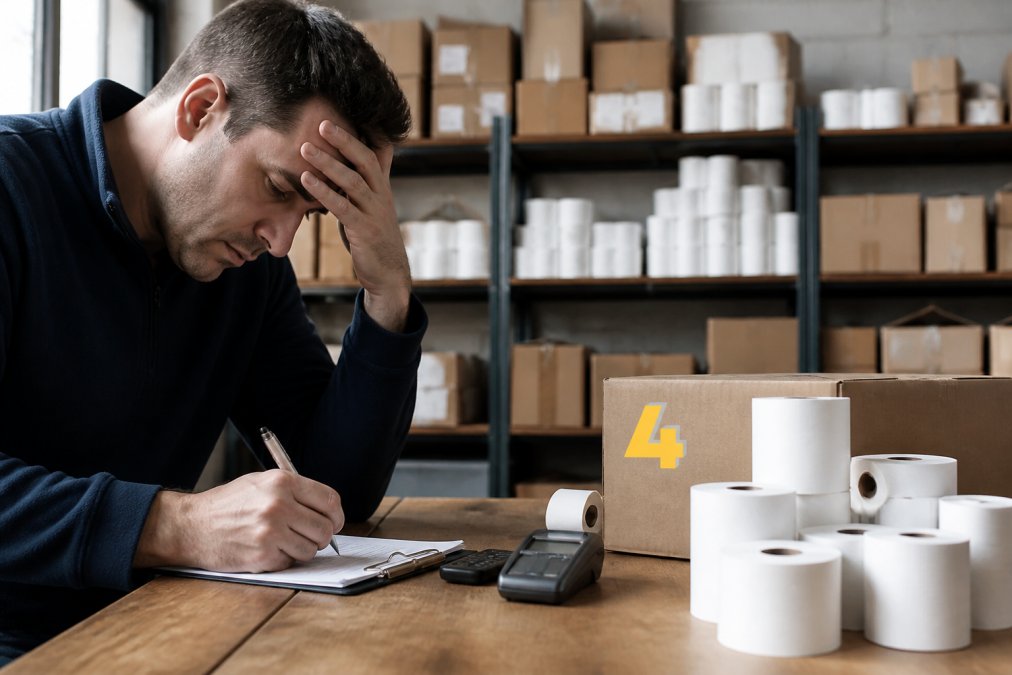
For business owners, a delayed order is not an inconvenience; it is a disruption to your operations. Running a café with no till rolls on a Monday morning stops your tills from working. Managing supplier delivery expectations is therefore a core operational task.
The Real Cost of a Missed Delivery
A delayed B2B order costs more than the price of the goods. When your till rolls run out, you cannot process card payments. When your food packaging does not arrive, you cannot serve takeaway orders. When your cleaning supplies are stuck in a depot, you may fail a hygiene inspection. Quantify this cost before you choose a supplier: calculate your daily revenue loss if a critical item is unavailable for one day.
Build a Two-Tier Supplier Strategy
Do not rely on a single supplier for critical consumables. Establish a primary supplier for everyday stock and a secondary option for emergencies, and test both before you need them.
A two-tier strategy works like this:
- Tier 1 (Primary): Your main supplier for routine orders. They should hold stock locally, dispatch within 24 hours, and offer a consistent delivery window.
- Tier 2 (Backup): A secondary supplier who can dispatch the same critical items within 48 hours. You do not need to order from them regularly, but you should have an account set up, pricing confirmed, and a test order completed so you know their process works.
Ask the Right Questions Before You Commit
When selecting a supplier, ask specific questions about their dispatch process. Do they hold stock in a purpose-built warehouse, or do they dropship from a third party? Suppliers with their own warehouse can dispatch immediately because the stock is physically on hand.
Ask these five questions before signing a contract:
- Where is your warehouse located? A supplier with a warehouse in Ireland can dispatch and deliver faster than one shipping from mainland Europe or the UK.
- What is your actual dispatch cutoff time? Many suppliers advertise "next-day dispatch" but have a 12:00 noon cutoff. If you order at 2:00 PM, your parcel does not leave until the following day.
- Which carrier do you use for business deliveries? Some carriers do not deliver on Saturdays in certain regions. If your business operates seven days a week, a Friday dispatch that arrives Monday may not be acceptable.
- What is your process for a lost or damaged parcel? A supplier with a clear, documented process will resolve issues faster than one who improvises.
- Can you provide a delivery date in writing? Verbal promises are not enforceable. A written delivery date triggers your legal rights under the 30-day rule.
The Buffer Stock Rule
A practical buffer calculation: take your average weekly usage of each critical item and multiply by 1.5. That is your minimum stock level. When your stock drops to that level, reorder immediately. This gives you a 10-day cushion even if your supplier faces a 5-day delay.
What to Do When a B2B Delivery Is Late
When a business-critical delivery is late, the standard consumer process still applies, but the timeline is compressed.
- Day 1 (missed delivery): Contact your supplier's account manager or sales representative directly, not the general customer service line. Reference your order number and the agreed delivery date.
- Day 2 (no resolution): Ask the supplier to dispatch a replacement via express courier at their cost. If they refuse, escalate to their management team.
- Day 3 (still unresolved): Activate your Tier 2 backup supplier and place an emergency order. Simultaneously, send a formal written complaint to the Tier 1 supplier referencing the missed contractual delivery date.
- Day 5 (no delivery, no communication): Exercise your right to cancel under the 30-day rule and request a full refund. If the supplier refuses, initiate a chargeback through your business bank account.
The Contract Clause That Protects You
When negotiating a supply agreement, include a service-level agreement (SLA) clause that specifies:
- The agreed delivery window (e.g., "within 3 working days of order confirmation")
- The remedy for late delivery (e.g., "supplier will dispatch a replacement via express courier at no cost")
- The right to cancel and receive a full refund if delivery exceeds 14 days from the agreed date
This clause turns a vague expectation into a contractual obligation, giving you a documented basis for cancellation and refund if the supplier misses the deadline.
The Bottom Line for Business Owners
A delayed delivery of operational stock is a failure of planning, not just logistics. Working with a supplier that holds stock in its own warehouse and can dispatch quickly reduces this risk substantially. But even the best supplier can face carrier disruptions. The businesses that survive supply chain hiccups are the ones that have a backup plan, a buffer stock level, and a written SLA in place before the disruption occurs.
The Bottom Line on Delayed Orders
A delayed order triggers a clear sequence of actions: check tracking, contact the retailer, escalate formally, and cancel for a refund if the 30-day window passes. Your consumer rights protect you at every step, but only if you exercise them in writing.
For business owners, the lesson is simpler. A delayed delivery of operational stock is a failure of planning, not just logistics. Working with a supplier that holds stock in its own warehouse and can dispatch quickly reduces this risk substantially. At Shop4Rolls.ie, we keep over 3,000 products in stock and our customer care team answers the phones, so you get straight answers about your order status when you need them most.
Get started with Shop4Rolls.ie and keep your business moving with reliable stock availability on the supplies your operations depend on. Sign up now to access wholesale pricing and hassle-free restocking.
Frequently Asked Questions
What should I do if my order is delayed?
First, check the tracking status and the estimated delivery date. If there is no update, contact the retailer or courier directly with your order number. If the item does not arrive within 30 days of purchase, you are entitled to a full refund under Irish consumer law. For business supplies, contact your supplier immediately to arrange a replacement or alternative delivery to avoid stockouts.
Can I cancel an order if the delivery date is missed?
Yes. Under EU and Irish consumer protection rules, if the retailer misses the agreed delivery date or the estimated delivery date, you can cancel the order and request a full refund. This applies even if the delay is only a few days. For business-to-business orders, check your terms and conditions, as cancellation rights differ from consumer contracts. A formal cancellation email protects your position.
Are retailers required to notify me of delivery delays?
Yes, retailers must inform you of any delay as soon as they become aware of it, and provide a new estimated delivery date. This falls under the Consumer Rights Act 2022. If they fail to deliver within 30 days without an agreed alternative, you can treat the contract as terminated and claim a full refund, including any delivery charges.
What is the legal timeframe for delivery under Irish consumer law?
Under the Consumer Rights Act 2022, goods must be delivered within 30 days of purchase unless a different delivery window was agreed at checkout. If no date was specified, the retailer must deliver within a reasonable time. If they miss this deadline, you can demand delivery by a new date or cancel for a full refund. Keep all order confirmations and shipping notifications as evidence.