 listicle
Why Choose a One-Stop Packaging Supplier
Table of Contents
- The Real Cost of Managing Multiple Packaging Suppliers
- How One-Stop Suppliers simplify Your Supply Chain
- Cost Reduction Strategies for Retail Supplies Through Consolidation
- Packaging Inventory Management Best Practices
- Is There a Minimum Order Quantity with One-Stop Suppliers?
- Integration with POS and Inventory Systems
- Risk Mitigation and Reliability When Consolidating Suppliers
- Frequently Asked Questions
Last Updated: September 3, 2026
The Real Cost of Managing Multiple Packaging Suppliers
Running a retail business means juggling dozens of operational details. One of the most overlooked pain points is what happens when your till rolls, receipt paper, and packaging supplies come from three different vendors.
Each supplier demands its own account setup. Each has different minimum orders, delivery schedules, and pricing tiers. Each requires separate invoicing and payment processing. When you need something urgently on a Friday afternoon, you're making three phone calls instead of one. When a supplier runs out of stock, your business feels the disruption immediately.
The hidden cost isn't just the time spent managing multiple relationships, it's the inefficiency baked into your supply chain. You're paying different unit prices because you can't consolidate volume. You're holding excess inventory from one supplier while waiting for another to restock. You're training staff on multiple ordering systems. These inefficiencies compound quietly until you step back and realise you're spending far more than necessary.
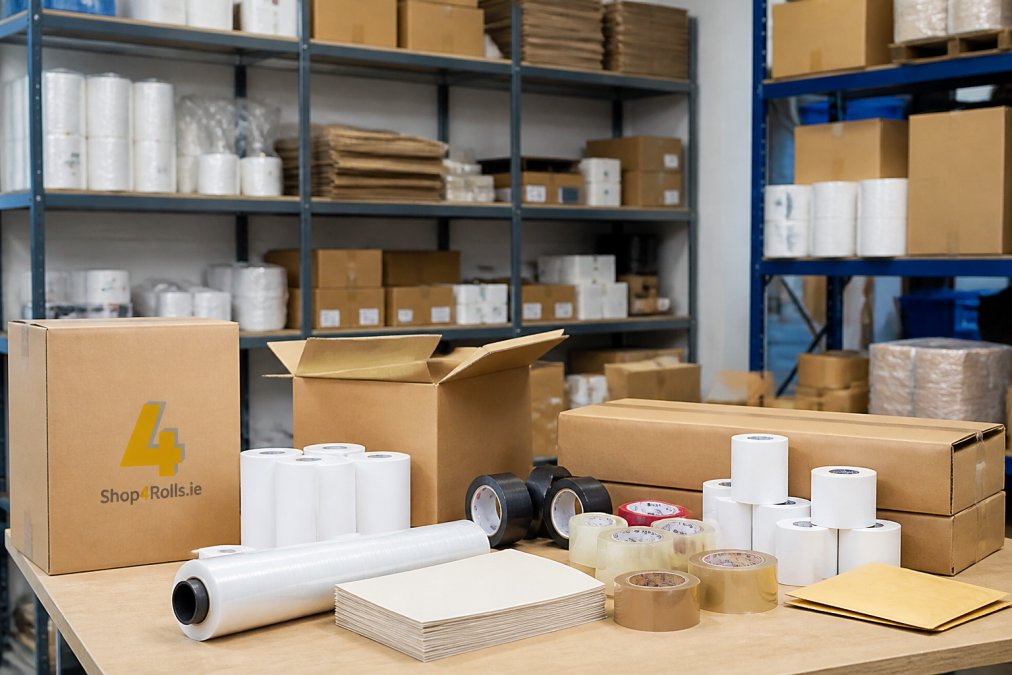
A one-stop packaging supplier eliminates this fragmentation. Instead of coordinating across vendors, you work with a single point of contact who understands your complete operational needs. Shop4Rolls.ie, for example, stocks over 3,000 products across till rolls, receipt paper, and packaging solutions, meaning most retailers can source everything they need from one platform rather than managing multiple relationships.
The real question isn't whether consolidation saves money. It's how much money you're currently leaving on the table by not doing it.
How One-Stop Suppliers simplify Your Supply Chain
simplifying your supply chain starts with reducing complexity. When you work with a single supplier, your procurement process becomes predictable and efficient.
Order management becomes straightforward. Instead of checking three different websites or calling multiple vendors to confirm stock availability, you log into one platform. Your staff learns one ordering system. Your delivery schedule becomes consistent, you know exactly when to expect your stock and can plan your inventory accordingly. This consistency eliminates the scrambling that happens when orders arrive at different times from different suppliers.
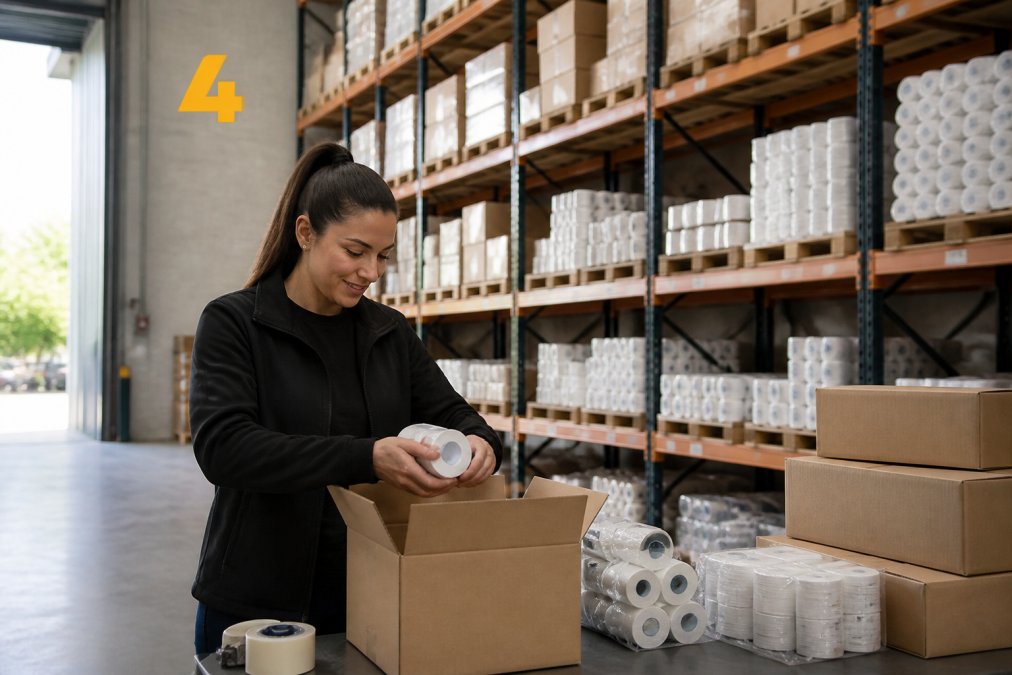
Inventory management improves dramatically. With multiple suppliers, you often over-order from one vendor to avoid running out, while another vendor's stock sits unused. A one-stop supplier lets you maintain tighter inventory levels because you can reorder quickly and reliably from a single source. You're not hedging bets across multiple vendors or padding orders to meet different minimum quantities.
Lead times become predictable. When you consolidate suppliers, you understand exactly how long replenishment takes. This means you can calculate safety stock more accurately and avoid both stockouts and excess inventory. Many businesses find that working with a dedicated supplier like Shop4Rolls.ie, which offers reliable stock availability and next-day delivery options on key items, allows them to reduce their overall inventory holding while improving fill rates.
Supply chain visibility improves. A single supplier provides you with one dashboard for order history, delivery tracking, and stock levels. You're not piecing together information from multiple systems. This visibility makes forecasting easier and gives you better data to make purchasing decisions.
Cost Reduction Strategies for Retail Supplies Through Consolidation
Cost reduction through consolidation works through several mechanisms. The most obvious is bulk purchasing power, when you concentrate your orders with one supplier, you qualify for better unit pricing.
But that's only part of the story. The real savings come from operational efficiency. You're not paying for the overhead of managing multiple supplier relationships. Your staff isn't spending time coordinating between vendors or resolving conflicts when deliveries don't align. You're not paying rush fees because one supplier is out of stock and you need to order emergency stock from someone else at a premium.
Consider the hidden costs in your current setup. How much time does your team spend each week managing supplier relationships? How many times do you pay for expedited delivery because stock arrived late from one vendor? How much inventory are you holding as safety stock because you don't fully trust one supplier's delivery reliability? These costs rarely appear as line items on a P&L, but they're real.
Consolidating suppliers can reduce these indirect costs through elimination of redundant processes. You're making fewer orders, fewer phone calls, fewer payments, and fewer invoicing corrections. Your staff has more time for revenue-generating activities.
Direct cost savings come from volume discounts and simplified pricing. When Shop4Rolls.ie becomes your primary supplier, you're building volume across multiple product categories. This volume translates to better pricing on till rolls, receipt paper, and packaging supplies. The lowest price guarantee means you're not overpaying, and the ability to order without minimums on key items removes the forced bulk-buying that inflates costs.
Pricing transparency improves. With one supplier, you understand your actual unit costs across your entire product range. You can track price changes and identify opportunities. With multiple suppliers, price comparisons are difficult, you're comparing different product specifications, different minimum orders, and different delivery terms across vendors. A single supplier makes cost analysis straightforward.
Packaging Inventory Management Best Practices
Effective inventory management starts with understanding your actual consumption patterns. Most retail businesses underestimate how much till roll and receipt paper they use because the consumption is spread across multiple tills and multiple staff members throughout the day.
Track your usage over a full month. Count how many till rolls you actually consume. Monitor receipt paper usage across all your card machines. Measure packaging supplies used for orders. This data becomes your baseline for inventory planning.
Set reorder points based on lead time and daily consumption. If your supplier delivers within 24 hours and you use 5 till rolls per day, your reorder point might be 10-15 rolls. This gives you a buffer without forcing you to hold excess stock. Working with a supplier like Shop4Rolls.ie that offers next-day delivery makes this calculation more reliable because you can trust the lead time.
Implement a first-in, first-out system for your stock. Receipt paper and till rolls have a shelf life, thermal paper fades over time, and older stock should be used first. Organise your storage so older items are used before newer ones arrive.
Centralise your ordering process. Assign one person responsibility for monitoring stock levels and placing orders. This prevents the chaos that happens when multiple staff members independently decide to order, resulting in duplicate orders or unexpected stock surges.
Use your supplier's online ordering system to your advantage. Most modern suppliers, including Shop4Rolls.ie, provide order history and usage tracking. Review this data monthly to identify trends. Are you using more packaging supplies in certain seasons? Are there products you ordered once and never reordered? This intelligence helps you forecast more accurately.
Communicate with your supplier about your business cycle. If you're a hospitality business that gets busier during summer, tell your supplier. They can help you plan stock levels and may offer seasonal discounts. A dedicated supplier relationship means your vendor understands your business and can proactively suggest solutions.
Is There a Minimum Order Quantity with One-Stop Suppliers?
Minimum order quantities are one of the biggest objections retailers raise when considering a new supplier. The fear is legitimate, you don't want to be forced into buying more stock than you need just to meet a supplier's threshold.
The good news is that modern one-stop suppliers have moved away from rigid minimums. Many, including Shop4Rolls.ie, operate with no minimum order requirements on essential items like till rolls. This flexibility is a major advantage over traditional suppliers who enforce strict minimums.
However, minimums may apply to certain products, particularly custom or specialty items. If you're ordering bespoke branded packaging with custom printing, there's usually a minimum run, this is standard across the industry because setup costs are high. But for standard stock items, you should expect flexibility.
Ask your supplier directly about minimums before committing. A reputable supplier will be transparent about which products have minimums and which don't. They'll also explain the reasoning, sometimes a minimum exists because of logistics costs, sometimes because of manufacturing constraints, but rarely because the supplier is trying to force unnecessary purchases.
When minimums do exist, they're usually lower than you'd expect. A minimum of 50 till rolls might sound high until you realise you consume that in a week. The minimum is often less than your weekly usage, not your monthly or annual requirement.
The real value of working with a one-stop supplier is that you can ask about minimums before ordering. You're not locked into a relationship with a supplier that won't work with your volume. If Shop4Rolls.ie's minimums don't suit your business, you'll know before you sign up.
Integration with POS and Inventory Systems
Modern retail depends on systems that talk to each other. Your point-of-sale system tracks sales, your inventory system tracks stock, and your ordering system should integrate with both.
A one-stop supplier that integrates with your existing systems saves significant time and reduces errors. When your POS system can communicate directly with your supplier's inventory, you get real-time stock visibility. You know immediately if an item is in stock before you place an order. You avoid the frustration of ordering something only to discover it's unavailable.
Some suppliers offer API integrations that allow your inventory management system to automatically trigger reorders when stock falls below your threshold. This eliminates manual ordering entirely for routine supplies. Your system monitors consumption, calculates reorder points, and places orders automatically. Your supplier fulfils them on schedule.
At minimum, your supplier should offer a user-friendly online ordering portal that integrates with your accounting system. You should be able to export order history, track invoices, and reconcile payments without manual data entry. This integration reduces administrative overhead and improves accuracy.
Shop4Rolls.ie provides online ordering that integrates with standard retail workflows. The platform is designed for busy store managers who need to place orders quickly without navigating complicated systems. Real-time stock visibility means you're never ordering out-of-stock items.
Ask potential suppliers about their integration capabilities before committing. Do they offer API access for advanced integrations? Do they support common accounting software? Can you export data for your own analysis? These technical capabilities matter more as your business grows because they directly impact operational efficiency.
Risk Mitigation and Reliability When Consolidating Suppliers
Consolidating suppliers creates a dependency. If your one supplier fails to deliver, your entire operation feels the impact. This is a legitimate concern that deserves serious consideration.
The way to mitigate this risk is to choose a supplier with proven reliability and then build safeguards into your relationship.
First, evaluate the supplier's track record. How long have they been in business? Do they have a purpose-built warehouse or are they drop-shipping from third parties? Do they maintain stock of essential items or do they order on demand? A supplier like Shop4Rolls.ie, which operates a dedicated warehouse with over 3,000 products in stock, has far lower delivery risk than a supplier that orders items as needed.
Second, establish clear service level agreements. What's their guaranteed delivery window? What happens if they miss it? Do they offer compensation? These terms should be documented so there's no ambiguity if something goes wrong.
Third, maintain a small safety stock of critical items. Even with a reliable supplier offering next-day delivery, holding 2-3 days of till rolls and receipt paper as emergency stock protects you against unexpected surges or rare delivery failures. This isn't excess inventory, it's insurance against operational disruption.
Fourth, communicate your needs clearly. Tell your supplier which items are critical to your operation. If you run a hospitality business, receipt paper is non-negotiable. If you're a retail chain, till rolls are essential. Your supplier should understand these priorities and treat them accordingly.
Finally, maintain a backup plan. Know which alternative suppliers you'd contact if your primary supplier fails. You don't need a full secondary relationship, but you should know who you'd call and roughly what their lead times are. This knowledge reduces panic if something goes wrong.
The irony is that consolidating suppliers often reduces risk, not increases it. When you're managing three suppliers, any one of them failing creates chaos. When you're working with one reliable supplier, you have a single point of focus and can build a relationship based on mutual understanding of your needs.
Choosing a one-stop packaging supplier isn't just about convenience, it's about building operational efficiency into your business. The consolidation of till rolls, receipt paper, and packaging supplies under one vendor eliminates the friction that comes from managing multiple relationships. Shop4Rolls.ie brings together Ireland's largest selection of till rolls and card machine receipt rolls with over 3,000 additional products, a lowest price guarantee, and reliable next-day delivery. Sign up now and simplify your supply chain.
Frequently Asked Questions
Q: What are the main benefits of consolidating with one-stop packaging suppliers?
A: Consolidating with a one-stop supplier eliminates the need to manage multiple vendor relationships, reduces administrative overhead, and often delivers better unit pricing through bulk purchasing power. You gain consistency in quality and branding, faster order fulfillment, and simplified inventory tracking. A single supplier also provides predictable lead times and streamlined logistics, meaning fewer delivery slots to coordinate and less complexity in your supply chain operations.
Q: Is there a minimum order quantity when ordering from a one-stop packaging supplier?
A: Minimum order requirements vary by supplier and product type. Many one-stop suppliers, including those specialising in retail essentials like till rolls and receipt paper, operate with no minimum order for core items, making them accessible to small cafés and independent retailers as well as larger chains. It's essential to confirm the specific minimums for the products you need most frequently, as some premium or custom items may have different thresholds. Always check the supplier's terms before committing.
Q: How can packaging inventory management best practices help when using one supplier?
A: With one supplier, you can implement centralised inventory tracking, automated reordering triggers, and consistent stock forecasting across all your packaging needs. A reliable one-stop supplier with dependable lead times allows you to reduce safety stock levels, freeing up storage space and capital. Regular order history with a single vendor also gives you data to optimise order quantities, predict seasonal demand, and negotiate volume discounts, all of which reduce waste and improve cash flow.
Q: What happens if a one-stop supplier runs out of stock on a critical item?
A: Reputable one-stop suppliers maintain stock visibility and notify customers upfront if items are unavailable, rather than delaying delivery. Many operate purpose-built warehouses with robust inventory systems to prevent stockouts on high-demand items. However, it's wise to clarify the supplier's contingency plan, whether they offer alternative products, priority restocking, or expedited sourcing. Choosing a supplier with a strong track record of reliability and transparent communication reduces this risk significantly.
This article was written using GrandRanker