 listicle
Packaging Supplies for Small Retail Stores: 2026 Guide
Table of Contents
- The 7 Packaging Supplies Every Small Retail Store Actually Needs
- How Much Do Packaging Supplies Cost for a Small Shop?
- Eco-Friendly Retail Packaging: What Works and What It Costs
- Wholesale Till Rolls for Shops: Getting the Right Size Every Time
- Branded Paper Bags Ireland: When Custom Printing Pays Off
- Packaging Storage and Space: Making a Small Stockroom Work
- Conclusion
- Frequently Asked Questions
Last Updated: September 16, 2026
The 7 Packaging Supplies Every Small Retail Store Actually Needs
Every euro spent on packaging supplies for small retail stores has to earn its place on the shelf. The real skill is knowing which seven categories genuinely move the needle.
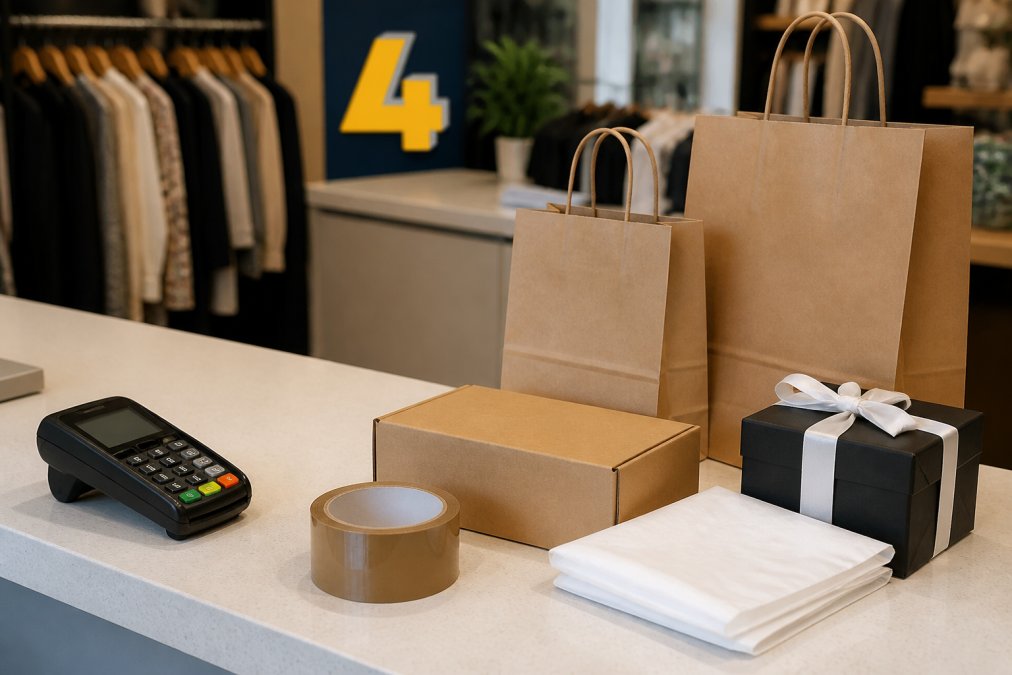
Front-of-House Essentials: Paper Bags, Gift Boxes and Wrapping
Paper bags, gift boxes and wrapping materials are the packaging customers actually touch, the fastest way to signal quality without a word. A sturdy paper bag with a folded top and decent handle does more for perceived value than a flimsy plastic one.
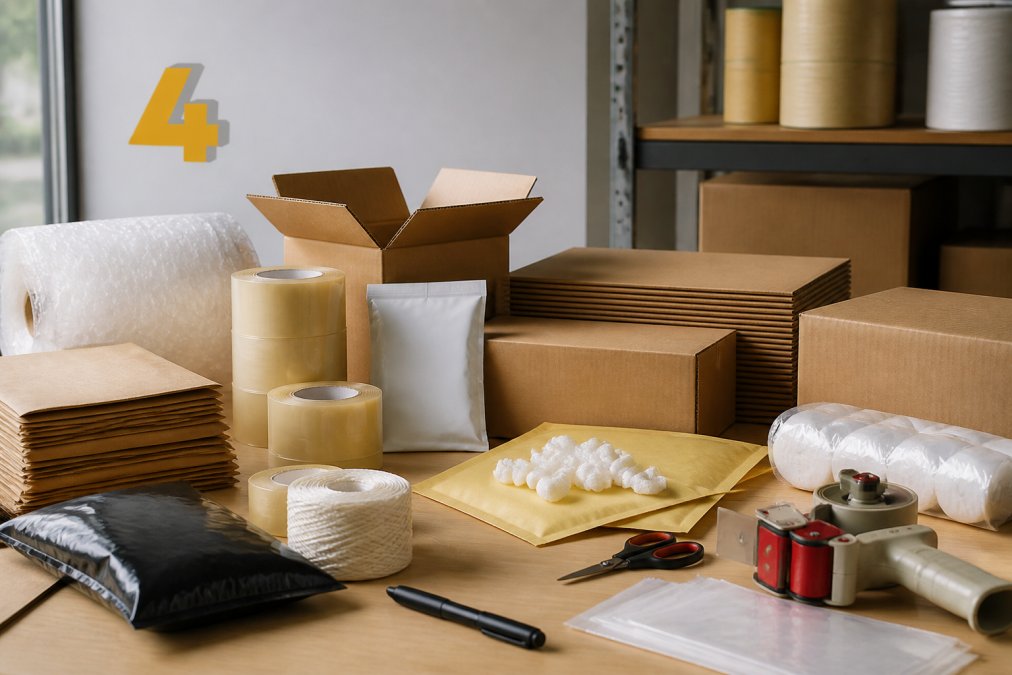
Back-of-House Essentials: Boxes, Mailers, Tape and Protective Packaging
Back-of-house packaging is where small shops quietly overspend, usually by buying the wrong sizes rather than quantities. Cardboard boxes and cartons, mailing envelopes, bubble wrap, packing tape and protective packaging all need to match your actual dispatch profile, not a generic starter kit.
How Much Do Packaging Supplies Cost for a Small Shop?
Packaging costs depend on order volume, material choice and delivery, so pricing varies by product and quantity rather than following a fixed rate card. The smartest approach is to calculate cost per transaction, not cost per order, and to factor in regulatory costs on top of unit price.
The cost-per-transaction method
A shop handing over 60 paper bags a day spends very differently from one posting 10 parcels a week. Work out monthly usage per item, then divide total monthly packaging spend by monthly transaction count. That figure tells you whether a heavier bag, branded box or compostable mailer is affordable.
A worked pattern most small retailers find useful:
- Count transactions for a typical week, then multiply by 4.3 for a monthly figure.
- List every packaging item consumed per transaction (bag, tissue, sticker, box, tape, void fill).
- Divide each item's pack price by the number of units in the pack to get a unit cost.
- Multiply unit cost by units per transaction, then sum across items.
Regulatory costs that sit on top of unit price
In Ireland, packaging placed on the market is subject to extended producer responsibility obligations under the Waste Management (Packaging) Regulations, administered by the Environmental Protection Agency (EPA). Producers and retailers above the relevant thresholds must register with an approved compliance scheme, Repak is the best-known, and pay a fee based on tonnage and type of packaging placed on the market.
Where bulk and trade pricing actually kick in
| Supply Category | Typical Reorder Rhythm | Watch For |
|---|---|---|
| Paper bags & wrapping | Monthly | Handle strength at higher weights; levy differences between materials |
| Boxes & mailers | Monthly to quarterly | Wrong sizes driving waste; recyclability affecting scheme fees |
| Tape & protective packaging | Monthly | Running out mid-dispatch |
| Till rolls & receipt paper | Weekly to fortnightly | Incorrect roll width |
Current pricing on any of these sits on the Shop4Rolls.ie website, where the lowest price guarantee applies to the specific products you buy regularly.
Eco-Friendly Retail Packaging: What Works and What It Costs
Eco-friendly retail packaging works best when you swap the items customers actually notice, rather than converting your whole stockroom at once. Recycled paper bags, recyclable cardboard cartons and paper-based void fill cover the visible end of the process and cost only marginally more than standard equivalents.
Wholesale Till Rolls for Shops: Getting the Right Size Every Time
Wholesale till rolls for shops fail for one reason more than any other: the wrong roll size ordered against the wrong machine. Thermal till rolls and card machine receipt rolls come in specific widths and diameters, and a roll 1mm off can jam the printer or simply not register.
Branded Paper Bags Ireland: When Custom Printing Pays Off
Branded paper bags Ireland shops order tend to pay off when the bag leaves the store and gets seen by someone who isn't already a customer. If your bags mostly end up in a bin within minutes, custom printing is decoration. If they walk down a high street, it's advertising. The decision is not "branded or not", it is which branding method earns its cost at your volume.
A decision framework: cost per impression
The useful comparison is cost per impression, not cost per bag. A plain bag with a branded sticker costs a fraction of a fully printed bag but delivers a smaller, less durable impression. A fully printed bag costs more per unit but carries your logo for the life of the bag, often for hours after the customer leaves.
Work out three numbers before you commit:
- Your monthly bag usage.
- The unit cost of your current plain bag.
- The unit cost of the printed alternative at the minimum order quantity your supplier requires.
Minimum order quantities and the storage cost nobody counts
Custom printed bags usually require a larger run than plain stock. The minimum order quantity varies by supplier and print method, but the pattern is consistent: the larger the run, the lower the unit price, and the more stock you must store. For a small shop, the hidden cost is not the print, it is the shelf space the surplus occupies and the cash tied up in it.
The unboxing experience: branding beyond the bag
The bigger opportunity is designing the moment the customer opens the package, the unboxing experience, because that is where repeat purchase and word of mouth are won or lost.
- The outer bag or mailer, which sets expectation.
- The tissue or void fill, which is the first thing seen on opening.
- A branded sticker or seal, which signals care.
- A small insert, a thank-you card, a care instruction or a discount code, which converts the moment into a reason to return.
Packaging Storage and Space: Making a Small Stockroom Work
Packaging storage decides how much you can sensibly buy, and most small stockrooms are organised by accident rather than design. The goal: daily items reachable without moving anything, monthly items out of the way but findable.
Conclusion
Getting packaging right for a small shop comes down to matching what you buy to what you actually use, then reordering before you run out rather than after. That's the gap Shop4Rolls.ie was built to close: over 3,000 packaging and operational supplies in one place, from till rolls and card machine receipt rolls to paper bags, boxes and protective packaging, all backed by a lowest price guarantee and reliable stock from a purpose-built warehouse.
Frequently Asked Questions
What are the most essential packaging supplies for a small retail business?
At minimum: paper or plastic carrier bags, gift and presentation boxes, tissue and wrapping paper, cardboard boxes and cartons, protective mailing supplies such as bubble wrap and Jiffy bags, packing tape, food-safe packaging where relevant, and till rolls for your card machine and POS. Most small shops also keep branded bags and labels on hand. Ordering these as a single restock from one packaging supplies supplier saves both delivery costs and admin time.
How do I choose the right size till roll for my card machine?
Check the model number on the machine itself, then match the roll width in millimetres (commonly 57mm or 80mm) and the roll diameter your printer housing accepts. Thermal paper is standard for most card machines, while impact printers need carbonless or bond rolls. If you have ordered the wrong size before, note your exact model and roll dimensions once, keep it on file, and reorder the same reference each time.
Is eco-friendly retail packaging more expensive than standard options?
Not always. Recycled kraft paper bags and plain cardboard cartons often sit at similar price points to virgin-material equivalents, especially when bought in bulk. The bigger cost gaps appear with compostable films and fully custom-printed recycled ranges. If budget is tight, start with the highest-volume items (carrier bags, cartons, tissue) and switch those first. Pricing depends on quantity and specification, so check current rates on the supplier's site before committing.
What are the current regulations for retail packaging waste in Ireland?
Retailers here fall under extended producer responsibility rules administered by Repak, and the Circular Economy and Miscellaneous Provisions Act 2022 shapes how packaging waste is managed. Levies apply to certain single-use items, and packaging must meet recycling and labelling expectations. Requirements vary by product type and volume, so confirm your specific obligations with Repak or your local authority before ordering new packaging lines.
Are branded paper bags worth the investment for small stores?
They pay off when your bag doubles as advertising. A customer walking through town with a printed bag reaches people who never see your shopfront. The trade-off is minimum order quantities: custom printing usually needs a larger run than plain stock, so it suits shops with steady footfall. Start with one size and one colour, test it for a few months, then expand the range if reorders move quickly.
Note: This article contains external source placeholders for authoritative references. Final publication should verify all cited sources are current and accessible.