 listicle
Best Packaging Supplies for Small Cafés
Table of Contents
- Packaging Supplies for Small Cafés: What You Actually Need
- Quick Comparison Table: Essential Packaging Categories
- Paper Cups and Lids for Cafés
- Sandwich Wrap Packaging and Food Paper
- Takeaway Food Containers for Cafés
- Eco-Friendly Café Packaging Options
- Storage, Stock Rotation, and Supplier Reliability
- Conclusion: Building Your Café Packaging Strategy
- Frequently Asked Questions
Last Updated: October 17, 2026
Packaging Supplies for Small Cafés: What You Actually Need
Running a small café means juggling a dozen priorities at once. Sourcing the right packaging supplies small cafes need shouldn't be one of them. Yet many café owners waste time chasing multiple suppliers, overpaying for minimum orders, or discovering mid-rush that they've ordered the wrong cup size or food container.
The reality is this: your packaging choices affect three things immediately, your bottom line, your customer experience, and how quickly you can serve. A leaking sandwich wrap loses you a customer. A cup that sweats through costs you a tip. Running out of kraft bags on a Saturday means turning away orders.
What we've learned is that the best packaging supplies small cafes need aren't necessarily the fanciest or the most sustainable, they're the ones that balance cost, reliability, and performance for your specific menu and order volume.
Below, we'll walk you through each packaging category, show you the real differences between options, and help you build a starter checklist that matches your actual café menu and daily volume.
Quick Comparison Table: Essential Packaging Categories
Before diving into specifics, here's what every small café needs to stock. This table maps packaging type to typical café use case and key considerations:
| Packaging Type | Best For | Key Consideration | Typical Order Frequency |
|---|---|---|---|
| Paper cups and lids | Hot and cold drinks | Insulation, lid fit, leak prevention | Weekly to bi-weekly |
| Sandwich wraps and food paper | Sandwiches, pastries, baked goods | Grease resistance, food contact approval | Weekly |
| Takeaway food containers | Soups, salads, prepared meals | Heat resistance, moisture barrier, stackability | Weekly to bi-weekly |
| Kraft paper bags | Takeaway orders, small items | Strength, handle durability, minimum order quantities | Bi-weekly |
| Napkins and cutlery | Dine-in and takeaway | Cost per unit, durability | Bi-weekly to monthly |
| Compostable or recyclable options | Sustainability-conscious customers | Price premium, local waste infrastructure | As needed |
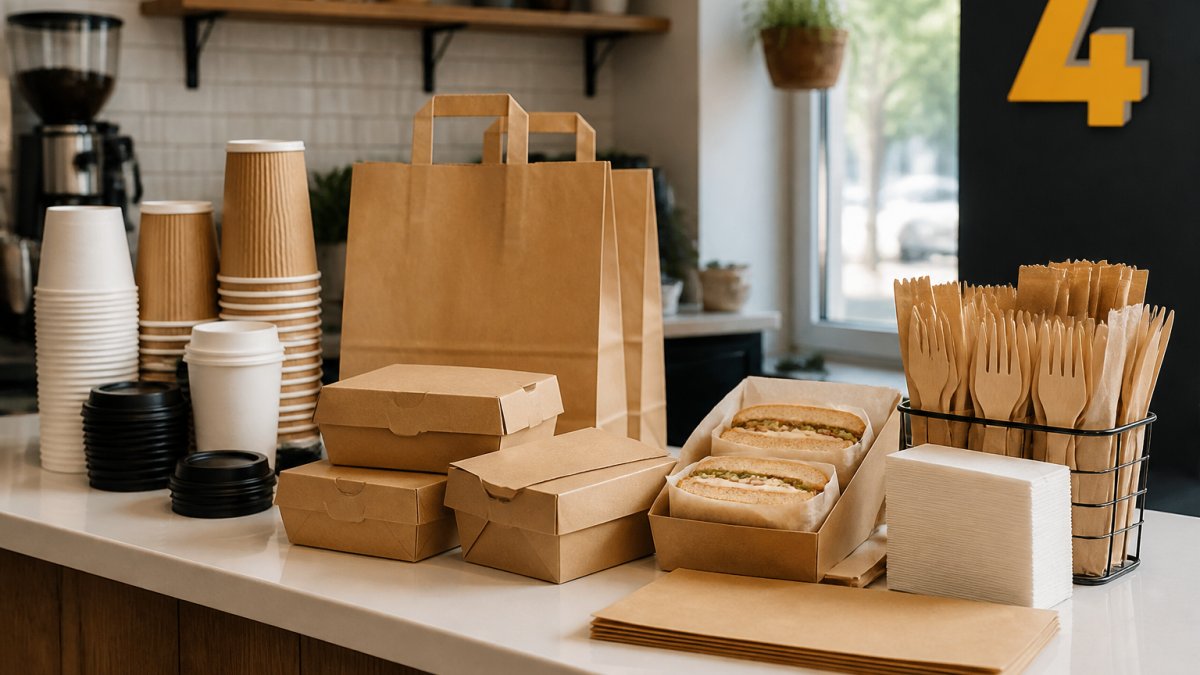
The table above shows the core categories. Notice that most small cafés reorder weekly or bi-weekly, this is important because it means you don't need to stock massive quantities upfront. Small order flexibility is a real advantage if your supplier supports it.
Paper Cups and Lids for Cafés
The coffee cup is your most visible packaging. It's the last thing a customer touches before they leave, and it's either going to make your café look professional or cheap.
For small cafés, paper cups typically come in two styles: single-wall (lighter, cheaper, better for cold drinks) and double-wall (heavier insulation, better for hot drinks, slightly more expensive).
Lid fit matters more than you'd think. A loose lid spills. A tight lid frustrates customers. Test the lid-to-cup fit before committing to a large order. Many café owners don't do this and end up with mismatched sets that waste time during service.
Common sizes are 8 oz (small), 12 oz (medium), and 16 oz (large). If you're just starting out, stock the 12 oz as your main size, it covers most customers and minimises waste from overstock.
The price difference between basic white cups and branded or specialty cups is real, but it compounds fast when you're ordering thousands. A small café selling 80-120 drinks per day might order 500-1,000 cups every two weeks. That's where bulk pricing and reliable supplier stock become critical.
Sandwich Wrap Packaging and Food Paper
Sandwich wraps and food paper are where most small cafés lose money.
For sandwiches, you want food-grade paper with a grease barrier. This means the paper has a thin plastic or wax coating that prevents oil from soaking through. Without it, your wrap becomes transparent and falls apart in the customer's hands.
Sandwich wraps come in two formats: flat sheets (which you fold around the sandwich) and pre-formed bags or cones. Flat sheets are cheaper and give you flexibility for different sandwich sizes.
For pastries and baked goods, uncoated kraft paper often works fine because there's less moisture and oil involved. The cost per unit is lower, and customers expect it. Save the food-grade coated paper for items that genuinely need the barrier.
A common mistake is ordering too much variety. Pick two or three formats that cover 90% of your menu, then stick with them. Rotating stock of six different wrap types means waste and confusion during service.
Takeaway Food Containers for Cafés
Takeaway food containers are where packaging performance really shows. A leaking container ruins a customer's day and your reputation. A container that's too flimsy collapses when stacked. One that's too rigid costs more and wastes space.
For soups and liquids, you need containers with tight-fitting lids and a moisture barrier. Polypropylene or PET plastic containers work well here, they're leak-resistant and stackable. Avoid thin paperboard for anything hot or liquid; it will fail.
For salads and cold items, paperboard containers are fine and cheaper. They're rigid enough to stack, and they don't need the plastic barrier. The tradeoff is that they're slightly less insulating, so cold items warm up a bit faster, acceptable for most café use.
Size matters. Common takeaway sizes are 16 oz (small salad or soup), 24 oz (medium meal), and 32 oz (large salad or pasta). If you're selling prepared meals, measure your actual portions first, then order containers that fit snugly.
Lids are separate. Don't assume a lid will fit a container until you've tested it. Buying containers and lids from the same supplier reduces this risk, they're usually designed to match.
Eco-Friendly Café Packaging Options
Sustainable packaging is no longer a niche. Many customers now expect cafés to offer compostable or recyclable options, and some actively choose cafés that do.
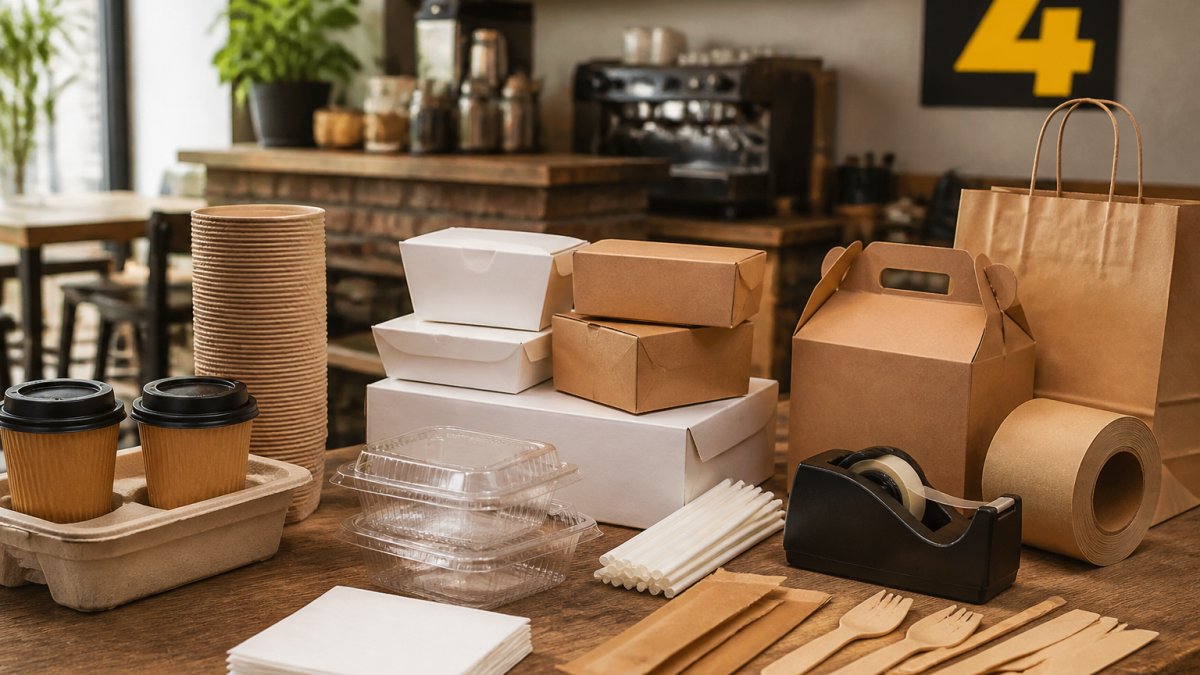
The most common eco-friendly options are compostable paper cups, cardboard food boxes, and bagasse (sugarcane fibre) containers. They cost more than standard plastic or paper, typically 15-30% premium depending on the material.
Compostable cups work well for hot drinks. They insulate similarly to standard double-wall cups and feel premium in a customer's hand. The catch is that they require industrial composting to actually break down, home composting won't work.
Cardboard food boxes are a good middle ground. They're recyclable in standard waste streams, they cost only slightly more than paperboard alternatives, and they feel more sustainable to customers.
Bagasse containers are made from sugarcane fibre and are fully compostable. They're sturdier than paperboard and work for hot items. The downside is limited supplier availability and longer lead times.
Before committing to eco-friendly packaging, check what waste infrastructure actually exists in your area. If your local council doesn't have composting or recycling for a material, it's not actually sustainable, it's just more expensive waste.
Storage, Stock Rotation, and Supplier Reliability
This is the part most guides skip, but it's where small cafés actually lose money.
Packaging takes up space. A box of 1,000 cups takes up roughly 0.3 cubic metres. Order too much at once and you're storing packaging instead of selling coffee. Order too little and you're reordering constantly, paying for multiple small-quantity shipments instead of one bulk order.
The solution is to calculate your weekly usage, then order for two weeks ahead. This gives you a buffer without excessive storage. If you sell 100 drinks per day, that's roughly 700 per week, order 1,500 cups every two weeks.
Stock rotation matters. Packaging deteriorates slowly, paper absorbs moisture, lids become brittle, cups warp. Use older stock first. Mark delivery dates on boxes and rotate accordingly.
Supplier reliability is everything. If your supplier runs out of stock and doesn't tell you until you order, you're stuck. If delivery is promised for Monday but arrives Wednesday, your service suffers. A good supplier proactively tells you about stock issues and delivers on time.
Shop4Rolls.ie publishes live stock levels so you can see what's available before ordering. This removes the guessing game.
Conclusion: Building Your Café Packaging Strategy
The best packaging supplies for small cafés aren't the cheapest or the fanciest, they're the ones that match your menu, your order volume, and your budget without creating service problems.
Start by listing your top 10 menu items. For each one, identify the packaging type it needs. Then pick two or three suppliers and order small quantities to test. Measure which containers actually fit your portions, which lids seal properly, and which wraps hold up to real use.
Once you've found what works, consolidate to one supplier. The time and cost savings from a single reorder, consistent delivery, and reliable stock availability outweigh any small price differences between multiple suppliers.
Shop4Rolls.ie stocks over 3,000 packaging and operational supplies with live inventory visibility, next-day delivery, and a lowest price guarantee. Whether you need paper cups and lids for hot drinks, sandwich wraps and food paper for takeaway items, or eco-friendly café packaging options, you can order online or visit our cash-and-carry warehouse. Our customer care team is available to help you find the right fit for your café's specific needs. Sign up now and get started with reliable, hassle-free packaging restocking.
Frequently Asked Questions
What packaging supplies does a small café need for takeaway orders?
Most small cafés need paper cups with lids for hot and cold drinks, kraft or paper bags for takeaway items, food boxes for sandwiches and baked goods, sandwich wraps for fresh items, napkins, and cutlery. Start by identifying your top 5-10 menu items, then stock packaging for those. A typical small café might order 200-500 cups, 100-300 bags, and 50-200 food boxes monthly, depending on volume. Begin with one supplier offering all categories to simplify reordering and reduce costs.
How do I choose packaging for hot and cold café food?
Hot drinks require insulated paper cups (typically 12-16 oz) with secure lids to prevent leaks and condensation. Cold drinks use standard paper cups with tight-fitting lids. For food, hot items need grease-resistant kraft paper or cardboard boxes; cold items work with standard food paper or kraft wraps. Test each material for heat retention, moisture resistance, and durability before committing to bulk orders. Small cafés benefit from ordering sample packs from suppliers to trial different options.
What packaging keeps sandwiches fresh without making them soggy?
Sandwich wrap packaging made from food-grade kraft paper or greaseproof paper prevents sogginess by creating a moisture barrier. Avoid plastic wraps that trap condensation. For pre-made sandwiches, use breathable kraft paper wraps; for fresh-cut items, layer paper inside a kraft bag. Some cafés use parchment paper liners inside cardboard boxes for extra protection. Test your preferred option with a sample batch to confirm freshness lasts through your typical service window.
Are eco-friendly café packaging options more expensive?
Eco-friendly packaging (compostable cups, bagasse trays, recycled kraft paper) typically costs slightly more per unit than standard options, but the difference narrows at higher volumes. Many small cafés find the cost difference acceptable, often a few cents per item, especially if customers value sustainability. Pricing depends on quantity, delivery dates, and material type. Compare quotes from suppliers offering both standard and eco-friendly ranges to see the exact price difference for your order volume.
Building the right packaging strategy takes a few weeks of testing, but it pays dividends. You reduce waste, speed up service, and stop wasting time chasing multiple suppliers. Your café runs smoother, your customers get a better experience, and your margins improve. That's what actually matters.