 listicle
Best Thermal Receipt Paper for Cafes
Table of Contents
- What Makes Thermal Receipt Paper Suitable for Cafes
- Thermal Receipt Paper Sizes and Compatibility
- How to Measure Till Roll Diameter for Your Printer
- Thermal Paper vs Standard Paper: Which Works Best
- Top Thermal Receipt Paper Options for Cafe Operations
- How to Store Thermal Paper Rolls Correctly
- Print Quality, Durability, and Receipt Legibility
- Choosing the Right Supplier for Reliable Stock
- Frequently Asked Questions
Last Updated: October 10, 2026
What Makes Thermal Receipt Paper Suitable for Cafes
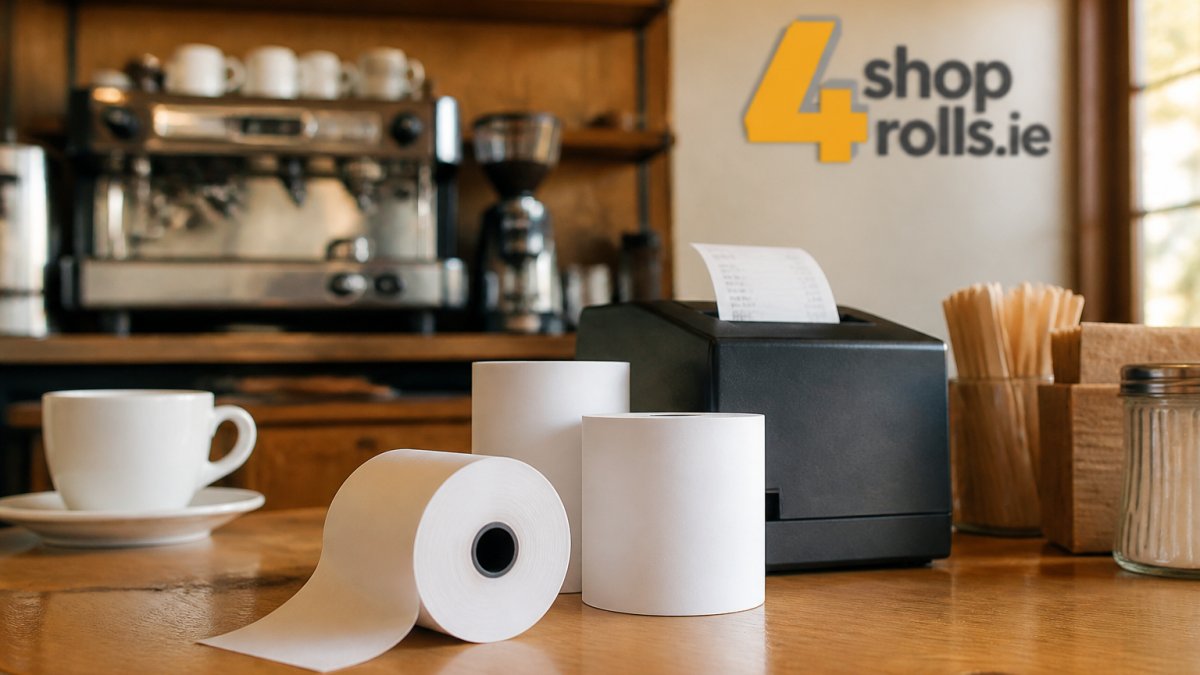
The best thermal receipt paper for cafes is the standard choice because it's fast, reliable, and requires no ink. The heat-sensitive coating eliminates cartridge costs and maintenance headaches.
For cafes, thermal paper offers distinct advantages: receipts print in under a second, the paper resists moisture and heat in kitchen environments, and rolls are compact and easy to load during service.
The challenge is choosing the right specifications for your printer and workflow. Roll width, core diameter, and paper quality vary significantly, and ordering the wrong size means wasted money and downtime.
Thermal Receipt Paper Sizes and Compatibility
Thermal receipt rolls come in standardised widths, but not all printers accept all sizes. The three most common widths are 57mm, 58mm, and 80mm.
Common roll widths: 57mm, 58mm, and 80mm
The 57mm and 58mm widths are nearly identical and most modern POS systems accept both interchangeably. These narrower rolls suit compact counter spaces. The 80mm width prints larger receipts, useful for detailed order details or promotions.
Check your printer's manual before ordering; many cafes assume all thermal rolls are the same size and end up with unusable stock.
Roll length and core diameter specifications
Thermal rolls are measured by total paper length (typically 20-40 metres) and core diameter (usually 12mm or 17.5mm). The core diameter must match your printer's spindle; a 17.5mm core won't fit a printer designed for 12mm cores.
Roll length determines receipt count per roll. A 25-metre roll at 57mm width typically yields 400-600 receipts, reducing reloading frequency in busy cafes.
How to Measure Till Roll Diameter for Your Printer
Before ordering in bulk, measure your current till roll to confirm compatibility.
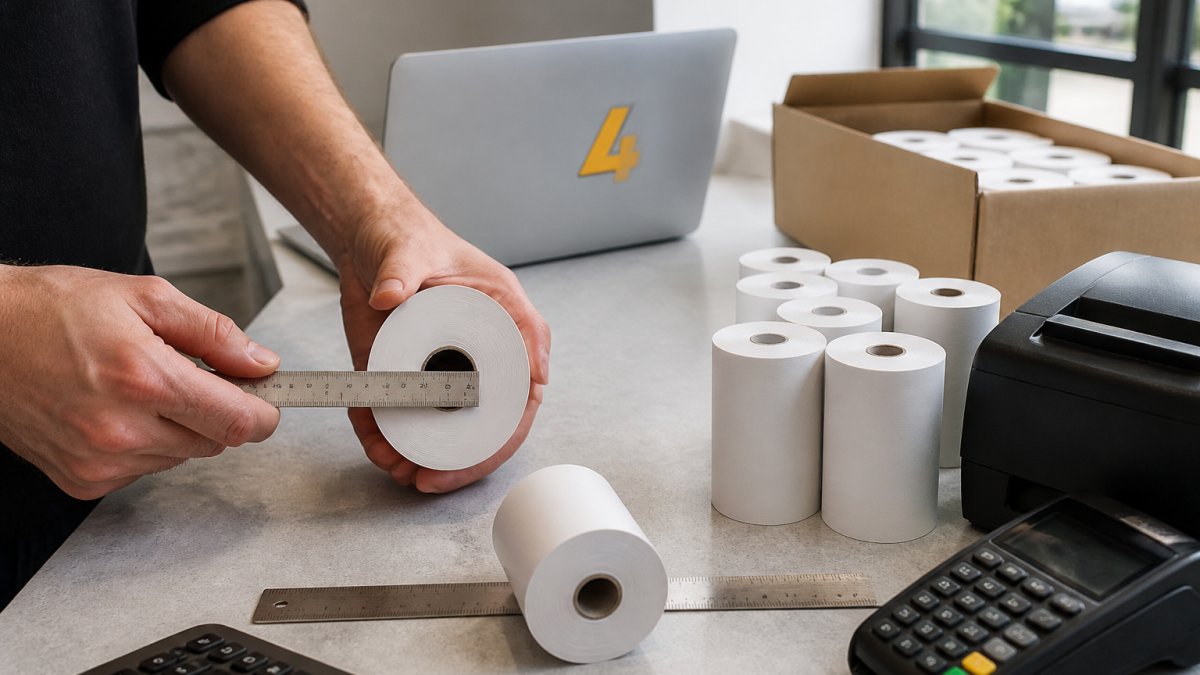
Remove the roll from your printer. Measure the paper width using a ruler (57mm, 58mm, or 80mm). Measure the cardboard tube diameter by placing a ruler across its opening. Most cafe printers use 12mm or 17.5mm cores.
Write down both measurements and keep them accessible. When reordering, match these exact specifications. If unsure, contact the printer manufacturer.
Thermal Paper vs Standard Paper: Which Works Best
Standard paper requires ink or toner and suits archival documents. Thermal paper creates images through heat alone, making it faster and cheaper for high-volume receipt printing.
For cafes, thermal paper wins on every practical measure: it prints in under one second, requires no ink cartridges, and costs less per receipt than ink-based alternatives.
Thermal receipts fade over time if exposed to direct sunlight or heat. For customer receipts kept as proof of purchase, this matters less for kitchen tickets discarded after fulfillment.
Top Thermal Receipt Paper Options for Cafe Operations
Selecting the best thermal receipt paper for cafes and the right supplier ensures your cafe never runs short of paper during service and balances cost against workflow needs.
BPA-free thermal rolls and food-service chemical safety
Thermal paper historically contained Bisphenol A (BPA). BPA concerns have driven the industry toward BPA-free alternatives, the responsible choice for cafes handling food.
BPA-free rolls cost slightly more but eliminate health concerns for staff. Many suppliers now stock BPA-free options as standard. Check the product specification when ordering; reputable suppliers clearly label BPA status and chemical composition.
To reduce chemical contact, encourage staff to wash hands after handling receipts and store rolls away from food preparation areas.
Cost per receipt: calculating true consumption and waste
Ordering thermal rolls in cases reduces per-roll cost, but the real metric is cost per receipt.
Calculate cost per receipt by dividing case cost by total receipts per case. A €45 case of 50 rolls (500 receipts each) = €0.0018 per receipt. Budget 5-10% extra for misprints, jams, and damaged rolls.
Most cafes use 10-15 rolls per week during normal trading. If you operate 6 days per week with 250-400 customer transactions daily, you'll consume roughly 12 rolls per week. Ordering two cases per month (100 rolls) provides a 6-8 week buffer, reducing reorder frequency and qualifying for bulk pricing.
Customer receipts versus kitchen tickets: print density and roll selection
Many cafes print two types of receipts: customer-facing receipts (proof of purchase) and kitchen tickets (order details for staff). Each has different requirements.
Customer receipts need clarity for barcodes, QR codes, and loyalty programme details. Use standard thermal rolls rated 90 brightness or higher.
Kitchen tickets prioritise speed and durability in a hot, humid environment. They don't need to last months, so standard thermal rolls are adequate.
Some cafes use narrower 57mm rolls for kitchen tickets and wider 80mm rolls for customer receipts, keeping both in stock. This approach optimises paper use and ensures kitchen staff can quickly identify order tickets by roll width.
How to Store Thermal Paper Rolls Correctly
Thermal paper is sensitive to heat and humidity. Improper storage degrades the coating and reduces print quality. Additionally, understanding how storage conditions affect receipt longevity helps cafes preserve records for tax, compliance, and customer-dispute purposes.
Optimal storage conditions for unused rolls
Store rolls in a cool, dry location away from direct sunlight. Basements, back offices, and interior storage rooms work well. Avoid areas near radiators, ovens, espresso machines, or windows where temperature fluctuates.
Ideal conditions are 15-25°C and 45-75% relative humidity. If your cafe is in a coastal area or experiences high seasonal humidity, consider a small dehumidifier in your storage area.
Keep rolls in their original packaging until use. The packaging protects the coating from dust and light exposure. Store rolls upright on shelves rather than stacking them flat, which can cause the paper to warp and become difficult to load.
Receipt longevity and fading: preserving records for compliance
Thermal receipts fade over time if exposed to direct sunlight, heat, or humidity. For receipts customers keep as proof of purchase, this is expected and acceptable. For receipts your cafe must retain for tax records, refund disputes, or food-safety audits, fading poses a compliance risk.
To preserve receipt records:
-
Photograph or scan important receipts within 48 hours of printing. High-resolution scans (300 dpi minimum) create a permanent digital record that won't fade. Store scans on a secure server or cloud backup.
-
Store original receipts in a cool, dark place. A filing cabinet in an interior office is ideal. Avoid storing receipts in direct sunlight or near heat sources. Under these conditions, thermal receipts remain legible for 3-5 years.
-
Use archival-grade thermal paper for critical records. Some manufacturers produce thermal rolls with enhanced fade resistance, designed for long-term storage. These cost slightly more but are worth the investment if your cafe operates a loyalty programme or tracks detailed transaction history for compliance purposes.
-
Separate high-value receipts from routine ones. Large transactions, refunds, or disputed orders warrant scanning and archival storage. Routine customer receipts can be discarded after a reasonable retention period (typically 30-90 days).
Disposal and recycling of thermal receipt paper
Thermal paper is coated and cannot be recycled through standard paper-recycling streams in most areas. The thermal coating contaminates standard recycling processes.
Check with your local waste management provider or council for guidance on thermal paper disposal. Some facilities accept thermal paper in general waste; others request it be separated. In some cases, specialist recyclers accept thermal paper as part of a mixed-coatings stream, though this is less common.
To minimise waste:
- Order rolls in quantities that match your actual consumption; excess stock that expires or becomes damaged represents pure waste.
- Use kitchen tickets sparingly; print only when necessary rather than as a default for every order.
- Consider a receipt-free option for small transactions (under €5) where customers don't require proof; this reduces paper consumption without compromising record-keeping.
If your cafe is committed to sustainability, discuss thermal-paper alternatives with your POS provider. Some newer systems support digital receipts via email or SMS, eliminating paper entirely for customers who opt in.
Print Quality, Durability, and Receipt Legibility
Print quality depends on three factors: paper brightness, coating consistency, and printer calibration.
Thermal paper brightness is measured on a scale where higher numbers indicate whiter paper. Brighter paper produces sharper text and clearer barcodes, which matters if customers need to scan receipts or if you print QR codes for loyalty programs.
The coating must be consistent across the entire roll. Poor-quality thermal paper produces faded patches or uneven text. Reputable manufacturers test every batch for consistency.
Your printer's settings also affect output. Most thermal printers have adjustable heat settings. If receipts print too faintly, increase the heat slightly. If they print too dark or the paper curls, reduce it.
Choosing the Right Supplier for Reliable Stock
Reliable supply means your cafe never closes because you've run out of receipt paper. The right supplier combines consistent stock availability, competitive pricing, and responsive customer service.
| Supplier Characteristic | Why It Matters | What to Look For |
|---|---|---|
| Stock Availability | Prevents downtime during peak hours | Next-day delivery option, real-time inventory visibility |
| Bulk Pricing | Reduces per-receipt cost over time | Clear price breaks for cases vs. single rolls |
| Product Specifications | Ensures compatibility with your printer | Detailed product listings with width, length, and core size |
| Customer Support | Resolves issues quickly if you order wrong | Phone support, easy returns, helpful staff |
| Lowest Price Guarantee | Confirms you're not overpaying | Transparent pricing, no hidden fees |
Shop4Rolls.ie is Ireland's largest supplier of till rolls and card machine receipt rolls, stocking over 3,000 products from a purpose-built warehouse. The combination of bulk pricing and a dedicated customer care team means you can reorder with confidence.
When choosing a supplier, verify they stock your exact specifications (width, length, core diameter) and offer bulk discounts. Ask about their return policy if you order the wrong size, mistakes happen, and a supplier that makes returns easy is worth the partnership.
Frequently Asked Questions
What type of paper is used for cafe receipts?
Thermal receipt paper is the standard for cafes. It uses heat-sensitive coating to print without ink, making it faster and cheaper to operate than standard paper. Thermal printers apply heat to the paper surface to create text and images instantly. Most cafe till systems and card machines use 57mm or 58mm thermal rolls, though some use 80mm. BPA-free thermal paper is recommended for food-service businesses to ensure customer safety.
How do I choose the right thermal receipt paper size for my printer?
Check your printer's manual or the printer model number to find the compatible roll width. Common cafe sizes are 57mm, 58mm, and 80mm. Measure your current roll's width and core diameter (usually 12mm or 40mm) to confirm compatibility. Most card machines use 57mm or 58mm rolls, whilst some kiosk and standalone thermal printers accept 80mm. Shop4Rolls.ie's customer care team can help verify the correct size for your specific equipment.
How should thermal receipt paper be stored?
Store thermal paper rolls in a cool, dry place away from direct sunlight, heat, and moisture. Extreme temperatures and humidity can fade the heat-sensitive coating and reduce print clarity. Keep rolls in their original packaging and away from direct light to preserve legibility. Avoid storing near radiators, windows, or damp areas. Properly stored thermal rolls maintain print quality for months, ensuring receipts remain readable for customer records and warranty purposes.
What is the difference between thermal receipt paper and standard paper?
Thermal receipt paper uses heat-sensitive coating and requires a thermal printer, whilst standard paper needs an ink-based printer. Thermal printing is faster, eliminates ink costs, and produces sharper text instantly. Standard paper is less expensive per sheet but requires ongoing ink cartridge replacements and maintenance. For cafes, thermal printing is more cost-effective and reliable for high-volume receipt printing. Thermal paper also dries instantly, reducing smudging.
Are thermal receipt rolls BPA-free?
Many thermal receipt papers contain BPA (bisphenol A) in their heat-sensitive coating. For food-service businesses like cafes, BPA-free thermal rolls are available and recommended to reduce customer exposure to this chemical. BPS (bisphenol S) is a common alternative in BPA-free rolls. When ordering thermal receipt paper for a cafe, specifically request BPA-free options to ensure compliance with food-safety best practices and customer expectations.
Running a cafe means managing countless small details that add up to smooth operations. Receipt paper might seem minor, but stockouts create real friction during service. The right thermal receipt paper, in the correct size, stored properly, and sourced from a reliable supplier, is one less thing to worry about. Shop4Rolls.ie delivers thermal rolls built for cafe workflows, with stock you can count on and pricing that rewards bulk ordering. Sign up now and simplify your restocking process.