 listicle
5 Best Cheap Shipping Boxes for Small Businesses
Table of Contents
- Quick Comparison: 5 Cheap Shipping Boxes Compared
- 1. Shop4Rolls.ie: Cheapest One-Stop Option for Packaging and Supplies
- 2. Amazon.ie: Fast Standard Boxes With Fluctuating Prices
- 3. Uline: Exact Sizes and Heavy-Duty Board at a Higher Cost
- 4. Staples: Convenient Retail Boxes for Mixed Office Orders
- 5. PackagingSupplies.com: Bulk Discounts for Dedicated E-Commerce Sellers
- How to Compare Wholesale Packaging Supplies on Cost Per Unit
- Eco-Friendly Shipping Boxes That Cut Costs and Waste
- Frequently Asked Questions
Last Updated: September 28, 2026
Quick Comparison: 5 Cheap Shipping Boxes Compared
Finding cheap shipping boxes for small businesses comes down to one question: what does each parcel actually cost you once postage, packing time and storage are counted? That total, not the sticker price on a bundle, is what separates a genuine bargain from a false economy. This guide shows you how to buy boxes that protect your products without inflating your courier bills.
| Supplier | Best For | Pricing Model | Standout Feature |
|---|---|---|---|
| Shop4Rolls.ie | One-stop restocking | Wholesale, see site | 3,000+ products, lowest price guarantee |
| Amazon.ie | Fast standard sizes | Per-unit/bulk | Quick delivery, easy price comparison |
| Uline | Exact dimensions | Wholesale | Huge size range, heavy-duty board |
| Staples | Mixed office orders | Retail | In-store pickup or delivery |
| PackagingSupplies.com | Dedicated e-commerce sellers | Wholesale tiers | Bulk discounts, packaging expertise |
1. Shop4Rolls.ie: Cheapest One-Stop Option for Packaging and Supplies
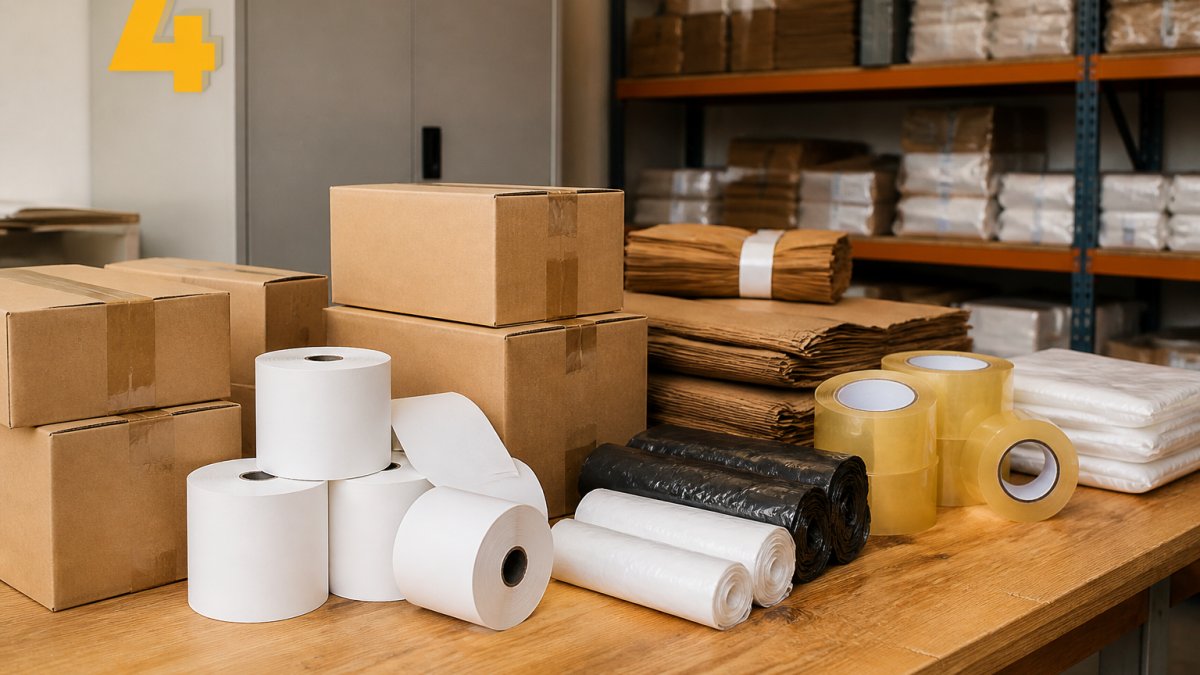
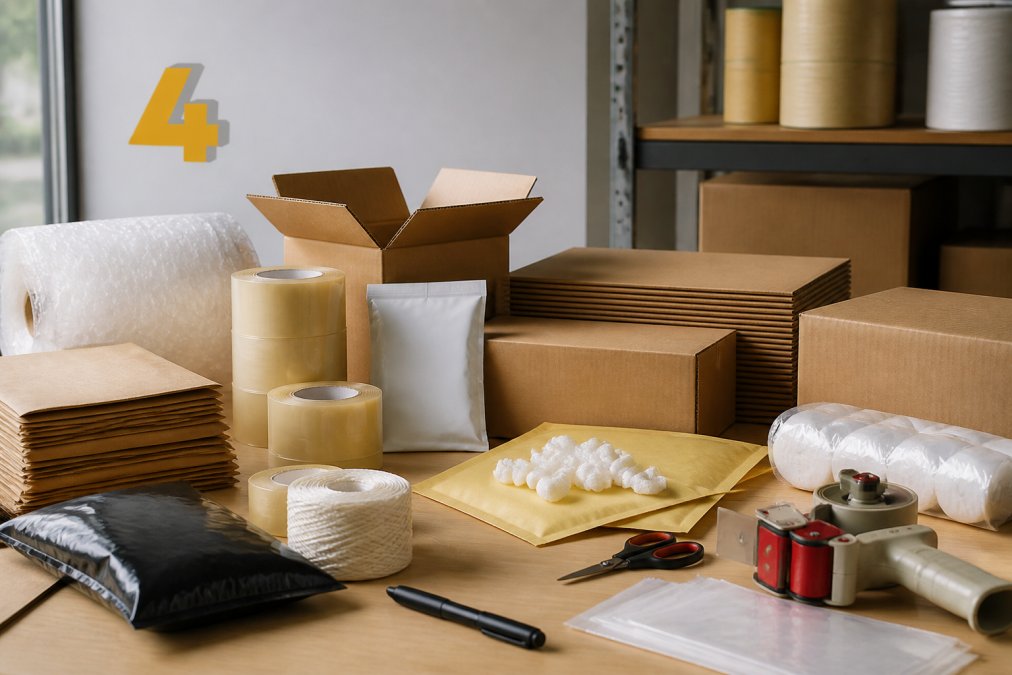
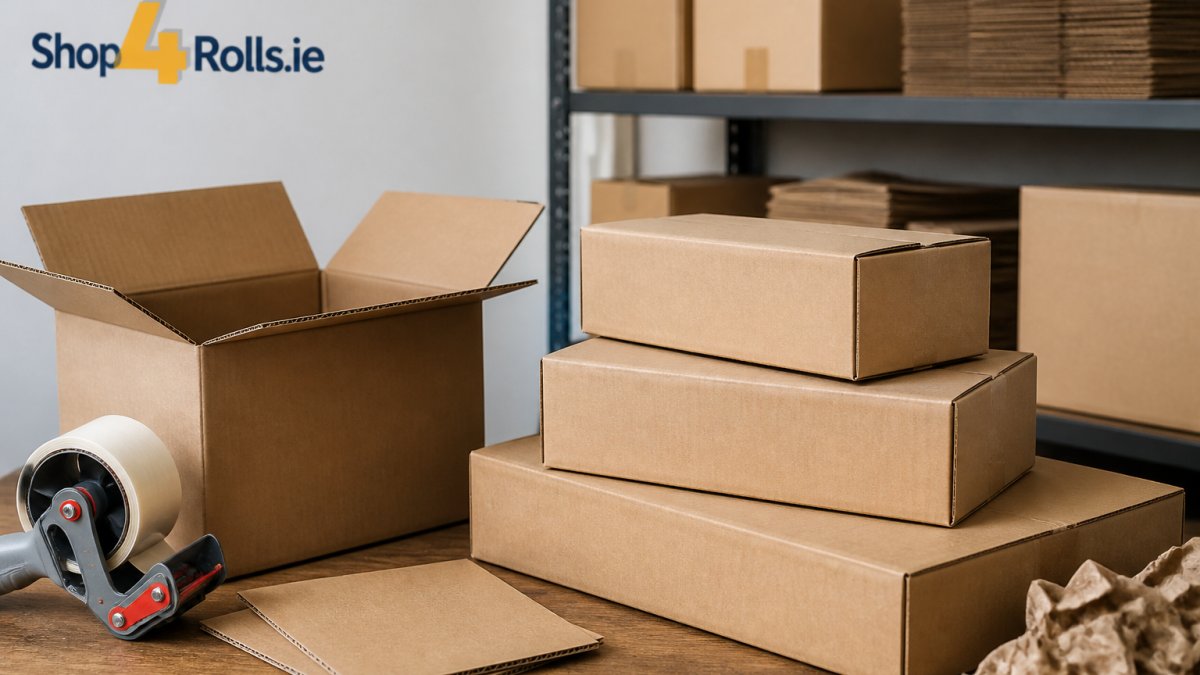
Shop4Rolls.ie is the strongest pick for most small businesses because it combines cheap shipping boxes with everything else you restock weekly. The purpose-built warehouse holds over 3,000 products, from corrugated cardboard boxes and Jiffy bags to till rolls and card machine receipt rolls, so one order covers your whole operation. The lowest price guarantee and reliable stock availability mean you are not chasing three suppliers to fill one shelf.
Pros and Cons
- Pros: One-stop shop for retail packaging supplies; lowest price guarantee; over 3,000 products in stock; phone support from a real team; cash and carry combined with online ordering.
- Cons: Pricing varies by quantity, so you need to check the site for current rates rather than assume a flat bundle price.
2. Amazon.ie: Fast Standard Boxes With Fluctuating Prices
Amazon.ie suits businesses that need standard-sized boxes quickly and without a contract. Bulk packs of corrugated cardboard boxes are easy to find, customer reviews help you judge durability before buying, and delivery is fast. The catch is price volatility: the same 40-pack can cost noticeably more one month to the next as demand shifts, and quality varies between third-party sellers.
Pros and Cons
- Pros: Rapid delivery; easy to compare sellers; no minimum order.
- Cons: Prices fluctuate; inconsistent quality across sellers; no dedicated account support.
3. Uline: Exact Sizes and Heavy-Duty Board at a Higher Cost
Uline carries the widest range of box sizes and styles of any supplier here, with detailed specifications for every box type. If you ship awkward items and need an exact dimension in double-wall board, Uline almost certainly stocks it. The trade-off is cost: shipping charges sting on small orders, and per-unit prices sit above budget alternatives. Best reserved for businesses with specific sizing needs and steady volume.
Pros and Cons
- Pros: Unmatched size range; reliable quality control; fast dispatch from regional centres.
- Cons: Higher shipping costs on small orders; pricier than budget-tier suppliers.
4. Staples: Convenient Retail Boxes for Mixed Office Orders
Staples works when you are already buying office stationery and want to add a few boxes to the same order. Standard sizes are available for delivery or in-store pickup, quality is consistent, and frequent promotions help on bulk buys. The downside is retail pricing, which generally runs higher than direct wholesale suppliers, plus a limited range of specialised sizes.
Pros and Cons
- Pros: Easy local sourcing; consistent quality; convenient for mixed orders.
- Cons: Retail pricing; limited specialist sizes.
5. PackagingSupplies.com: Bulk Discounts for Dedicated E-Commerce Sellers
PackagingSupplies.com focuses purely on shipping and mailing supplies, with bulk pricing tiers and a wide variety of box styles including mailers and corrugated boxes. It suits e-commerce sellers shipping regularly who want a dedicated packaging partner.
Pros and Cons
- Pros: Deep packaging expertise; strong bulk pricing; wide style range
- Cons: International shipping costs may apply; awkward for small orders
How to Compare Wholesale Packaging Supplies on Cost Per Unit
The right way to compare wholesale packaging supplies is to calculate cost per shipped parcel, not cost per box. A cheap box that pushes a parcel into a higher volumetric band costs more across every order than a slightly pricier box that ships in a lower band. This is the gap most supplier listicles skip: they compare the price of the box, not the price of sending it.
The two weights your courier charges on
Couriers bill on whichever is greater: the parcel's actual weight or its volumetric (dimensional) weight. Volumetric weight is calculated from the box's length × width × height divided by a volumetric divisor set by the carrier. Because that divisor varies between carriers and service tiers, the same box can be charged differently depending on who you ship with. Always confirm the current divisor and band thresholds with your own carrier before you commit to a bulk order, do not assume a figure you read online still applies.
Run this calculation before every bulk order
- Cost per unit: Divide the pack price by the number of boxes, then add tape, void fill and label. This is your true box cost.
- Packed weight: Weigh one real order in the candidate box, fully packed, not the empty box.
- Packed dimensions: Measure the external dimensions of the packed box, not the flat size.
- Volumetric weight: Apply your carrier's divisor to those dimensions and compare it against the packed actual weight.
- Band check: Identify which band the greater of the two weights falls into, and what that band costs.
- Total per parcel: Add box cost, packing materials and postage. That figure is what you are really comparing.
Standardised sizing pays twice
Fewer box sizes means faster packing and less storage waste, but it also makes banding predictable. If you consolidate to three or four sizes that all sit comfortably inside a lower band for your typical product, you stop paying for air. A box that is 2 cm too big on every side is not a small inefficiency, multiplied across hundreds of orders it is a recurring cost.
Durability is a cost line, not a quality preference
Single-wall board suits light, non-fragile items. Double-wall protects fragile or heavy goods, but it also adds weight, which can push a parcel into a higher actual-weight band. The trade-off is real: a heavier box that prevents one damaged return may still cost less than the postage premium it adds on every other parcel. Test both against your actual product mix rather than defaulting to the thickest board.
Delivery terms to factor in
Lead times and minimum order quantities affect your working capital and your storage. A marginally cheaper box that arrives in three weeks and must be bought in pallet quantities ties up cash and shelf space. A slightly dearer box available in smaller, more frequent orders often wins on cash flow for a small operation.
Eco-Friendly Shipping Boxes That Cut Costs and Waste
Eco-friendly shipping boxes often cost less overall because they use less material and reduce returns from damage. Choosing recyclable materials and right-sized boxes cuts both waste and dimensional weight charges, and customers notice a tidy, recyclable parcel. But "eco-friendly" is a claim, not a specification, and most guides never explain what the labels actually mean. That is the gap this section fills.
What the certifications actually tell you
- FSC certification: The Forest Stewardship Council certifies that the fibre in a paper or board product traces back to responsibly managed forests. For a small business, an FSC label is a verifiable, third-party claim you can put on your packaging page, it is not self-declared marketing.
- Recycled content: This describes how much of the box's fibre came from recovered material rather than virgin pulp. Look for a stated percentage rather than a vague "recycled" badge, because the figure is what backs the claim.
- Recyclability: A box being recyclable in principle is different from being recyclable in your local collection stream. Confirm what your waste collection actually accepts before advertising it.
Why this matters for brand image
Customers increasingly read packaging as a signal of how a business operates. A verifiable certification gives you something concrete to say; a vague green claim invites scepticism and, in some markets, regulatory scrutiny of environmental statements. If you are going to market your packaging as sustainable, use the certification name and the recycled-content figure, not adjectives.
Practical ways to cut both cost and waste
- Right-size first: A box that fits snugly needs less protective cushioning, which cuts both material cost and volumetric weight.
- Recyclable materials: Paper tape and cardboard void fill recycle with the box, so the whole parcel goes into one stream.
- Reuse inbound boxes: Clean supplier boxes can go straight back out for suitable orders, provided they are structurally sound and free of old labels.
- Avoid over-boxing: Oversized boxes waste void fill, add volumetric weight and look careless to the customer.
- Check local rules: Confirm recycling and waste guidance with MyWaste Ireland's waste guide.
- Verify claims: Look for recognised certification before advertising a box as sustainable, and keep the certificate reference on file.
Storage efficiency is part of the eco case
Cardboard box sizing also affects storage efficiency: flat-packed boxes stack tighter and free up shelf space in a small stockroom. Fewer, better-chosen sizes mean less cardboard sitting idle and less chance of damaged stock from poor stacking. For businesses restocking weekly, that saved space is a real cost saving, and less wasted board is less waste full stop.
Frequently Asked Questions
What is the cheapest shipping box I can buy for a small business?
The cheapest option per unit is usually a single-wall corrugated box bought in bulk, since the cost per box drops sharply once you order in larger quantities. Prices depend on size, board grade and pack quantity, so it is worth checking current pricing directly with your supplier. Standard sizes that fit your most common orders will almost always work out cheaper than custom dimensions, because you avoid waste and reduce the void fill you need inside each parcel.
Are double-wall boxes necessary for small e-commerce items?
For light, non-fragile items, single-wall boxes are usually enough and cost less per unit. Double-wall board adds crush resistance, which matters for heavier goods, stacked parcels in transit, or anything fragile. If you ship glassware, ceramics or electronics, the extra cost of double-wall protection is often cheaper than replacing a damaged order. Match the board grade to what you actually send rather than defaulting to the heaviest option for everything.
How do box dimensions affect my parcel delivery costs?
Couriers charge on either actual weight or dimensional weight, whichever is greater. Dimensional weight is calculated from the length, width and height of your parcel, so an oversized box with empty space can cost more to send than a smaller box holding the same product. Choosing the right box dimensions and trimming void fill is one of the simplest ways to reduce delivery charges across every order you fulfil.
Where can I buy wholesale packaging supplies in bulk?
Wholesale packaging supplies are available from dedicated packaging suppliers, general marketplaces and office retailers, but the cost per unit and delivery reliability vary a lot between them. A supplier with a local warehouse tends to offer faster restocking and more consistent stock on the sizes you use weekly. Compare the total landed cost, including delivery and any minimum order value, rather than just the headline box price.
Do I need to follow postal regulations when choosing shipping boxes?
Yes. An Post and the courier networks you use set rules on parcel dimensions, weight limits and labelling, and a box that falls outside those limits can be refused or surcharged. Keep packaging sturdy enough to protect contents in transit and make sure labels are clearly attached and scannable. Checking the current size and weight thresholds before you buy a new box size saves rejected parcels and unexpected fees later.
Small businesses rarely lose money on the box itself; they lose it on postage bands, damaged stock and time spent juggling suppliers. Shop4Rolls.ie solves all three by stocking over 3,000 packaging and operational products, from cheap shipping boxes to till rolls, behind a lowest price guarantee and reliable stock availability, with a customer care team that answers the phone. Get started with Shop4Rolls.ie and restock your packaging and everyday supplies in one quick order.