 listicle
Benefits of Bulk Buying Retail Consumables for Shops
Table of Contents
- 1. Lower Unit Costs and Real Purchase Price Savings
- 2. Cutting Shipping, Delivery and Handling Costs Through Order Consolidation
- 3. Time Savings and Fewer Orders: The Hidden Operational Win
- 4. What to Buy in Bulk: Retail Consumables by Category
- 5. Understanding Minimum Order Quantity and Supplier Negotiation
- 6. How to Calculate Reorder Levels and Manage Inventory for Retailers
- 7. Cash Flow Management for Small Businesses: Balancing Bulk Buys
- 8. Risks and Trade-Offs: When Not to Buy in Bulk
- Where Bulk Buying Pays Off
- Frequently Asked Questions
Last Updated: October 12, 2026
1. Lower Unit Costs and Real Purchase Price Savings
Bulk buying retail consumables is the practice of ordering everyday operational stock, such as till rolls, receipt paper and packaging, in larger quantities to reduce the cost of each individual unit. For most shops, the appeal is straightforward: the more you order at once, the less you pay per item. This guide from Shop4Rolls.ie breaks down where the real savings come from and where they quietly disappear.
The headline benefit is a lower purchase price per unit. Suppliers price by volume, so a single box of till rolls costs more per roll than a full carton. That gap is the volume discount, and it compounds across everything you restock regularly.
How Volume Discounts and Per-Unit Pricing Work
Suppliers set a cost per unit that falls as order size rises, because larger runs spread their own fixed costs further. A bulk discount is simply that reduced rate applied at a set quantity. The mistake most buyers make is comparing shelf price instead of unit cost. A cheaper-looking box of 20 rolls can cost more per roll than a carton of 100.
The catch is that savings only count if you actually use the stock. Buy more than you can sell through, and you have tied up cash rather than saved it. We cover that trade-off in section 8.
2. Cutting Shipping, Delivery and Handling Costs Through Order Consolidation
Consolidating orders is the second lever, and it is the one retailers overlook most. Every separate delivery carries its own shipping costs, delivery costs and handling costs, whether those are charged directly or built into the price.
Order consolidation means combining what you need into fewer, larger deliveries. Fewer orders means fewer delivery charges, less admin and less time spent receiving and checking stock. It also cuts packaging costs and reduced packaging waste, since one large shipment uses less outer packaging than several small ones.
- One delivery instead of four: lower transport cost per item
- Less time booked in for receiving and checking
- Fewer invoices to process and reconcile
- Less cardboard and wrapping to dispose of
The environmental angle is real too. Fewer, fuller deliveries mean a lower environmental impact per unit moved, which matters if you publicise your sustainability commitments.
3. Time Savings and Fewer Orders: The Hidden Operational Win
The benefit that rarely shows on an invoice is time. Purchasing efficiency improves sharply when you place one order a month instead of four or five, and that recovered time is time savings you can spend running the shop.
Consider what each order actually costs you: checking stock, logging in, building a purchase order, chasing delivery, checking it in, filing the paperwork. Multiply that by every supplier and every week. Bulk buying collapses that routine into a single task.
Fewer orders also means fewer opportunities for something to go wrong. Every delivery is a chance for a missing item or a wrong size. Consolidate, and you cut the number of times your staff have to stop selling and sort out a supply problem.
4. What to Buy in Bulk: Retail Consumables by Category
Not every consumable is worth buying in volume. The ones that pay off are high-use, non-perishable and consistent, which is why retail consumables split neatly into a few reliable categories.
Till Rolls and Card Machine Receipt Rolls
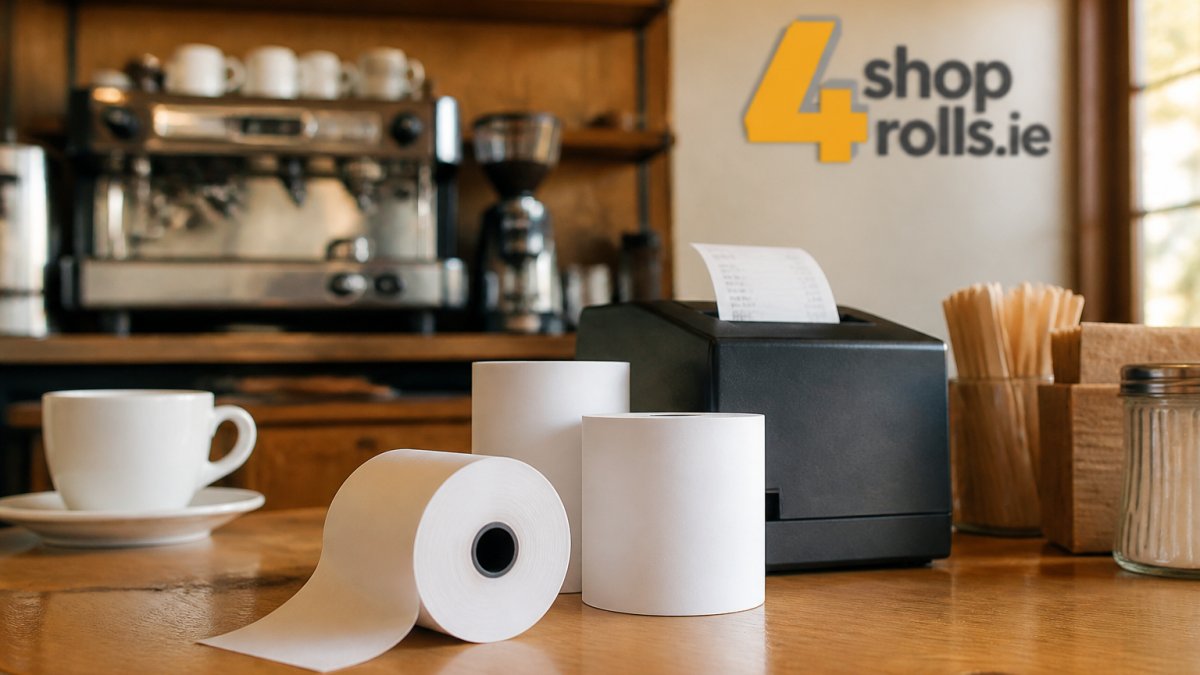
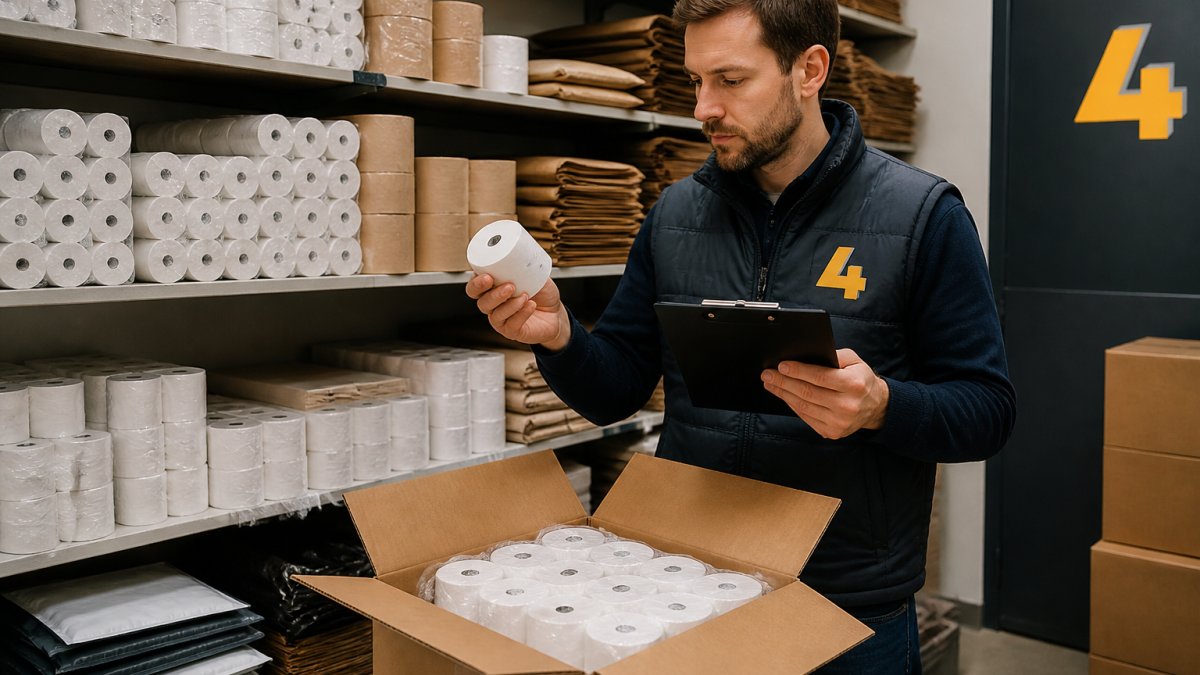
Till rolls and card machine receipt rolls are the clearest case for bulk buying. They are used every single day, they do not expire, and running out mid-shift stops you trading. Buying these in cartons keeps stock availability steady and drops your cost per unit on the item you get through fastest.
The one thing to get right is size. Card machine rolls vary by terminal, so confirm the width and roll diameter before ordering in volume. Ordering the wrong size in bulk is an expensive mistake.
Packaging Supplies: Jiffy Bags, Polythene Bags and More
Packaging supplies such as Jiffy bags, polythene bags and mailing envelopes are the second strong category. They are lightweight, they store easily, and their price falls noticeably at higher quantities. For e-commerce sellers, these are business supplies you will always need, so buying in volume smooths both cost and supply.
5. Understanding Minimum Order Quantity and Supplier Negotiation
Minimum order quantity is the smallest amount a supplier will sell at a given price, and it is the gate you have to pass to unlock wholesale rates. Understanding it is the difference between paying retail and paying trade.
When you know your real usage, you can negotiate from a position of strength. Supplier relationships and negotiating use improve once you are a predictable, repeat buyer rather than an occasional one. Ask about volume discount tiers, and about whether a bulk discount applies at the next quantity break up.
| What to ask | Why it matters |
|---|---|
| Minimum order quantity | Sets the entry point for trade pricing |
| Volume discount tiers | Shows where the next price break sits |
| Lead time | Tells you how far ahead to order |
| Stock availability | Confirms they can supply consistently |
A one-stop supplier removes a layer of this entirely. Sourcing till rolls, receipt paper and packaging from one place means one minimum order quantity, one delivery and one relationship to manage.
6. How to Calculate Reorder Levels and Manage Inventory for Retailers
Inventory management for retailers comes down to one number: your reorder point. Get it right and you never run out and never over-order.
How to calculate reorder levels: multiply your average daily usage by your supplier's lead time, then add a safety margin. If you use 10 rolls a day and delivery takes 3 days, you need 30 rolls just to cover the wait, plus a buffer.
Demand Forecasting and Safety Stock
Demand forecasting means looking at your own sales history to predict what you will get through. Safety stock is the extra you hold to absorb a busy spell or a delayed delivery. Together they protect stock levels without leaving you with overstocking.
- Track usage weekly, not by memory
- Set the reorder point at lead-time usage plus safety stock
- Review after any unusually busy or quiet period
- Watch inventory turnover so stock does not sit too long
7. Cash Flow Management for Small Businesses: Balancing Bulk Buys
Cash flow management for small businesses is where bulk buying can bite. A large order looks like a saving on paper, but it is cash leaving your account today for stock you may not use for months.
The fix is to match order size to your working capital. Bulk buying should free up money over time, not starve you of it in the short term. If a big order would leave you short before your next busy period, buy a smaller quantity at a slightly higher unit cost and protect your cash flow.
- Buy in volume only on items you get through quickly
- Stagger large orders across the year, not all at once
- Keep a buffer of cash for the unexpected
- Compare the discount against the cost of tying up that money
A larger profit margin comes from lower costs, but only if you can still pay your bills while the stock sits on the shelf.
8. Risks and Trade-Offs: When Not to Buy in Bulk
Bulk buying is not always the right call, and pretending otherwise costs retailers money. The honest answer is that it suits fast-moving, non-perishable stock and works against you everywhere else.
The main risks are storage capacity and warehouse space, both of which are limited in most shops. Stock that will not fit gets stacked in aisles, which is a safety problem and a nuisance. Product quality and product consistency matter too: if a supplier changes a roll's size or paper weight, you are stuck with a large batch you cannot use.
Skip bulk buying when:
- The item is slow-moving or seasonal
- You have no dry, secure storage for it
- You are unsure of the exact specification
- The order would strain your cash flow
- The product could change or be discontinued
Where Bulk Buying Pays Off
The challenge is not knowing that bulk buying saves money. It is finding a supplier who makes the savings real, without leaving you short on storage, cash or the exact stock you need.
Shop4Rolls.ie exists for exactly that. We carry Ireland's largest range of till rolls and card machine receipt rolls, backed by our lowest price guarantee and reliable stock availability from our purpose-built warehouse. With over 3,000 products, quick online ordering and a customer care team that actually answers the phone, restocking becomes one simple task instead of five.
Get started with Shop4Rolls.ie and keep your business moving forward.
Frequently Asked Questions
Why is purchasing in bulk cheaper?
Purchasing in bulk reduces the unit cost because suppliers spread fixed costs like order processing, packing, and delivery across a larger quantity. You also qualify for volume discounts and lower per-unit pricing. For example, buying 50 till rolls at once typically costs less per roll than buying 10. This directly improves your profit margin on every sale that uses those consumables.
What are the risks of buying retail supplies in bulk?
The main risks are overstocking, tying up cash flow, and storage constraints. If demand drops, you could be left with slow-moving stock. Perishable or seasonal items are especially risky. Bulk buying also increases working capital tied up in inventory. To manage this, calculate reorder levels accurately, forecast demand, and only bulk-buy items with consistent turnover like till rolls or packaging.
How can a retailer compare bulk prices with smaller orders?
Compare the total cost of ownership, not just the headline price. Include delivery charges, handling costs, and any minimum order quantity requirements. Calculate the cost per unit for each option. Factor in storage and cash flow impact before deciding.
Which retail consumables are best to buy in bulk?
Items with steady, predictable demand and long shelf life are ideal: till rolls, card machine receipt rolls, Jiffy bags, polythene bags, and thermal printer labels. These are used daily across most retail and hospitality businesses. Avoid bulk-buying seasonal or trend-dependent items. Focusing on core operational supplies ensures you get volume discounts without risking dead stock.