 ultimate-guide
Bulk Packaging Supplies for Small Business: 2026 Guide
Table of Contents
- The 7 Packaging Categories Every Small Business Needs
- Wholesale Cardboard Boxes Ireland: Sizes, Grades, and Buying Smart
- Eco-Friendly Packaging Solutions for Small Business
- Packaging Cost Reduction Strategies That Work
- How to Choose a Bulk Packaging Supplies Supplier
- The Bottom Line: Build a Packaging System That Scales
- Frequently Asked Questions
Last Updated: September 7, 2026
Every euro spent on packaging is a euro that isn't going toward inventory, marketing, or payroll. Yet many small business owners treat packaging as an afterthought, buying single rolls of tape and boxes by the handful, quietly draining margins through higher per-unit costs and the risk of running out of stock. Buying bulk packaging supplies for small business operations protects your bottom line and scales with you as you grow.
The core principle is straightforward: the more you buy at once, the less you pay per unit, and the fewer times you interrupt your day to reorder. This guide breaks down the categories you need, the sustainability questions worth asking, and the cost-reduction tactics that deliver measurable savings.
The 7 Packaging Categories Every Small Business Needs
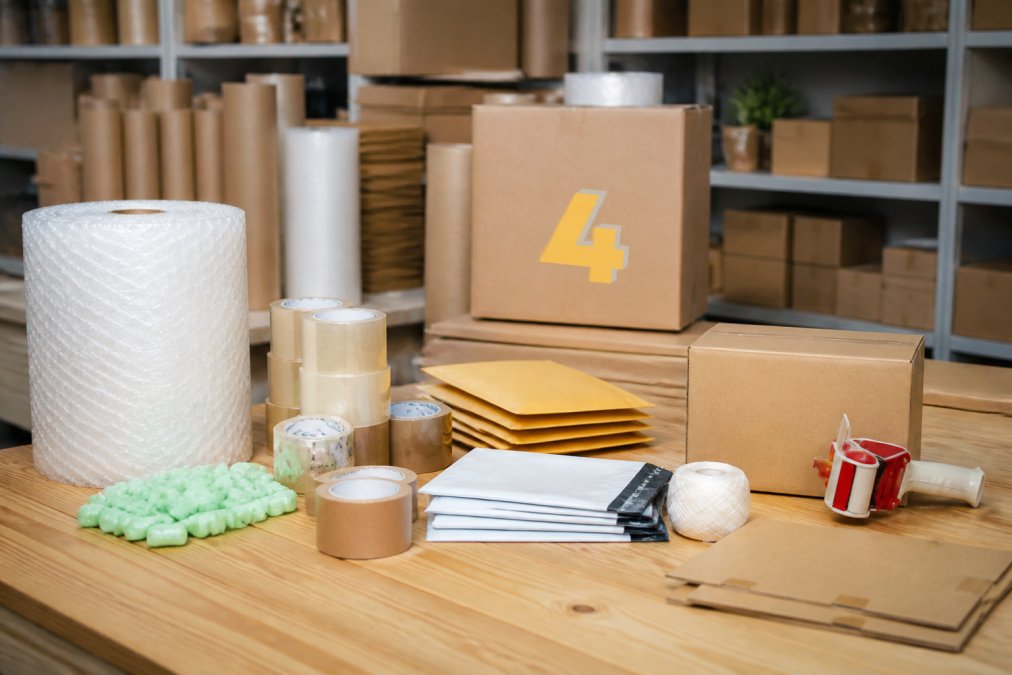
Packaging is a system of seven distinct categories that work together to protect your products, present your brand, and move goods efficiently. Most businesses need at least four from day one, and nearly all will use all seven as they scale.
Cardboard Boxes and Shipping Cartons
Corrugated boxes are the backbone of almost every shipment. They come in a range of strengths, measured by the "burst strength" or edge crush test, and in standard double-wall or single-wall construction. Single-wall boxes handle items up to roughly 10-15 kg, while double-wall suits heavier or more fragile goods. The real cost saving comes from buying in quantity and storing flat.
Mailing Bags, Envelopes, and Protective Void Fill
For clothing, documents, and non-fragile items, mailing bags and polythene envelopes are lighter and cheaper to ship than boxes, and they reduce dimensional weight, lowering courier fees. Bubble wrap, kraft paper, and other void fill materials protect contents from movement. A common mistake is overpacking with excessive void fill, which adds weight and cost; match the protective layer to the fragility of the product.
Tapes, Stretch Film, and Pallet Wrap
Custom printed tape seals your boxes and markets your brand in one move, while standard adhesive tape is purely functional. Stretch film and pallet wrap are essential for consolidating multiple boxes onto a pallet for freight shipping or storage. Buying these in bulk is particularly important because they have a long shelf life and are used consistently across every order you send out.
Wholesale Cardboard Boxes Ireland: Sizes, Grades, and Buying Smart
The Irish packaging market offers a wide selection of wholesale cardboard boxes Ireland businesses can draw on, but the choice comes down to three variables: size, grade, and quantity. Size must match your product with minimal empty space, grade must match the fragility and weight of the contents, and quantity should reflect monthly shipping volume plus a safety margin of roughly 20% to cover seasonal spikes and supplier delays.
Think in terms of monthly usage rather than annual projections. A business shipping 100 orders per week will use roughly 400-500 boxes per month. Ordering a three-month supply balances unit savings against storage space.
| Packaging Category | Typical Use | Buying Strategy |
|---|---|---|
| Corrugated boxes | Heavy or fragile items | Order 3-month supply, store flat |
| Mailing bags | Clothing, documents | Buy by the roll or pack of 100+ |
| Void fill (bubble wrap, kraft) | Protecting items in transit | Match quantity to box volume |
| Tape & stretch film | Sealing, pallet consolidation | Long shelf life, buy generously |
Eco-Friendly Packaging Solutions for Small Business
Consumer demand for eco-friendly packaging solutions for small business operations is now a mainstream expectation. In Ireland, sustainability is also a legal obligation. Under the Waste Management (Packaging) Regulations 2014, if your business places more than 10 tonnes of packaging onto the Irish market each year, or has a turnover above €1 million, you must register with the EPA and pay an annual environmental levy. Even below that threshold, your supplier's compliance status affects your own reporting obligations.
What the Regulations Actually Mean for Your Buying Decisions
The regulations operate on Extended Producer Responsibility, pushing the cost of collecting and recycling packaging waste back onto the businesses that put it into circulation. Part of what you pay a supplier already includes their compliance fees. Ask any potential supplier whether they are registered with a compliance scheme such as Repak; one who is not is likely undercutting prices by avoiding these legal fees, and an audit could disrupt your supply chain overnight.
For your own business, track the tonnage of packaging you purchase. Keep a simple spreadsheet recording the weight of each packaging category you buy each month. If you are approaching the 10-tonne threshold, factor the registration cost (typically a few hundred euros) into your overhead calculations before scaling up bulk ordering.
The Label Trap: What Irish Kerbside Recycling Actually Accepts
The most common mistake is choosing packaging based on symbols that do not work in the Irish waste system. The chasing arrows symbol is a US icon with no legal meaning in Ireland. The Green Dot indicates the producer has paid the recycling fee, but even that does not guarantee the material is recyclable locally.
Irish kerbside collections vary by county. Most accept rigid plastics and clean paper and cardboard, but many do not accept flexible plastics like polythene mailing bags, even if labelled recyclable. Before ordering compostable mailers or biodegradable void fill, ask your waste contractor: Do you accept flexible plastics in the kerbside bin? And compostable packaging in the organic waste stream? In most counties the answer to both is no, meaning those premium eco-products will end up in general waste.
A Practical Framework for Genuinely Sustainable Choices
Rather than chasing certifications, build your eco-strategy around three verifiable criteria:
-
Material reduction first. The most sustainable box is the one you do not use. Right-sizing your packaging to eliminate void fill reduces material use and shipping weight simultaneously. A business switching from a 400mm x 300mm x 300mm box to a 350mm x 250mm x 200mm box for the same product typically reduces corrugated board usage by roughly 30%.
-
Mono-material preference. Packaging made from a single material (e.g., pure cardboard, pure polythene) is far easier to recycle than multi-layer laminates that combine paper with plastic film. Choose single-material options even if a multi-layer alternative offers slightly better protection.
-
Verifiable supply chain claims. Ask your supplier for a copy of their environmental policy and their Repak registration number. A legitimate supplier will provide both without hesitation. If they cannot, treat their eco-claims with suspicion.
The Cost Reality of Going Green
Sustainable packaging typically costs 10-20% more per unit, but that premium is often offset by lighter shipping costs and customer retention gains. Irish consumers report a willingness to pay slightly more for genuinely sustainable packaging, greenwashing is quickly called out on social media, and the reputational damage far outweighs any savings.
The upcoming EU Packaging and Packaging Waste Regulation (PPWR) will replace the current directive and is expected to tighten requirements around recyclability, recycled content, and reusable packaging by 2030. Businesses that build material reduction and mono-material choices into their packaging system now will be ahead of the curve.
Packaging Cost Reduction Strategies That Work
Packaging cost reduction strategies fall into two camps: reducing cost per unit and reducing cost per shipment. The first comes from bulk purchasing and negotiation; the second from right-sizing boxes, reducing dimensional weight, and eliminating unnecessary void fill. The second often delivers larger savings because courier fees frequently exceed the cost of the packaging itself.
Audit your last 50 shipments, noting box size, void fill, and shipped weight. You will likely find some used an oversized box or excessive padding. Standardising to two or three box sizes that closely fit your most common products reduces material costs and speeds up packing.
Supply chain reliability is the hidden factor in cost reduction. A cheaper supplier who delivers late forces you to buy emergency stock at full retail prices. A dependable supplier with nationwide delivery and reliable stock protects your margins more than a marginally cheaper box ever will.
How to Choose a Bulk Packaging Supplies Supplier
The right supplier for your bulk packaging supplies for small business needs combines competitive wholesale pricing with reliable stock and fast delivery. In a market where dozens of Irish distributors compete, the difference between a good supplier and a costly mistake comes down to five criteria most buyers never check.
Criterion 1: Stock Depth and Availability
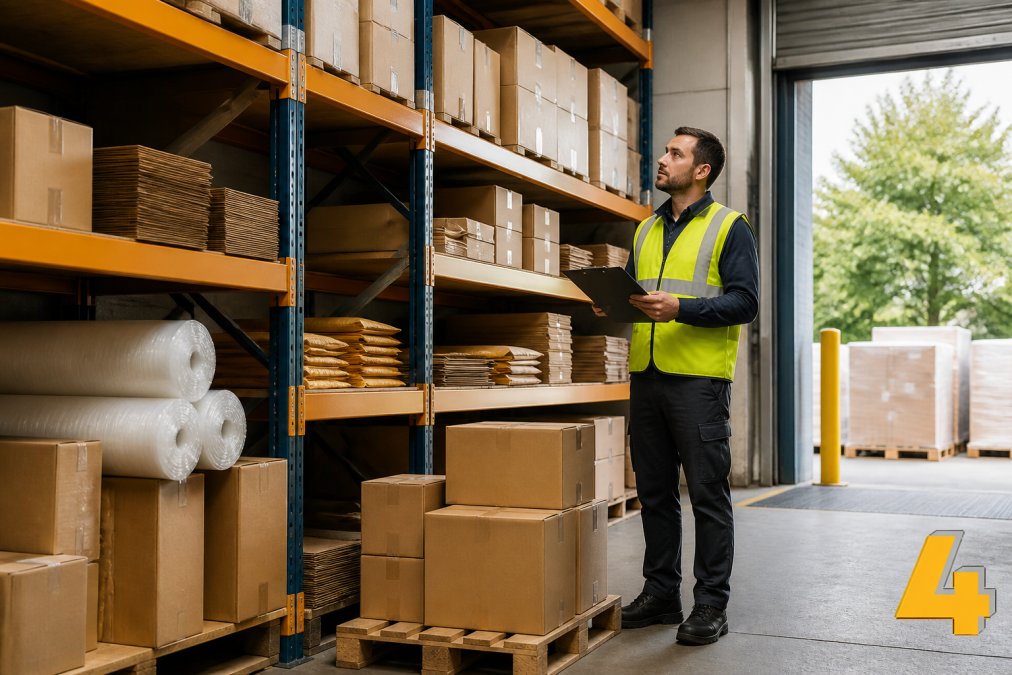
A supplier's website may list 3,000 products, but what matters is what is in their warehouse today. Ask directly: "What is your current stock level on the specific box sizes I need?" A supplier with deep inventory across corrugated boxes, mailing bags, tapes, and void fill can consolidate orders into a single delivery; one who dropships or relies on backorders leaves you juggling partial deliveries.
Ask about their reorder trigger. The best suppliers monitor their own stock and proactively notify you when your regular items are running low, preventing the emergency "we ran out of boxes on Monday morning" scenario.
Criterion 2: Delivery Reliability and Geographic Coverage
Nationwide delivery is a marketing phrase; reliable delivery is an operational fact. Look for a supplier with its own fleet or a dedicated courier with tracked, time-specific windows, and ask for their on-time delivery rate over the past quarter. A supplier that cannot provide this number is not tracking it.
Consider your location. A Dublin supplier may offer next-day delivery to Cork, but that depends on courier cut-off times that may not align with your packing schedule. Ask about the latest order time for guaranteed next-day delivery to your county; a 4pm cut-off is significantly more useful than a 12pm one during peak periods.
Criterion 3: Total Cost Transparency
Unit price is the number suppliers advertise, but it is rarely the number you pay. Before comparing quotes, ask for a complete breakdown including:
- Delivery fees (and whether they are waived above a minimum order value)
- Minimum order quantities per product line
- Pallet charges for large orders
- Restocking fees for returns
- VAT treatment (packaging is generally subject to the standard 23% Irish VAT rate)
A supplier offering boxes at €0.85 per unit with free delivery over €200 may work out cheaper than one offering €0.78 per unit with a €15 delivery fee on every order. Calculate your total landed cost per unit before deciding.
Criterion 4: Quality Consistency
Packaging quality varies between manufacturers, even within the same grade. A batch with weak creases or inconsistent dimensions slows down packing and increases damage risk. Ask which manufacturers suppliers source from and whether they perform incoming quality checks; a dedicated quality control process is worth a slightly higher unit price.
Request samples before a large order. Most reputable suppliers send free samples of boxes, mailing bags, and tapes. Test them with your actual products, pack a box, seal it, and drop it from waist height. This five-minute test reveals more than any specification sheet.
Criterion 5: Customer Service Accessibility
When a delivery fails on a busy Monday morning, you need a human who can fix it. Test customer service before you need it: call during business hours and note the wait, email support and measure the response time. A team that answers within three rings and resolves issues on the first call is worth a premium.
A Practical Supplier Scorecard
To make the comparison concrete, score each potential supplier from 1 to 5 on each of the five criteria above. Multiply the scores by the following weights and add them up:
| Criterion | Weight | Why It Matters |
|---|---|---|
| Stock depth | 25% | Prevents backorders and partial deliveries |
| Delivery reliability | 25% | Directly impacts your ability to ship on time |
| Total cost transparency | 20% | Hidden fees erode bulk savings |
| Quality consistency | 15% | Poor materials cause damage and returns |
| Customer service | 15% | Critical when problems arise |
A supplier scoring above 4.0 out of 5 is worth building a relationship with. Below 3.5, the risk of disruption outweighs any unit price savings. This scorecard takes 30 minutes to complete but prevents a year of frustration with the wrong supplier.
The Relationship Factor
Beyond the scorecard, consider whether the supplier treats you as a long-term partner. The best offer volume-based pricing that improves as your order frequency grows and proactively suggest alternatives when your shipping profile changes. A supplier who contacts you before your usual reorder date prevents costly gaps, a relationship worth more than a few cent per box saved from a cheaper, less dependable alternative.
The Bottom Line: Build a Packaging System That Scales
Bulk buying is a system, not a one-off purchase. Businesses that get it right start with a clear picture of monthly shipping volume, choose standardised packaging across a few core categories, and build a relationship with a supplier who can grow with them. That system keeps your packing station efficient, courier costs predictable, and products protected.
At Shop4Rolls.ie, we stock over 3,000 packaging and operational supplies from our purpose-built warehouse, with a lowest price guarantee and a customer care team that answers the phone. Whether you need corrugated boxes, jiffy bags, polythene bags, or till rolls for your card machines, the goal is the same: one reliable supplier for hassle-free restocking at competitive wholesale prices.
Frequently Asked Questions
What is the cheapest way to get packaging supplies?
Buying in bulk is the most direct way to lower unit costs. Instead of purchasing individual boxes or rolls of tape as needed, consolidate orders for common items like corrugated boxes, mailing bags, and void fill. This reduces the price per unit and cuts delivery frequency. Focus your budget on high-use essentials and avoid over-buying specialist items that sit in storage.
How do I balance eco-friendly packaging with wholesale costs?
Start by switching high-volume items to recyclable materials. Look for corrugated boxes and kraft paper void fill made from recycled content. These often cost close to virgin materials when bought wholesale. Also check that the packaging is recyclable in Irish kerbside collections, which helps you meet customer expectations without a major cost increase.
What are the benefits of using a local Irish packaging supplier?
A local supplier offers faster delivery, which means you can hold less stock and free up storage space. You also get support during Irish business hours, and you avoid customs delays or currency issues that can come with importing. Consistent lead times from a local warehouse make it easier to plan reorders and maintain a steady supply chain.
How can small businesses optimise their packaging storage space?
Store flat-pack boxes on pallets and keep them off the floor to prevent moisture damage. Use vertical space with shelving for tapes and smaller items. Order more frequently for fast-moving items to avoid overstocking. Keep a clear inventory list so you know what you have and what you need to reorder before you run out.
Are there specific regulations for food-grade packaging in Ireland?
Yes. Packaging that touches food must comply with EU regulations on materials in contact with food. Look for suppliers who clearly state their food-safe certifications. For takeaway packaging, you also need to follow rules on single-use plastics. Check that your chosen packaging meets these standards before you buy in volume.
How much should a small business spend on packaging supplies?
A common target is to keep packaging costs between 5% and 10% of the product's sale price, but this varies. Start by tracking what you spend per order on boxes, tape, and void fill. Review this monthly. You can often reduce costs by switching to a slightly smaller box size or a lighter-weight mailer without affecting protection.
The challenge for most small businesses is not finding packaging; it is finding a dependable, cost-effective source that keeps every category in stock. Shop4Rolls.ie combines wholesale pricing, reliable stock availability, and quick online ordering with the country's largest range of till rolls and card machine receipt rolls. Sign up now and build a packaging system that keeps your business moving forward.