 ultimate-guide
Sandwich Trays with Lids: 2026 Buying Guide
Table of Contents
- What to Look for in Sandwich Trays with Lids
- Lid Types and Secure Locking Explained
- How Many Sandwich Trays Do You Need?
- Eco-Friendly Sandwich Packaging and Recyclability
- Disposable Catering Platters for Events and Delis
- Buying Wholesale Food Presentation Trays
- Conclusion
- Frequently Asked Questions
Last Updated: October 1, 2026
What to Look for in Sandwich Trays with Lids
Choosing sandwich trays with lids starts with three specifications: base dimensions, lid type, and case quantity. Get those right and the rest of the decision falls into place quickly. At Shop4Rolls.ie, we supply food packaging to delis, cafés and event caterers, and the same questions come up every week.
The biggest mistake buyers make is ordering on appearance alone. A tray that looks generous on a product photo may be too shallow for a filled sandwich, or too flimsy to carry a full platter from a commercial kitchen to a van without flexing. Below, we break down exactly what to check before you commit to a bulk order.
Size, Depth, and Case Quantities
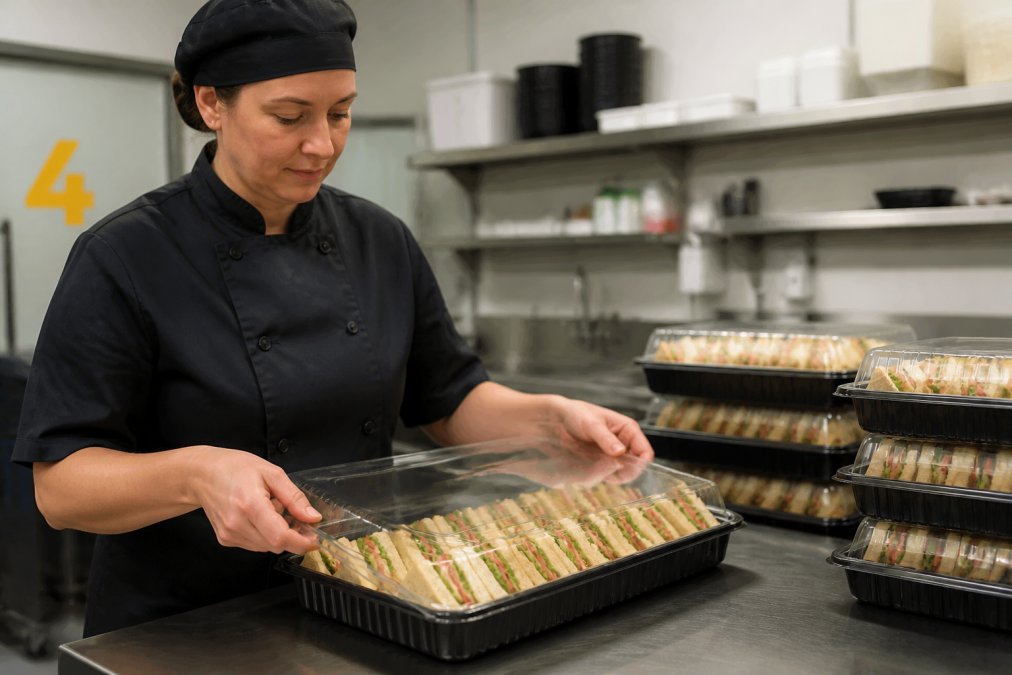
Standard rectangular sandwich trays with lids typically run in a small, medium and large format, with case sizes usually quoted in units per sleeve and sleeves per carton. Depth matters more than length: a shallow base holds a single layer of sandwiches, while a deeper platter base accommodates a double stack or a mix of wraps and rolls.
Before ordering, measure the shelf or fridge space where the tray will actually sit. A tray that fits your display but not your chiller is a wasted case.
Material and Construction
Most food service trays are made from PET or recycled plastic, both of which are food grade and rigid enough to hold their shape under load. PET gives you a clearer, more transparent finish that shows off food display; recycled plastic tends to be slightly more economical in bulk.
Check the wall thickness of the base. A thinner base bows in the middle when loaded, which is the single most common cause of lid failure in transit.
Lid Types and Secure Locking Explained
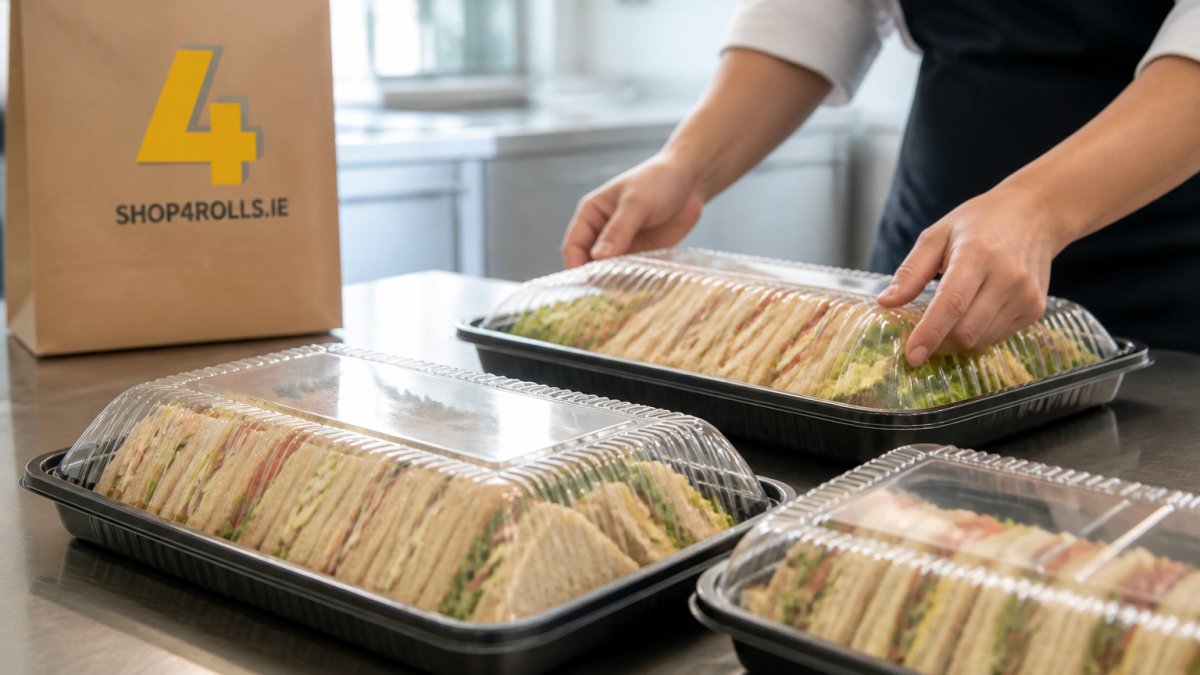
Clear lids come in three main formats: flat snap-on, domed, and tight-fitted locking lids. The right choice depends on whether the tray is travelling or sitting on a display counter.
Flat snap-on lids are the cheapest option and work well for single-layer deli range platters that stay on site. Domed lids give extra headroom for piled sandwiches and taller garnishes, which matters for event catering where presentation is judged at a glance. Locking lids use a rim that grips the base on all four sides; they cost a little more but are the only sensible choice for transportation.
The test for a secure locking mechanism is simple: fill the tray, fit the lid, and lift it by one corner. If the lid shifts, it will not survive a delivery run.
| Lid Type | Best For | Headroom | Transport-Safe |
|---|---|---|---|
| Flat snap-on | Deli counters, single layer | Low | No |
| Domed | Event catering, piled food | High | Partly |
| Tight-fitted locking | Takeaway, delivery | Medium | Yes |
How Many Sandwich Trays Do You Need?
Work from your busiest service, not your average day. Count the platters you put out on a peak Saturday, add a buffer for breakage, and multiply by the number of days between deliveries.
A practical formula for a café or deli running regular catering:
- (Peak platters per day) × (days between deliveries) + 10% buffer = minimum stock holding
If you put out 12 platters on a busy day and order weekly, that is 12 × 7 = 84, plus roughly 8 spare, so around 92 trays. Round up to the nearest full case size rather than ordering loose units; case pricing is almost always better, and you avoid running short mid-week.
For event catering, count per head instead. A generous platter serves a set number of guests, so divide your guest count by that figure and add one extra platter per table for presentation.
Eco-Friendly Sandwich Packaging and Recyclability
Eco-friendly sandwich packaging in 2026 means two things: the material is recyclable in practice, and the lid and base separate easily so they can be processed. PET is widely accepted in recycling streams, and a clean, empty tray with the film and food residue removed is far more likely to be recycled than one thrown away loaded.
The environmental comparison most guides skip is weight. Rigid reusable trays that survive dozens of wash cycles carry a higher upfront footprint but a lower one over their life than single-use alternatives, provided they are actually reused. If a tray gets used once and binned, the reusable option loses that advantage entirely.
A more useful comparison is between PET and compostable alternatives. PET is lightweight, rigid and widely recycled in kerbside and commercial streams, but it is fossil-based and its carbon footprint is tied to virgin resin production. Compostable trays, typically made from bagasse, PLA or coated board, can break down in industrial composting, but they require specific collection infrastructure, are often heavier per unit, and can contaminate dry recycling streams if mixed in. For a caterer, the practical question is not which material sounds greener, but which one your waste contractor can actually process. MyWaste Ireland's commercial food packaging guidance sets out how food service businesses should segregate packaging waste, and it is worth reading before you settle on a format.
For buyers balancing cost and sustainability, the honest answer is that material choice matters less than whether the tray is reused, recycled or landfilled. Buy the format that fits your operation, then build the washing or recycling habit around it.
Disposable Catering Platters for Events and Delis
Disposable catering platters are the workhorse of any event setup: light enough to stack by the dozen, rigid enough to carry a full sandwich selection, and cheap enough to hand over without chasing the return.
Where disposable platters fall short is heat and grease. A hot filled roll straight from the grill will soften a thin base within minutes, so let hot items cool briefly before loading. For cold deli ranges, wraps and rolls, there is no issue at all.
What most guides do not cover is weight capacity and structural integrity. A standard single-layer platter with a snap-on lid is typically comfortable up to around 1.5-2 kg of food, while a heavy-duty base with a locking rim can carry a double layer of dense sandwiches or pastries up to roughly 3-4 kg. Exceed that and the base bows, the lid lifts at the corners, and the platter fails in transit. If you are loading dense items such as filled bagels, sausage rolls or traybakes, choose a deeper base and a locking lid rather than a flat snap-on.
Sanitisation and food safety standards matter just as much for disposable formats. Single-use trays are exempt from the washing and disinfection requirements that apply to reusable equipment, but they must still be stored clean, dry and off the floor before use, and they must be food-grade and suitable for direct food contact.
Buying Wholesale Food Presentation Trays
Wholesale food presentation trays reward planning. Case size, storage footprint and reorder frequency all interact, and the cheapest unit price is worthless if the case is too big to store or the trays arrive crushed.
- Confirm the case size fits your storage shelving without crushing
- Check whether the tray is stackable empty as well as loaded
- Verify the lid and base are sold together, not separately
- Confirm reorder lead time against your busiest trading weeks
- Check the trays are food grade and suitable for direct food contact
Conclusion
The challenge with sandwich trays with lids is that the wrong format only reveals itself at the worst moment, mid-delivery with a full platter. Getting the base depth, lid type and case size right the first time avoids that entirely.
Frequently Asked Questions
What materials are best for sandwich trays with lids?
PET is the most common choice for clear lids because it is food-grade, rigid, and shows the contents clearly. Bases are often PET or recycled plastic, depending on whether you need a heavy-duty tray for transport or a lighter option for display. For eco-friendly sandwich packaging, look for trays made from recycled PET or widely recyclable mono-material plastic, which keeps the whole tray recyclable at end of life.
How many trays of sandwiches for 30 people?
As a general rule, plan for 3 to 4 sandwiches per person, which means 90 to 120 sandwiches in total. A standard large platter holds around 30 to 40 finger sandwiches, so you would need 3 to 4 trays for 30 people. If the sandwiches are the main meal rather than part of a buffet, increase to 4 to 5 trays to be safe. Always confirm portion sizes with the client before ordering.
Can sandwich trays with lids be recycled?
Many sandwich trays with lids can be recycled if they are made from a single material like PET and your local waste collection accepts rigid plastics. Trays with mixed materials, such as a PET lid on a different plastic base, are harder to recycle and may need to go to general waste. Check the recycling symbol on the tray and confirm with your waste provider what they accept in your area.
How do I ensure sandwich trays with lids are food-safe?
Only buy trays that are clearly labelled as food-grade and suitable for direct food contact. In Ireland, food businesses must follow Food Safety Authority of Ireland (FSAI) guidance on food contact materials, which means keeping records of where your packaging comes from and storing it away from chemicals or waste. Choose trays that are easy to clean or single-use, and never reuse a disposable tray if it has been damaged or held non-food items.