 ultimate-guide
Pizza Boxes Ireland: Sizes, Sustainability & Buying Guide
Table of Contents
- Choosing the Right Pizza Boxes for Your Takeaway
- Pizza Box Sizes Guide: Matching Boxes to Your Menu
- Corrugated vs. Clay-Coated: Which Board Suits Your Kitchen?
- Eco-Friendly Pizza Packaging That Customers Notice
- Food Grade Packaging Regulations Every Takeaway Should Know
- Vented Lids, Stacking and Storage: Getting More from Every Box
- How to Order Pizza Boxes in Bulk Without Overstocking
- Frequently Asked Questions
Last Updated: September 27, 2026
Choosing the Right Pizza Boxes for Your Takeaway
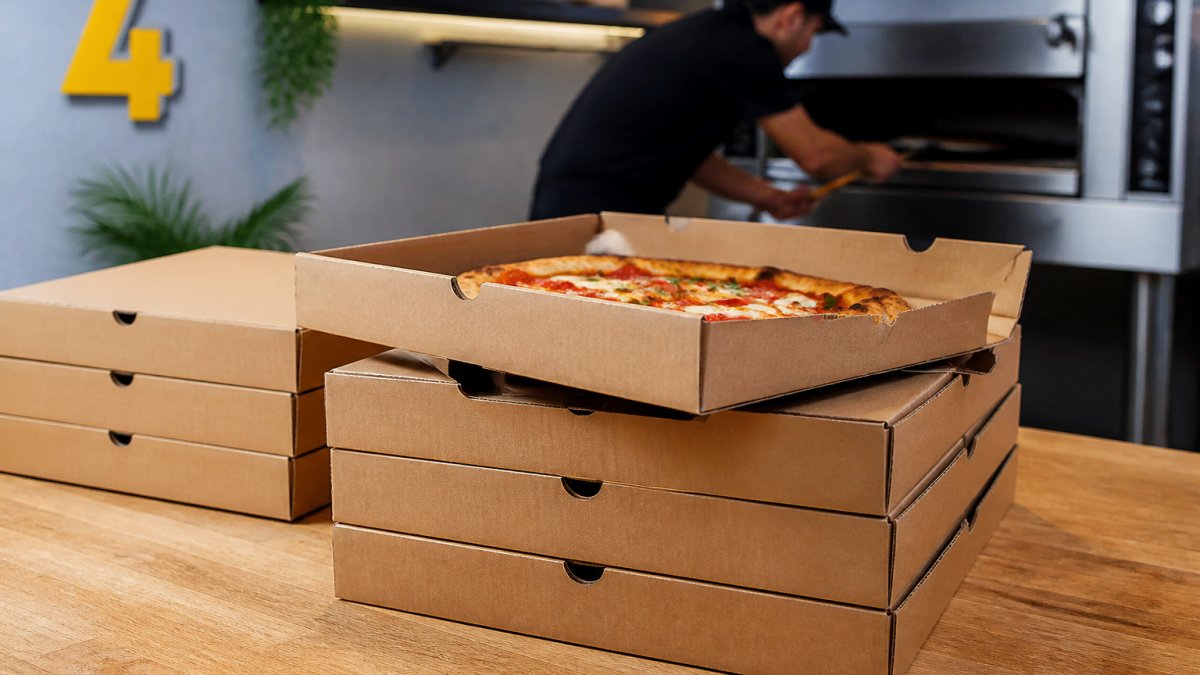
Pizza boxes are the corrugated cartons that protect, vent and carry a takeaway pizza from oven to customer, and choosing the right pizza boxes operators can rely on comes down to three variables: board grade, size and lid style. Get those wrong and you get soggy bases, crushed corners and customers who don't come back.
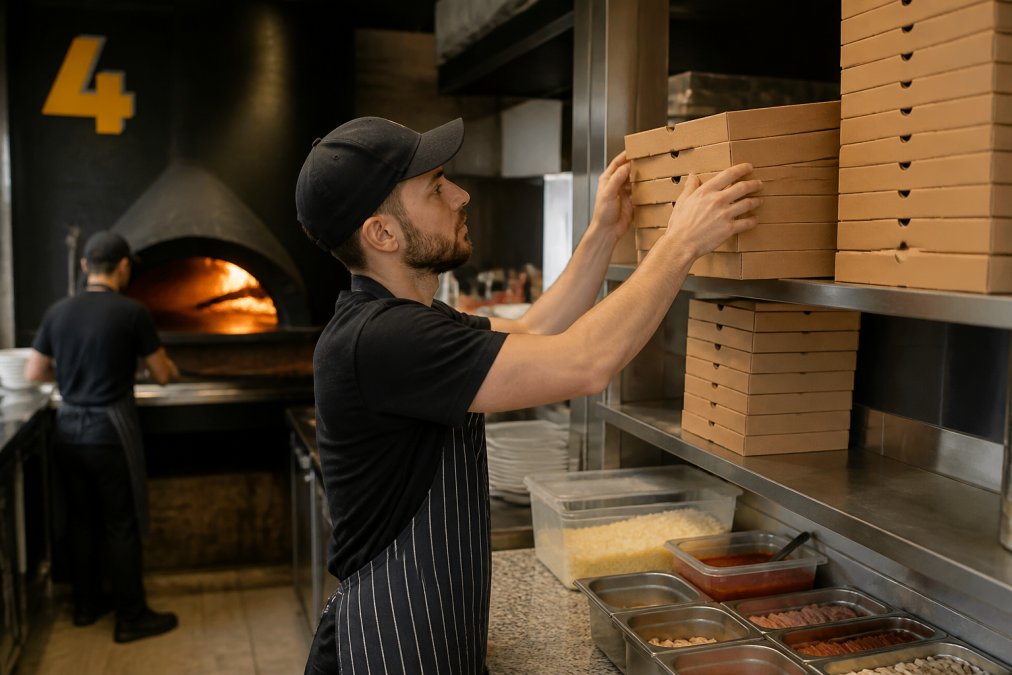
This guide from Shop4Rolls.ie covers the practical side of buying pizza boxes in bulk: matching box sizes to your menu, choosing between corrugated and clay-coated board, meeting food contact rules, and storing stock so it arrives at the counter ready to use.
The iced coffee cups and disposable drinkware you buy for the same order matter too, because a takeaway is judged as one package, not five separate items.
A common mistake is buying boxes purely on price per unit and ignoring board thickness. A thin box that folds under a stacked order costs more in complaints than it saves per hundred.
Pizza Box Sizes Guide: Matching Boxes to Your Menu
Pizza box sizes are measured by the internal square the pizza sits in, not the outer dimensions of the folded carton. A 12-inch box holds a 12-inch pizza with a small margin for the crust.
| Box Size | Typical Pizza | Best For | Notes |
|---|---|---|---|
| 7-inch | Personal | Kids' meals, lunch deals | Often paired with a small drink |
| 10 inch | Small | Single diners | Good for combo offers |
| 12 inch | Medium | Standard takeaway | The workhorse size |
| 14 inch | Large | Family orders | Needs deeper stacking clearance |
| 16 inch | Extra large | Sharing pizzas | Check oven and bag dimensions |
Two practical points most guides skip. First, always check your oven's maximum pizza diameter before you commit to a box size, because a 16-inch box is useless if your deck oven tops out at 14. Second, measure the folded box height against your delivery bags, not just your shelves.
If you sell sides, dips and salads alongside pizza, keep a small range of food service packaging that nests with the boxes so one bag carries the whole order. Cup dimensions matter here too: a tall cold drink container that doesn't fit your carrier forces a second bag.
Corrugated vs. Clay-Coated: Which Board Suits Your Kitchen?
Corrugated board is the standard choice for hot pizza because the fluted layer traps air and insulates, while clay-coated board gives a smoother printable surface for branding. Most takeaways use corrugated for the box itself and reserve coated stock for the lid print. That much is common knowledge. What most guides skip is that "corrugated" is not one product, it is a family of board constructions, and the one you pick decides whether your base stays crisp on a 20-minute delivery or steams itself soft in the bag.
The variables that actually matter:
- Flute profile. B-flute is the everyday pizza box board: roughly 3 mm thick, good stacking strength, folds cleanly on standard die-cut blanks. E-flute is thinner (around 1.5 mm), prints beautifully and suits premium or branded boxes, but it dents more easily under a stacked order. C-flute is thicker again and used for heavier or multi-item cartons.
- Wall construction. Single-wall is the default. Double-wall is worth considering only if you routinely stack four or more boxes high in a hot bag or on a heated shelf.
- Grease resistance. Standard kraft or white board will show grease within minutes on a high-fat pizza. A grease-resistant liner or a coated inner surface slows wicking and keeps the print side clean, important if the box doubles as a table mat.
- Coating position. Clay-coated board can be coated on one side or both. One-side coating gives you a printable outer face at lower cost; two-side coating is smoother inside but reduces the board's ability to breathe, which works against venting.
A simple selection rule by bake style:
| Your situation | Board that suits |
|---|---|
| High-volume takeaway, standard 12-14 inch pizzas | Single-wall B-flute, vented lid |
| Premium or branded boxes where print matters | E-flute with clay-coated outer liner |
| Wood-fired or very wet toppings | B-flute with grease-resistant liner and punch-out vents |
| Stacked delivery runs of four or more | Double-wall or reinforced corners |
Ventilation is the other half of the board decision. A sealed box traps steam and softens the base within minutes. Look for vented lids or punch-out vents, and if you're buying flat lids for cups at the same time, remember that straw slots and vents serve different purposes and can't be swapped.
If you are switching board grades, order a sample box, load it with a hot pizza, and time how long the base stays firm. That single test tells you more than any specification sheet.
Eco-Friendly Pizza Packaging That Customers Notice
Eco-friendly pizza packaging means board that is recyclable, compostable or made from recycled fibre, and it is now a visible part of how customers judge a takeaway. Grease-soaked corrugated board is generally not accepted in mixed recycling, so the practical route is compostable board or a clearly labelled recyclable grade.
What actually moves the needle with customers:
- A recyclable or compostable box, stated plainly on the lid
- No unnecessary plastic windows or inner bags
- Consistent messaging across cups, containers and bags
What most guides miss is that "eco-friendly" only works if the whole order matches. A compostable box arriving in a plastic carrier bag undoes the message in one glance. Align your recyclable pizza packaging with your cold drink containers and takeaway packaging so the customer sees one coherent choice.
The EPA circular economy guidance sets out how waste streams are separated, which is worth reading before you print recycling claims on a box.
Food Grade Packaging Regulations Every Takeaway Should Know
Food grade packaging regulations require that any material touching food is safe for its intended use, does not transfer harmful substances, and is traceable to its supplier. In practice this means buying from a supplier who can confirm food-contact compliance and provide documentation on request.
The rules that apply to a takeaway are straightforward to follow:
- Buy board and liners rated for direct food contact
- Keep supplier documentation on file for inspection
- Store boxes off the floor and away from chemicals
- Never reuse boxes that have held raw food
The Food Safety Authority of Ireland publishes guidance on food contact materials that covers paper and board packaging.
Vented Lids, Stacking and Storage: Getting More from Every Box
Vented lids let steam escape so the base stays crisp, while flat lids seal in heat for delivery. The right choice depends on your average delivery time: short runs suit flat lids, longer runs need vents.
- Store flat boxes horizontally, never on their edge
- Keep stock off the floor on racking, away from damp
- Rotate stock so older boxes are used first
- Keep boxes away from cleaning chemicals and strong odours
- Don't over-stack pallets beyond the point where the bottom layer deforms
How to Order Pizza Boxes in Bulk Without Overstocking
Ordering pizza boxes in bulk without overstocking comes down to matching your order quantity to your real weekly usage, not your busiest week of the year. Most takeaways over-order on their first bulk purchase and then store boxes in conditions that damage them before they are ever used.
-
Medium: 240 × 3 = 720 boxes
-
Large: 120 × 3 = 360 boxes
-
Personal: 40 × 3 = 120 boxes
-
Store flat boxes horizontally, never on their edge
-
Keep stock off the floor on racking, away from damp
-
Rotate stock so older boxes are used first
-
Keep boxes away from cleaning chemicals and strong odours
-
Don't over-stack pallets beyond the point where the bottom layer deforms
-
Keep the size mix visible, label each stack so staff grab the right box without digging
- Count boxes used in an average week, excluding your two busiest weeks
- Multiply by the number of weeks between deliveries
- Add a buffer of roughly one week's usage, no more
- Review the figure after the first full cycle and adjust
Frequently Asked Questions
What sizes of pizza boxes are standard for takeaway businesses?
Most takeaways stock 7-inch, 9-inch, 12-inch and 16-inch boxes, with 12-inch being the busiest size for individual pizzas. Deep-dish or calzone orders usually need a deeper box or a larger footprint. Measure your finished pizza across the base, not the dough before baking, because it expands in the oven. Keeping two or three core sizes plus one large option covers most menus without tying up storage space.
Are corrugated cardboard pizza boxes recyclable in household bins?
Clean corrugated boxes with no grease or food residue can go into dry mixed recycling. Once a box is stained with cheese or oil, the fibres become harder to process and most waste collectors will treat it as general waste. Tear off the clean lid and base sections for recycling and bin the greasy parts. Compostable or grease-resistant liners can help keep the board clean enough to recycle.
Can I get custom-branded pizza boxes for my takeaway?
Yes, custom-printed boxes are widely available in bulk, usually with a minimum order quantity that depends on the supplier. Lead times are longer than plain stock, so plan around seasonal peaks. Many takeaways start with plain boxes plus branded stickers or sleeves, then move to full print runs once volumes are steady. Ask your supplier about food-grade inks and coatings before committing to a design.
What are the benefits of using vented pizza boxes?
Vent holes let steam escape so the base stays crisp instead of going soft on the drive to the customer. They also reduce condensation inside the box, which keeps the board from weakening under a stacked order. Vented boxes work best for thin and stone-baked pizzas, while deep-pan orders may need a different airflow design. Pairing vents with a grease-resistant liner gives the best result for delivery.