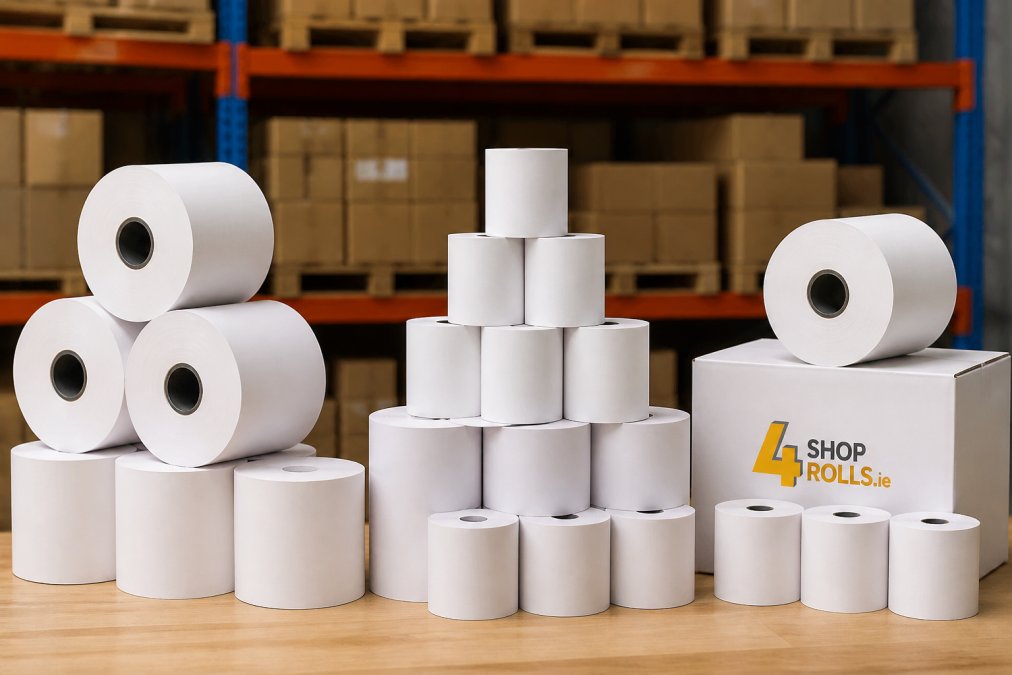
 ultimate-guide
Bulk Till Rolls Wholesale: The Complete Guide
Table of Contents
- Why Buying Bulk Till Rolls Wholesale Saves Your Business Money
- Thermal Paper Roll Sizes: A Complete Sizing Guide
- How to Measure Till Roll Diameter Accurately
- BPA-Free Thermal Paper Benefits for Your Business
- Best Practices for Thermal Paper Storage
- Bulk Till Rolls for Every Business Type
- Environmental Impact and Recycling Considerations
- Conclusion
Last Updated: August 22, 2026
Why Buying Bulk Till Rolls Wholesale Saves Your Business Money
Buying bulk till rolls wholesale is one of the simplest cost-reduction decisions a retail or hospitality business can make. Businesses that switch from ad-hoc single-roll purchasing to case quantity ordering spend significantly less per roll over the course of a year.
Single rolls bought in small quantities carry a premium per unit. Case quantities and wholesale pricing drop that cost considerably. For a busy retail outlet running multiple POS terminals or a restaurant managing both front-of-house and kitchen printers, that difference adds up fast across a full year of trading.
A common mistake is treating till rolls as a low-priority consumable, reordering only when you run out. That reactive approach means paying higher per-unit prices and risking stockouts at the worst possible moments.
Wholesale Pricing vs. Single-Roll Purchasing
Wholesale pricing operates on a straightforward principle: the more you buy, the less you pay per unit. Bulk till rolls purchased in case quantities typically cost a fraction of what individual rolls cost from a convenience supplier.
For procurement managers, centralising your thermal paper purchasing through a single wholesale supplier reduces administrative overhead, consolidates invoicing, and often qualifies your account for additional volume discounts. Rather than managing multiple suppliers for till rolls, card machine receipt rolls, and kitchen printer rolls, a one-stop wholesale supplier handles everything under a single order.
Subscription Ordering and Case Quantity Discounts
Subscription ordering for bulk till rolls means you never run short, you lock in pricing, and you eliminate manual reordering. Case quantities are the standard unit for wholesale pricing on commercial supplies. A case of till rolls might contain anywhere from 20 to 100 rolls depending on roll size and paper weight, with meaningfully lower per-roll costs than smaller batches. Knowing your monthly consumption and ordering accordingly keeps costs predictable.
Thermal Paper Roll Sizes: A Complete Sizing Guide
Thermal paper roll sizes are defined by three measurements: paper width, roll diameter, and core size. Getting any one of these wrong means the roll either won't fit your printer or won't feed correctly.
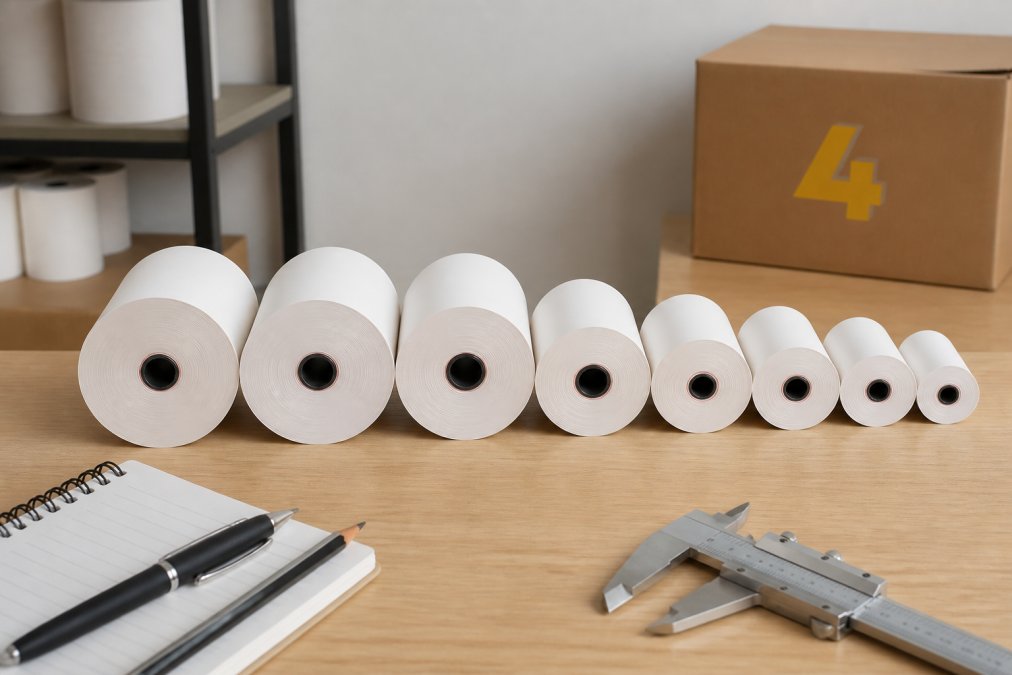
The most common widths in commercial use are 57mm, 76mm, and 80mm. Each corresponds to specific printer types and use cases. Direct thermal printing, the technology used in most modern POS systems and card machines, requires paper that matches the printer's specified width precisely.
| Roll Width | Common Use | Typical Roll Diameter |
|---|---|---|
| 57mm | Credit card machines, handheld terminals | 40mm - 50mm |
| 76mm | Older cash registers, some kitchen printers | 70mm - 80mm |
| 80mm | POS receipt printers, restaurant systems | 80mm - 83mm |
| 57mm x 30m | Compact card terminals | 30mm |
| 80mm x 80mm | High-volume retail POS | 80mm |
Standard Widths for POS and Credit Card Machine Rolls
The 57mm width is the dominant standard for credit card machine rolls and handheld payment terminals. Most Ingenico, Verifone, and PAX devices take a 57mm roll, though the required roll diameter and core size vary by model. Businesses most often order incorrectly by getting the width right but ordering the wrong diameter, so the roll doesn't fit the paper compartment.
The 80mm width is the standard for most modern desktop receipt printers connected to POS systems. Paper quality matters here: a 55GSM paper weight is standard for clear, durable thermal printing.
Kitchen Printer Rolls and Specialist Sizes
Kitchen printer rolls require thermal paper with higher resistance to environmental degradation, as they operate in high-heat, high-humidity environments. The 76mm width is common in older installations, while many modern systems use 80mm rolls. Standard receipt paper used at a front-of-house terminal is not always suitable for kitchen printer use.
For restaurants and cafés running both front-of-house receipt printers and kitchen order printers, buying the correct roll type for each application in bulk through a single wholesale supplier is the most cost-effective approach. buying wholesale goods.
How to Measure Till Roll Diameter Accurately
Measuring till roll diameter accurately requires a calliper or straightforward ruler measurement across the widest point of the roll. Till roll diameter is the measurement from one outer edge to the other, not the core.
Core Size, Paper Width, and Roll Diameter Explained
Core size is the diameter of the hollow cardboard tube at the centre of the roll. Most thermal paper rolls use a standard 12mm or 25mm core, but this varies by printer type. A roll with the correct paper width but the wrong core size will not seat properly on the printer spindle.
Paper width is the measurement across the roll from one side to the other. This must match your printer's specification exactly.
Roll diameter is the total diameter of the full roll including the paper. This determines whether the roll fits inside the printer's paper compartment. Many compact card machines have a maximum roll diameter of 40mm or 50mm.
Use a calliper to measure the core inner diameter, the paper width, and the full roll outer diameter. Write these three numbers down and match them against your printer's specifications before ordering. According to guidance published by the European Payments Council on terminal specifications, payment terminals must be maintained with manufacturer-specified consumables to ensure reliable transaction records.
BPA-Free Thermal Paper Benefits for Your Business
BPA-free thermal paper is thermal paper manufactured without bisphenol A, a chemical compound used in some thermal coatings that has been subject to regulatory scrutiny across the European Union.
The EU's restriction on BPA in thermal paper has been in force since 2020, as confirmed by ECHA's restrictions on BPA in thermal paper. This means compliant thermal paper sold within the EU market must meet BPA-free standards. Sourcing your bulk till rolls from a supplier who explicitly confirms BPA-free certification keeps your business on the right side of this requirement.
BPA-free thermal paper is safer for staff who handle receipts frequently and performs comparably to older formulations in terms of print clarity and durability.
Best Practices for Thermal Paper Storage
Thermal paper storage is one of the most overlooked aspects of POS supply management. Direct thermal paper is heat-sensitive by design, which means it is also sensitive to storage conditions.
Shelf Life and Stock Management Tips
Thermal paper rolls have a shelf life that varies by paper quality and storage conditions. Most commercial-grade thermal paper maintains print quality for two to five years from the date of manufacture when stored correctly. According to guidance from the British Retail Consortium's operational standards resources, proper consumable storage is part of sound operational hygiene for retail environments.
The key storage rules for bulk till rolls:
- Temperature: Store below 25°C. High temperatures cause thermal paper to darken prematurely.
- Humidity: Keep in a dry environment. Moisture degrades the thermal coating.
- Light exposure: Avoid direct sunlight and fluorescent light for extended periods.
- Pressure: Do not stack heavy items on top of stored rolls.
- Packaging: Keep rolls in their original packaging until use.
For stock management, use a first-in-first-out rotation system. Use older stock before newer deliveries. Label incoming stock with the delivery date and position new cases behind existing stock.
Bulk Till Rolls for Every Business Type
Bulk till rolls are not exclusively a large-retailer purchase. The economics of wholesale pricing apply equally to a small café buying two cases per month as to a supermarket chain buying a pallet per week.

Retail, Hospitality, and Small Business Needs
Retail businesses running multiple POS terminals benefit most obviously from bulk purchasing. Each terminal consumes rolls at a predictable rate, and ordering in case quantities aligned to that consumption keeps costs low and stock reliable.
Hospitality businesses have more complex requirements. A restaurant might need 57mm rolls for a card machine at the bar, 80mm rolls for a front-of-house receipt printer, and 76mm or 80mm rolls for a kitchen printer. Sourcing all three from a single wholesale supplier simplifies procurement and often qualifies the combined order for better pricing.
Small businesses, including cafés, crèches, and independent retailers, sometimes assume wholesale suppliers require large minimum orders. Many do not. Even one or two cases per order benefit from wholesale unit pricing compared to retail purchasing.
Next-Day Delivery and Reliable Stock Availability
Next-day delivery is not a luxury for businesses that depend on POS systems to operate. Running out of till rolls mid-trading is a genuine operational problem. Shop4Rolls.ie operates from a purpose-built warehouse with over 3,000 products in stock, which means the thermal paper rolls you order are available for fast shipping rather than subject to supplier lead times. For procurement managers setting up regular ordering cycles, knowing that your bulk till rolls will arrive on schedule removes a variable from an already complex operational picture.
Environmental Impact and Recycling Considerations
Thermal paper recycling is more complicated than it appears. Standard thermal paper cannot be recycled with regular paper waste because the thermal coating contaminates the paper pulp during the recycling process.
The practical options are:
- BPA-free thermal paper reduces the chemical impact of paper that ends up in general waste.
- Phenol-free thermal paper removes the thermal coating chemicals that cause recycling contamination.
- Receipt paper reduction through digital receipts where your POS system supports it reduces overall thermal paper consumption.
The Environmental Protection Agency's guidance on commercial waste streams provides direction on correct disposal routes for thermal paper waste in a commercial context. For businesses buying bulk till rolls, the most straightforward environmental step is to confirm BPA-free certification as a minimum standard and to store rolls correctly to avoid waste through premature degradation.
Running out of till rolls during trading hours is an operational failure that wholesale purchasing prevents entirely. Shop4Rolls.ie carries the largest range of till rolls and card machine receipt rolls available, with over 3,000 products in a purpose-built warehouse and a customer care team that answers the phone when you need support. Whether you need 57mm credit card machine rolls, 80mm POS receipt paper, or specialist kitchen printer rolls in BPA-free grades, the right stock is available for fast dispatch. Sign up now at Shop4Rolls.ie and set up your wholesale account to access competitive pricing and reliable stock availability.
Frequently Asked Questions
How do I measure the diameter of a till roll accurately?
Use a ruler or calliper to measure across the widest point of the roll from one outer edge to the other, that is the outer diameter. Also measure the inner cardboard core diameter separately, as both figures determine compatibility with your printer. Most POS printers list the maximum roll diameter they accept in their manual. Common outer diameters range from 40mm to 80mm, while core sizes are typically 12mm or 25mm. When in doubt, check your printer's specification sheet before ordering.
What is the difference between thermal and bond paper rolls?
Thermal paper uses a heat-sensitive coating so direct thermal printers produce an image without ink or ribbons. Bond paper requires an ink ribbon and works in impact printers. Thermal printing is faster, quieter, and more cost-effective for high-volume retail and hospitality environments. Thermal rolls are the standard for modern POS systems and card machines. Bond rolls are mainly found in older or specialist applications. If your printer has a thermal head rather than an ink ribbon, you need direct thermal paper.
How should thermal receipt paper be stored to prevent fading?
Store thermal paper rolls in a cool, dry location away from direct sunlight, heat sources, and humidity. Temperatures above 40°C can activate the heat-sensitive coating prematurely, causing the roll to darken or fade. Keep rolls in their original packaging until use and away from solvents, plasticisers, and adhesive tapes, all of which degrade the coating. Properly stored, most thermal paper rolls have a shelf life of two to five years. Rotating stock on a first-in, first-out basis helps maintain print quality.
Are there standard sizes for card machine receipt rolls?
Yes. The most common width for credit card machine rolls is 57mm, with a typical roll length of 30m to 40m and a core size of 12mm. Some card terminals, particularly countertop models from major terminal providers, use 76mm or 80mm wide rolls instead. Always check your terminal's user manual or the label on your current roll before ordering in bulk. Ordering the wrong width is one of the most common procurement mistakes, and checking the three key measurements, width, length, and core size, prevents it entirely.
What are the benefits of buying till rolls in bulk for small businesses?
Buying bulk till rolls wholesale reduces the cost per roll significantly compared to purchasing in small quantities, which matters even for businesses using only two or three rolls a month. Bulk purchasing also means fewer reorder cycles, lower risk of running out at a critical moment, and simpler stock management. Many wholesale suppliers offer case quantity discounts and subscription ordering options that lock in lower prices. For small businesses, the savings on receipt paper can be redirected to other operational costs, making bulk procurement a straightforward efficiency gain.
Are BPA-free thermal paper rolls safe to handle and dispose of?
BPA-free thermal paper does not contain bisphenol A, the chemical used in older thermal coatings that raised health concerns for staff handling receipts frequently. BPA-free rolls use alternative developers that meet current EU chemical safety standards under REACH regulations. They are safer for cashiers and customers who handle receipts regularly. For disposal, BPA-free thermal paper is generally not suitable for standard paper recycling streams because of its coating, so check with your local waste management provider for the correct disposal route.
This article was written using GrandRanker