 how-to
Cling Film: A Practical Guide for Food Storage
Table of Contents
- What Cling Film Is and Why It Matters in Your Kitchen
- How to Use Cling Film Safely with Food
- Microwave-Safe Cling Film: What You Need to Know
- Choosing the Right Cling Film Roll Sizes for Your Needs
- Commercial Cling Film Rolls for Busy Kitchens
- Cling Film Alternatives: Reusable and Sustainable Options
- Troubleshooting: When Cling Film Won't Stick or Tears
- Conclusion: Getting the Most from Your Cling Film
- Frequently Asked Questions
Last Updated: October 8, 2026
What Cling Film Is and Why It Matters in Your Kitchen
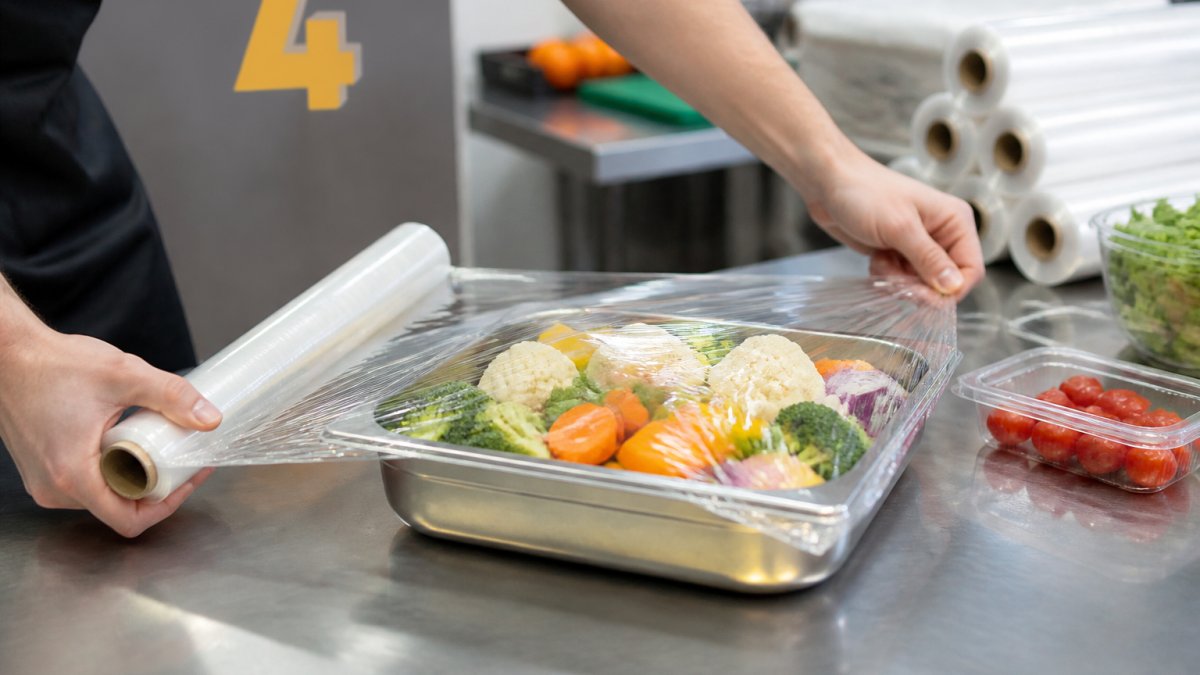
Cling film is a thin, flexible plastic sheet that sticks to itself and smooth surfaces, used to cover and protect food.
At Shop4Rolls.ie, we supply food wrapping and food storage supplies to kitchens across the country, and cling film is one of the items we restock most often.
Most guides get this wrong: cling film is a category, not one product.
Below, we break down what cling film is made of, how to use it safely with food, and how to choose the right roll.
Common Uses for Food Wrapping and Covering
The everyday uses for cling film come down to food protection and covering food quickly: covering a bowl before refrigeration, wrapping a sandwich, or protecting plated food from drying out.
A few of the most common jobs:
- Covering bowls and containers before refrigeration
- Wrapping sandwiches and lunch items
- Protecting plated food from drying out or picking up fridge odours
Cling film is multi-purpose, not single-task: used well, it handles food wrapping, covering, and short-term storage in one go.
How to Use Cling Film Safely with Food
Safe use comes down to three things: clean hands, the right film, and a tight seal. Follow the manufacturer's instructions and keep film away from surfaces it is not suited to.
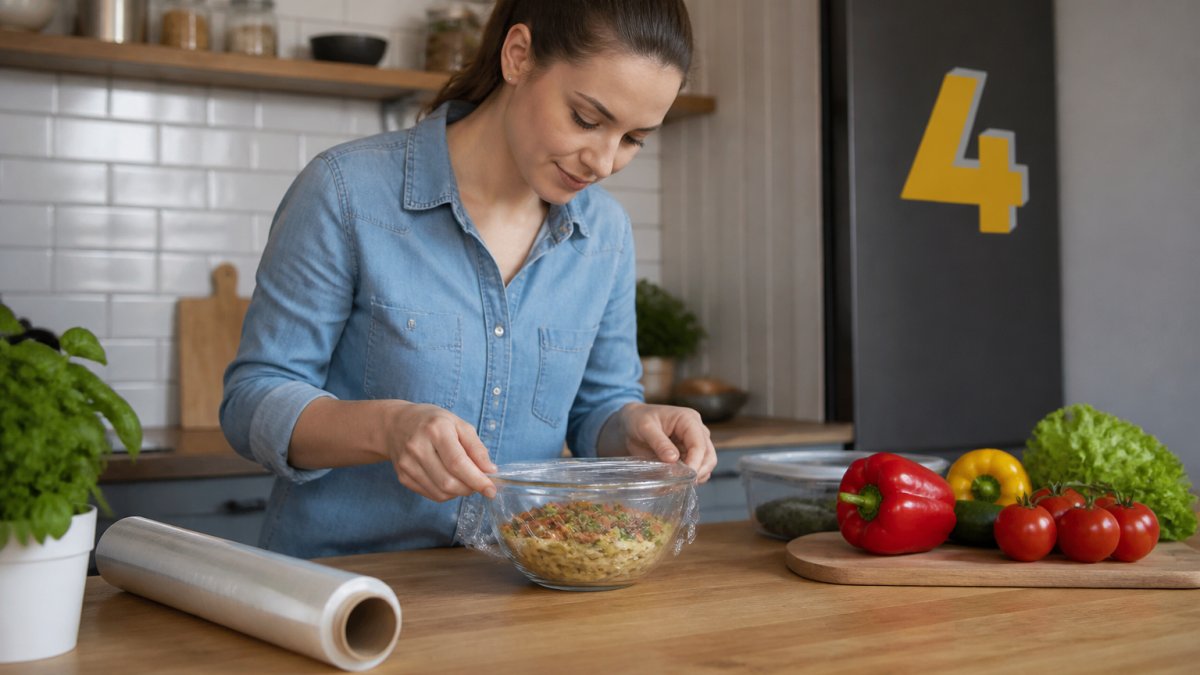
Here is the step-by-step method we recommend:
- Wash your hands before handling film that will touch food.
- Pull the film from the roll and tear it against the cutter, leaving a generous overlap.
- Lay the film over the container, not stretched tight. Let it drape.
- Press the edges down against a dry, smooth rim so it seals.
- Smooth out air pockets with your fingers so the film sits flat on the surface.
- Check the seal before the container goes in the refrigerator.
A common mistake is wrapping food while the container rim is wet. Cling film will not stick to a wet surface. Dry the rim first, and the seal holds far better.
Foods Unsuitable for Direct Contact
Not every food should touch cling film directly. The main ones to avoid are pure fats, lard, oils, and food preserved in oil.
Fat and oil can draw substances out of certain plastics over time.
For everything else, direct food contact is fine as long as the film is labelled suitable for food use. Check the packaging, and follow the manufacturer's instructions.
Refrigerator and Freezer Use
Cling film works well at cold temperatures, making it a natural fit for the refrigerator and, in many cases, the freezer.
In the refrigerator, film keeps food fresh by limiting air contact and stops strong odours drifting between dishes.
For the freezer, suitability depends on the film. Standard thin film can become brittle at low temperatures and may not seal as well; heavier or freezer-rated film holds up better.
| Storage Use | Suitability | What to Watch |
|---|---|---|
| Refrigerator | Good for most films | Dry the rim before sealing |
| Freezer | Depends on film type | Thin film can crack when frozen |
| Microwave | Only if labelled microwave-safe | Never let film touch food |
| Hot food | Not suitable | Let food cool first |
Microwave-Safe Cling Film: What You Need to Know
Microwave-safe cling film is film the manufacturer has specifically labelled for microwave use. If the box does not say so, do not microwave it, the non-negotiable rule most people break.
The reason film behaves badly in a microwave is steam pressure, not heat alone. As food heats, moisture turns to steam, the steam has nowhere to go, and the film stretches until it splits or peels back.
A safe microwave method, step by step
- Check the label first. Only use film marked as microwave-safe. If the box is gone, use a lid instead.
- Leave headspace. The film should sit above the food, not pressed onto it, a gap of a few centimetres is enough.
- Vent the film. Fold back one corner, or pierce it two or three times with a knife tip or skewer. This prevents splitting.
- Use a lower power setting for longer where your microwave allows it. Gentler heating produces steam more slowly.
- Loosen, don't lift, when removing. Peel the film back away from you so steam escapes away from your hand and face.
- Never re-cover and reheat the same dish repeatedly with the same sheet of film. Replace it.
What to avoid
- Film touching the food. Even microwave-safe film should not sit directly on the surface. Food can reach temperatures well above boiling in spots.
- Sealing a container completely. A tight seal with no vent turns the container into a pressure vessel, and the film fails first.
- High-fat or high-sugar foods. These heat faster and more unevenly, making steam build-up harder to predict. Use a lid.
When a lid beats film
For anything oily, sugary, or reheated more than once, a microwave-safe lid is better: it vents predictably, does not touch the food, and can be washed and reused. Keep film for quick covers and short reheats of low-fat dishes.
Choosing the Right Cling Film Roll Sizes for Your Needs
Cling film roll sizes come down to two numbers: film width and roll length. Get those right and you stop wasting film on jobs it was never meant for.
For home kitchens, a narrower width is easier to handle for bowls and sandwiches.
- Narrow rolls: Best for bowls, mugs, and small containers
- Standard rolls: The everyday all-rounder for most kitchens
- Wide rolls: For trays, platters, and larger containers
- Long rolls: Better value if you use film daily
Film strength matters as much as size. Thinner film tears more easily and clings less reliably; if you double-wrap everything, a stronger film saves more than it costs.
Commercial Cling Film Rolls for Busy Kitchens
Commercial cling film rolls are built for volume: wider, longer, and often stronger than home film, because a busy kitchen wraps far more food, far more often.
For restaurants, cafés, and catering operations, the practical benefits are real:
- Fewer roll changes during a shift
- Wider film for trays and platters in one pass
- Stronger film that holds under a stretch
- Better value per metre on long rolls
If you run a kitchen, buying in bulk removes the weekly scramble for film. That is the restocking we handle at Shop4Rolls.ie, where film sits alongside the other operational supplies a kitchen gets through every week, one delivery, one invoice, no last-minute runs.
Cling Film Alternatives: Reusable and Sustainable Options
Cling film alternatives are worth considering if you want to cut down on single-use plastic. Several options do the job well, each with a trade-off worth knowing.
The main alternatives, and where each one wins
- Beeswax wraps: Cotton cloth coated in beeswax, jojoba oil, and tree resin. They mold to a bowl with the warmth of your hands and can be rinsed and reused for months. Best for cheese, sandwiches, and bowls. They do not like heat, raw meat, or very wet food, and need replacing once the wax wears thin.
- Silicone lids: Stretch over containers and wash clean. They seal better than film on smooth rims and handle the fridge and freezer well. Not microwave-safe unless labelled, and they do not wrap odd shapes.
- Reusable containers with lids: The simplest swap for most storage. They stack, seal, and work in the fridge, freezer, and microwave. The trade-off is bulk, more cupboard space than a roll of film.
- Greaseproof paper: Good for separating layers, wrapping sandwiches, and lining trays. It does not cling, so it will not seal a bowl on its own.
None of these replaces cling film entirely. Film still wins for a quick wrap, a tight seal on an odd-shaped bowl, and food you are about to freeze. But for everyday storage, a mix of reusable options and film covers most kitchens well.
Material differences and what they mean for disposal
Most household cling film is made from one of three materials, affecting both performance and disposal:
- PVC (polyvinyl chloride): The traditional cling film. It clings strongly and stretches well, which is why it is common in commercial kitchens. It often contains plasticisers for flexibility.
- PE (polyethylene): The most common film for home use. It clings less aggressively than PVC but is cheaper and does not use the same plasticisers.
- PVDC (polyvinylidene chloride): Used in some higher-performance films. It clings well with good barrier properties, but is less common in household rolls.
On disposal, film is a flexible plastic and most household recycling does not accept it, soft plastics can jam sorting machinery, so even where kerbside collection takes rigid plastics, film is usually excluded. The practical options:
- Check your local waste guidance rather than assuming it can go in the recycling bin. Rules vary by council and collection.
- Use less of it. Buying the right width and length reduces waste more than any disposal choice.
- Reuse where safe. A clean sheet that only covered a bowl can often cover another before it is thrown away.
- Switch where it makes sense. For everyday storage, a reusable container or silicone lid removes the disposal question entirely.
Troubleshooting: When Cling Film Won't Stick or Tears
When cling film will not stick, the cause is almost always a wet, greasy, or textured surface. When it tears, it is usually thin film or a stretched edge.
Work through the likely causes before you blame the roll:
- Will not stick: Dry the rim, check for grease, use a smooth-edged container
- Tears on the roll: Pull slowly and tear against the cutter, not by hand
- Sticks to itself: Unroll a little at a time and keep the loose end flat
- Won't seal on odd shapes: Overlap two strips for a better fit
The fix is often the film, not your technique. A stronger roll solves most of these problems at once.
Conclusion: Getting the Most from Your Cling Film
Cling film rewards a little know-how. Match the film to the job, keep surfaces dry, and follow the manufacturer's instructions.
When you are ready to restock, Shop4Rolls.ie keeps food wrapping and operational supplies in one place. We offer quick and easy online ordering, reliable stock availability from our purpose-built warehouse, and a lowest price guarantee across our range.
Sign up now and get your kitchen restocked without the runaround.
Frequently Asked Questions
What is cling film made from?
Most cling film is made from PVC (polyvinyl chloride) or a flexible plastic like polyethylene. PVC film is stretchier and clings better, while polyethylene is often used for microwave-safe versions. The material affects how well it seals, its strength, and whether it can be recycled. Always check the manufacturer's instructions on the box for specific guidance on safe use and disposal.
Can I use cling film in the microwave?
Only use cling film that is explicitly labelled microwave-safe. Even then, avoid direct contact with food; leave a gap or use a container. Never use it in a conventional oven or under a grill. The film can melt or release chemicals if overheated. For reheating, pierce the film to let steam escape, and follow the manufacturer's instructions for wattage and time limits.
Is there an alternative to cling film?
Yes, several cling film alternatives exist. Beeswax wraps, silicone lids, and reusable containers are popular reusable options. For single-use needs, consider compostable films made from plant starches. Each has different cling, seal, and storage properties. Choose based on whether you need a tight seal for freshness, microwave suitability, or a more sustainable disposal method.
Can cling film be recycled?
Cling film is generally not recyclable in standard household recycling collections because it is a flexible plastic that can jam sorting machinery. Some supermarkets offer collection points for soft plastics, but availability varies. Check local recycling guidelines. Reducing use or switching to reusable alternatives is the most reliable way to cut waste.