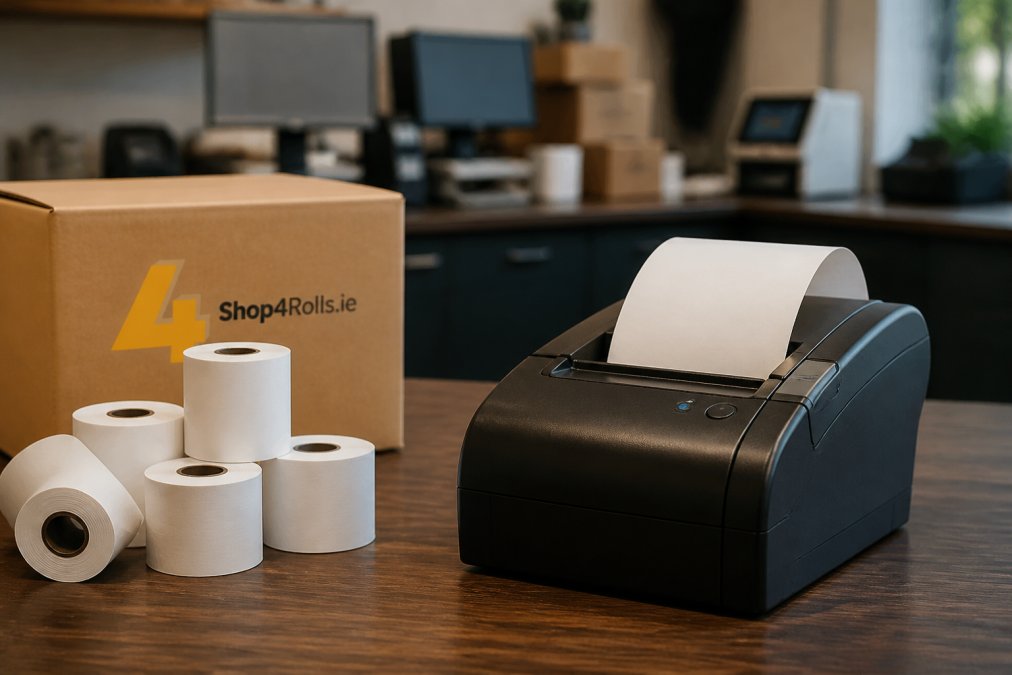
 ultimate-guide
Why Thermal Printers Need Specific Paper (2026 Guide)
Table of Contents
- Why Thermal Printers Need Specific Paper: The Heat-Sensitive Coating
- What Happens If You Use the Wrong Paper in a Thermal Printer?
- Direct Thermal vs. Thermal Transfer: Two Different Technologies
- Thermal Paper vs Bond Paper: Why Ordinary Paper Fails
- How to Measure Till Roll Diameter Accurately for a Perfect Fit
- How to Store Thermal Receipt Paper to Prevent Fading
- The Hidden Costs of Cheap Paper: Print Head Damage and Cost-Per-Print
- Conclusion: Choose the Right Roll for Reliable Receipts
- Frequently Asked Questions
Last Updated: September 5, 2026
Why Thermal Printers Need Specific Paper: The Heat-Sensitive Coating
Thermal printers need specific paper because they use heat, not ink or toner, to create an image on paper coated with a heat-sensitive chemical layer. This coating darkens when heated, forming text and barcodes in a process known as direct thermal printing. Ordinary paper lacks this coating and passes through blank. At Shop4Rolls.ie, we supply till rolls across Ireland, and the most common issue we help customers solve is compatibility confusion.
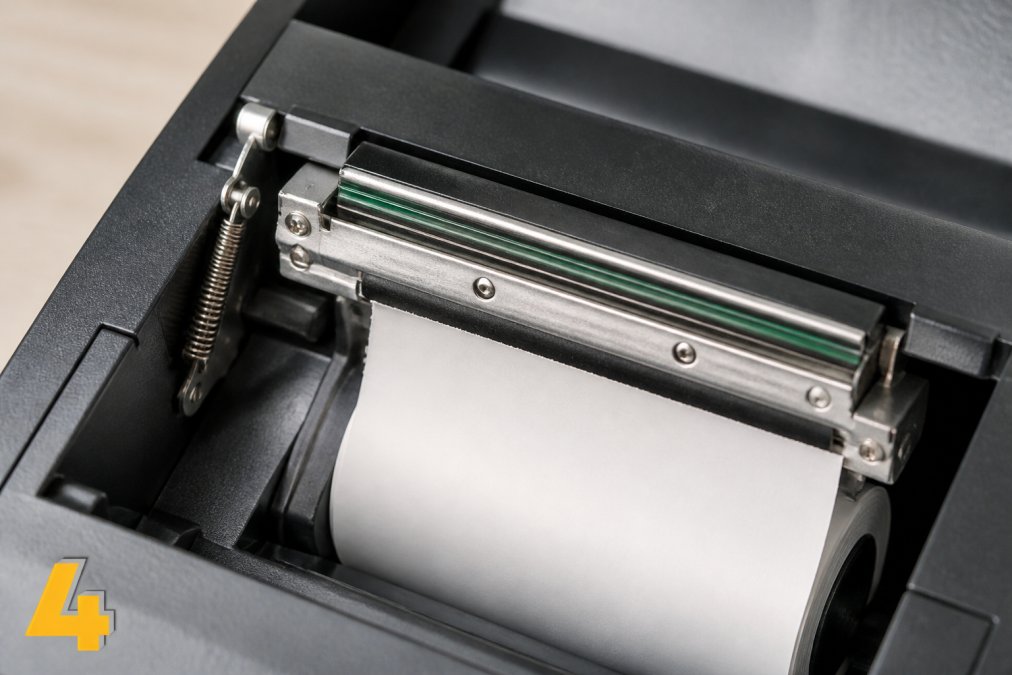
A thermal print head applies localised heat to the paper, triggering a chemical reaction that darkens the affected areas. With no ribbon or toner, print density depends entirely on the paper's quality and thermal sensitivity. This inkless method is fast and low-maintenance, but it makes the paper the single most important consumable.
The Chemistry Behind the Image
The active layer on a thermal roll is a balanced mixture of three components: a leuco dye, a colour developer, and a sensitiser. When heat is applied, the sensitiser melts, dissolving the dye and developer together. The developer then forces the dye into a coloured form, typically black, though blue and red variants exist. This reaction is instantaneous and irreversible under normal conditions.
The chemical ratio determines thermal sensitivity. A high-quality roll activates at a consistent temperature, producing crisp characters without excessive heat. Budget rolls often cut corners on the sensitiser, forcing the printer to run hotter, which shortens print head life and can cause 'ghosting', a faint shadow image from prior heating.
The BPA Question in Thermal Coatings
For decades, the most common colour developer in thermal paper was bisphenol A (BPA), a compound linked to endocrine-disrupting health concerns. The coating can transfer to skin, particularly when fingers are moist or greasy, a concern for retail and hospitality staff who handle receipts all day.
Most major European manufacturers have moved to BPA-free formulations, but 'BPA-free' does not automatically mean safe. Many alternatives use bisphenol S (BPS), which has a similar structure and may carry comparable risks. As of 2026, the most forward-thinking suppliers offer phenol-free developers, such as urea-based compounds, which eliminate the bisphenol family entirely.
For business owners, this matters on two fronts: employee welfare and customer trust. Providing phenol-free rolls reduces staff exposure to a potentially harmful chemical, and a growing number of consumers may ask whether your paper is safe. Choosing phenol-free is a simple procurement decision that addresses both.
Modern phenol-free coatings match or exceed the thermal sensitivity of BPA-based papers, producing dense, high-contrast images that scan reliably. The cost difference is marginal and is justified by reduced health risk and the marketing value of a responsible supply chain.
What Happens If You Use the Wrong Paper in a Thermal Printer?
Using the wrong paper produces blank receipts, but the consequences go beyond a wasted roll. Bond paper lacks the thermal activation layer, so the print head generates heat with nothing to react with. The printer still runs, which can mislead staff into thinking the device is faulty.
The more serious risk is print head damage. Standard paper is often rougher and may contain abrasive fillers, increasing friction that wears down heating elements. Replacing a print head costs far more than buying correct paper. Incorrect paper can also shed dust and fibres that clog the mechanism.
Direct Thermal vs. Thermal Transfer: Two Different Technologies
Understanding why thermal printers need specific paper starts with recognising two distinct technologies. Direct thermal printers use heat-sensitive paper and require no ribbon or toner, making them standard for till rolls and receipts.
Thermal transfer printers use a ribbon coated with waxy or resin-based ink. The print head heats the ribbon, melting ink onto plain paper, card, or synthetic stock. This offers superior abrasion resistance and archival life, making it preferred for shipping labels and asset tags.
| Feature | Direct Thermal | Thermal Transfer |
|---|---|---|
| Paper type | Heat-sensitive coated paper | Plain paper or synthetic stock |
| Consumables | Paper only | Ribbon + paper |
| Print durability | Prone to fading | Long-lasting, abrasion resistant |
| Typical use | Receipts, till rolls | Shipping labels, barcode tags |
| Print head wear | Lower friction | Higher friction |
Confusion arises because both technologies are called "thermal." Running direct thermal paper through a thermal transfer printer yields a faint image, while running plain paper through a direct thermal printer produces nothing.
Thermal Paper vs Bond Paper: Why Ordinary Paper Fails
Thermal paper and bond paper differ at the molecular level. Bond paper, made from pressed and dried wood pulp, has no chemical reactivity to heat. Thermal paper is coated with a leuco dye and colour developer that melt and react when heated, producing the dark image.
A roll of bond paper may look identical to a thermal roll, but print quality will be zero. Many businesses discover this only after installing a new roll. Always verify the packaging states "thermal paper" and that the roll is designed for direct thermal printing.
Thermal paper is typically lighter with a smoother, and a coated feel. Rubbing a fingernail across the surface leaves a dark grey mark on thermal paper due to friction heat; bond paper will not react. This quick test can save you from installing the wrong roll.
How to Measure Till Roll Diameter Accurately for a Perfect Fit
Measuring till roll diameter accurately ensures the roll fits your printer and avoids jams. The two critical measurements are roll diameter, the total width across the centre, and core size, the diameter of the hollow cardboard tube.
Use a ruler or caliper, placing the roll on a flat surface and measuring straight across the centre point. Measuring off-centre adds millimetres and leads to ordering a roll too large for the printer. For core size, measure the inside diameter of the tube to match the printer's spindle.
| Measurement | How to Measure | Common Sizes |
|---|---|---|
| Roll diameter | Across the centre, edge to edge | 40 mm to 80 mm |
| Core size | Inside of the cardboard tube | 12 mm, 25 mm |
| Paper width | Across the roll face | 57 mm, 80 mm |
If your printer specifies a maximum roll diameter of 50 mm, a 60 mm roll will catch on the printer housing. Checking the manual for supported core size and diameter is the fastest way to order correctly. When in doubt, measure twice and order once.
How to Store Thermal Receipt Paper to Prevent Fading
Thermal receipt paper fades because the chemical coating continues to react slowly when exposed to heat, light, and certain chemicals. The image is a chemical state that can revert over time. Proper storage slows this process dramatically, preserving legibility for years rather than months.
Store thermal rolls in a cool, dry place below 25°C with moderate humidity, away from direct sunlight and heat sources. Avoid storing near PVC or plasticisers, which can trigger premature darkening or fading, particularly relevant for rolls kept next to cleaning supplies.
Why Prints Fade: The Reversal Reaction
Fading is not simple ink degradation but a chemical reversal. The leuco dye can revert to its colourless state if the equilibrium shifts. Heat provides activation energy for this reversal; UV radiation breaks down the dye structure; and chemicals, plasticisers, adhesives, and skin oils, can interfere with the dye-developer bond.
A receipt left on a car dashboard in summer can fade to blank within a week, while one stored in a dark drawer at 18°C might remain legible for five years. Fading accelerates sharply with each 10°C increase; a receipt at 35°C fades roughly four times faster than one at 25°C.
The Archival Grade Difference
Standard thermal paper, used for everyday retail receipts, typically has an archival life of 1 to 5 years under normal storage, adequate for a returns window or expense claim.
Premium 'archival grade' paper includes a protective topcoat of silica or polymer that shields the active layer from UV, moisture, and chemicals. Rated for 10 to 25 years of legibility, it is the choice for long-term records such as weighbridge tickets, parking notices, and legal documents.
Archival paper has a glossier surface, and a fingernail mark is fainter because the topcoat absorbs friction heat. The cost premium is roughly 20-30%, negligible compared to the cost of losing a legally required record.
Practical Preservation for Businesses
For receipts that must survive VAT inspections or warranty claims, the most reliable method is digitisation. Scan or photograph each receipt immediately and store it in a cloud-based accounting system, eliminating the fading problem entirely.
For physical storage, follow these guidelines:
- Keep receipts flat in a dark, acid-free folder or box. Do not fold them, as the crease creates a stress point where the coating can crack.
- Avoid paperclips and staples. The metal can react with the coating over time, leaving rust-coloured marks that obscure text.
- Separate thermal receipts from thermal labels. The adhesive on labels contains plasticisers that migrate onto adjacent surfaces and accelerate fading.
- Do not laminate receipts. The heat from lamination will darken or destroy the image, and the plasticiser in the laminate film will eventually attack the coating.
- Store spare rolls in their original packaging, sealed if possible, to protect them from humidity and airborne contaminants.
A common pattern in Irish retail is a till roll sitting in a hot delivery van for a day, which can reduce its usable life by months. Request insulated packaging during summer and rotate stock so the oldest rolls are used first, ensuring you always print on fresh, chemically stable paper.
The Hidden Costs of Cheap Paper: Print Head Damage and Cost-Per-Print
Cheap thermal paper appears to save money, but low-grade paper often has an uneven coating requiring higher print head temperatures. This increased heat accelerates wear, shortening the print head's lifespan.
Print heads are a significant replacement cost, not covered under most warranties once worn. A single replacement can cost several times more than a year's supply of quality paper. Cheap paper also produces lighter prints requiring reprints, so the "savings" evaporate quickly.
Inferior paper produces barcodes that do not scan, receipts that fade within weeks, and smudged text. For returns or warranty claims, a faded receipt can mean a lost sale. Investing in reliable, correctly specified rolls protects your hardware and customer relationships.
Conclusion: Choose the Right Roll for Reliable Receipts
Thermal printers' dependence on specific paper is a direct consequence of the heat-sensitive chemistry that makes them fast, quiet, and ink-free. Using the correct paper protects your print head, ensures crisp barcodes, and prevents blank receipts during a busy shift.
Getting the right roll means checking the coating, diameter, and core size before ordering, storing rolls correctly, and resisting the cheapest option. A few minutes of verification saves you from costly repairs and faded receipts.
Shop4Rolls.ie stocks Ireland's largest range of till rolls and card machine receipt rolls, backed by next-day delivery from our purpose-built warehouse. Our customer care team can help you confirm the right size for your printer model, and our lowest price guarantee keeps your operational costs down. Get started with Shop4Rolls.ie and keep your receipts clear, your printers healthy, and your business moving.
===
Frequently Asked Questions
Can I use regular paper in a thermal printer?
No. Regular paper lacks the heat-sensitive coating that reacts to the thermal print head. Without this chemical coating, the print head cannot create marks on the paper, resulting in blank receipts. Additionally, standard paper is often thicker or rougher, which can increase friction and cause premature print head damage. You must use paper specifically designed for direct thermal printing to get legible output and keep your printer working reliably.
What happens if I use the wrong type of thermal paper roll?
Using the wrong roll can lead to several issues. If the paper lacks the correct thermal sensitivity, prints will be faint or invisible. An incorrect core size or roll diameter will prevent the roll from fitting properly, causing paper jams and feeding problems. Low-quality paper can also leave residue on the print head, leading to poor print quality and costly repairs. Always match the roll dimensions and paper grade to your specific printer model.
How should I store thermal receipt paper to prevent fading?
Store thermal rolls in a cool, dry place away from direct sunlight, heat sources, and high humidity. Exposure to heat, light, and certain chemicals (like PVC or alcohol) triggers the thermal activation process prematurely, which causes the paper to darken or fade over time. For long-term archival, keep receipts in a dark, climate-controlled environment. Proper storage ensures your receipts remain legible for as long as the paper's stated archival life.
What is the difference between direct thermal and thermal transfer printing?
Direct thermal printing uses paper with a heat-sensitive coating; the print head applies heat directly to the paper to create an image, requiring no ribbon or toner. Thermal transfer printing uses a ribbon, which is melted onto the label stock by the print head. Direct thermal is ideal for short-lived receipts due to its simplicity and lower cost. Thermal transfer is better for durable labels requiring a longer archival life, as it is more resistant to fading and abrasion.
This article was written using GrandRanker
Frequently Asked Questions
Q: Can I use regular paper in a thermal printer?
A: No. Regular paper lacks the heat-sensitive coating that reacts to the thermal print head. Without this chemical coating, the print head cannot create marks on the paper, resulting in blank receipts. Additionally, standard paper is often thicker or rougher, which can increase friction and cause premature print head damage. You must use paper specifically designed for direct thermal printing to get legible output and keep your printer working reliably.
Q: What happens if I use the wrong type of thermal paper roll?
A: Using the wrong roll can lead to several issues. If the paper lacks the correct thermal sensitivity, prints will be faint or invisible. An incorrect core size or roll diameter will prevent the roll from fitting properly, causing paper jams and feeding problems. Low-quality paper can also leave residue on the print head, leading to poor print quality and costly repairs. Always match the roll dimensions and paper grade to your specific printer model.
Q: How should I store thermal receipt paper to prevent fading?
A: Store thermal rolls in a cool, dry place away from direct sunlight, heat sources, and high humidity. Exposure to heat, light, and certain chemicals (like PVC or alcohol) triggers the thermal activation process prematurely, which causes the paper to darken or fade over time. For long-term archival, keep receipts in a dark, climate-controlled environment. Proper storage ensures your receipts remain legible for as long as the paper's stated archival life.
Q: What is the difference between direct thermal and thermal transfer printing?
A: Direct thermal printing uses paper with a heat-sensitive coating; the print head applies heat directly to the paper to create an image, requiring no ribbon or toner. Thermal transfer printing uses a ribbon, which is melted onto the label stock by the print head. Direct thermal is ideal for short-lived receipts due to its simplicity and lower cost. Thermal transfer is better for durable labels requiring a longer archival life, as it is more resistant to fading and abrasion.