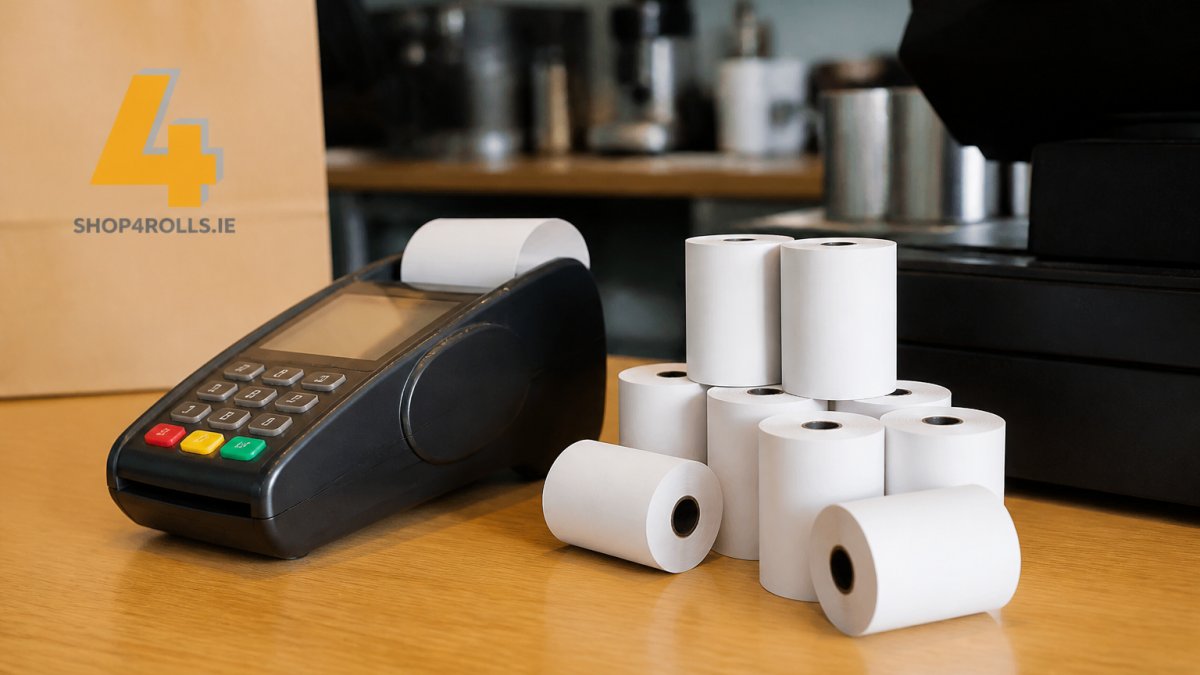
 comparison
Discount Till Rolls Alternative: 2026 Retailer Guide
Table of Contents
- Why Retailers Look Beyond Discount Till Rolls
- Comparing Till Roll Suppliers: What to Weigh Up
- Thermal Receipt Paper Sizes: Matching Your Equipment
- Till Roll Compatibility: Getting the Right Fit First Time
- Till Rolls Wholesale: When Bulk Buying Pays Off
- Total Cost of Switching: What to Factor In
- Making the Switch: Practical Steps for Retailers
- Frequently Asked Questions
Last Updated: October 12, 2026
Why Retailers Look Beyond Discount Till Rolls
Most retailers don't leave a discount till roll supplier over price. A discount till rolls alternative for retailers is rarely about a cheaper roll, it's about a supplier whose stock, delivery and range you can plan around.
Store owners often tell us the same story: three suppliers for till rolls, receipt paper and packaging, three invoices, three delivery windows, and still nothing on the shelf when the card machine runs dry.
This guide compares the realistic alternatives and how to switch without disrupting your ordering process.
Comparing Till Roll Suppliers: What to Weigh Up
Price per roll is the easiest thing to compare and the least useful on its own. A supplier that saves a few cent per roll but leaves you short on a bank holiday weekend has cost you far more than the difference.
Four factors decide whether a till roll supplier is genuinely cheaper over a year:
- Stock depth: can they supply every size and ply you use, every week?
- Delivery reliability: do they hit the day they promise, including Fridays?
- Range breadth: can they cover packaging and POS supplies in the same order?
- Service: can you reach a person when something goes wrong?
Stock Depth and Range
A discount supplier typically carries a narrow core range: standard thermal rolls and little else. That works until you need a specialist card machine size, a scale roll, or a coloured receipt roll for a promotions till.
The test is simple: list every roll you've ordered in the last six months, including the odd sizes, and check whether one supplier stocks all of them.
Delivery Reliability and Lead Times
Reliability matters more than speed. A predictable two-day delivery beats an unreliable next-day promise, because you can plan your reorder point around it.
Ask any supplier directly: what happens if I order on a Friday afternoon? What's your cut-off time? Do you tell me upfront if something is out of stock? A supplier that answers clearly is worth more than one that undercuts on price.
Thermal Receipt Paper Sizes: Matching Your Equipment
Getting the size wrong is the most common ordering mistake we see. Till rolls are defined by three measurements, and all three must match your printer.
Roll width is the paper's width in millimetres, measured across the roll. Roll diameter is the full outside diameter of the wound roll, which determines whether it physically fits inside the printer housing. Core size is the inner tube diameter, which must match the spindle.
Standard thermal sizes such as 80 × 80 mm are cheapest per roll because they're produced at volume; specialist and coloured rolls cost more.
Till Roll Compatibility: Getting the Right Fit First Time
Till roll compatibility comes down to matching width, diameter and core size to your equipment model. The right width with the wrong core will spin loose or jam; too large in diameter and it won't close.
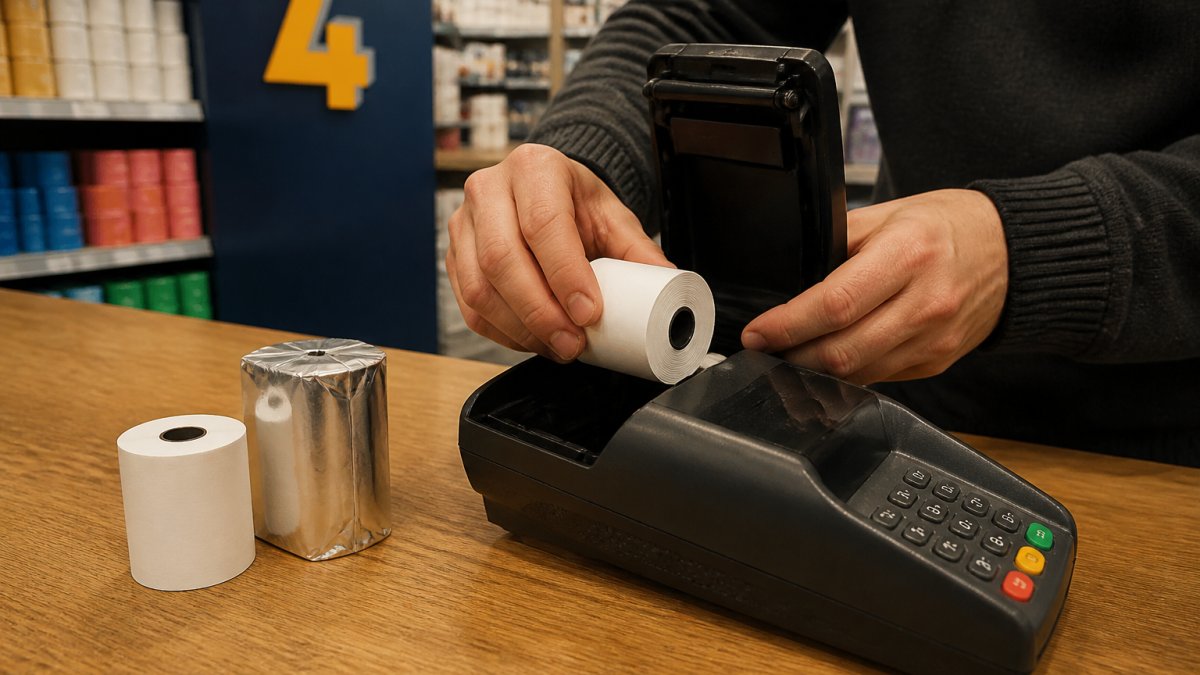
Common equipment includes Ingenico and Verifone card machines, Epson and Star receipt printers, and scale rolls for weighing equipment. If you've ordered the wrong size before, ask about the returns policy before you buy.
Till Rolls Wholesale: When Bulk Buying Pays Off
Bulk buying pays off when your storage can absorb it and your usage is predictable. It stops paying off when rolls sit in a damp stockroom and the thermal coating degrades before you finish the pallet.
Most wholesale advice treats every retailer the same. A convenience store with four tills burns through rolls at a completely different rate to a single-chair barber or a market stall with one card machine.
Match Your Buying Tier to Your Usage
Work out your average monthly roll usage per till over the last quarter, then match it to a tier:
- Low volume (under 20 rolls a month per till), a single-till salon, a market stall, a small café. Buy in small pack quantities, even if the unit price is higher. Storage risk and dead stock outweigh any bulk saving.
- Medium volume (20-60 rolls a month per till), a convenience store, a pharmacy, a takeaway with two or three tills. Two to three months of cover on standard sizes is the sweet spot. Order specialist sizes in smaller packs.
- High volume (60+ rolls a month per till), a supermarket, a busy forecourt, a multi-till retail unit. Wholesale pricing on standard thermal rolls genuinely pays. Buy quarterly, store flat, and rotate stock so the oldest rolls are used first.
Buy by Business Type, Not Just by Price
Different retail environments have different roll profiles, and a single-source supplier should cover all of them in one order:
- Hospitality and food service, high turnover of standard thermal rolls, plus kitchen printer rolls and often coloured rolls for order tracking.
- Retail and convenience, standard till rolls, card machine rolls, and scale rolls if you weigh produce or sell loose goods.
- Health and beauty, lower volume, but often a mix of receipt rolls and appointment or treatment card rolls.
- Trade and services, card machine rolls dominate, with occasional receipt printer rolls for job sheets.
If your supplier can't cover your full profile in one order, you're still running two accounts, and the wholesale discount hasn't solved anything.
What to Check Before You Commit to a Bulk Order
- Calculate average monthly roll usage per till over the last quarter
- Order two to three months of cover on high-volume standard rolls, not twelve
- Buy smaller pack quantities for specialist or low-volume sizes
- Store rolls flat, away from direct sunlight, heat and moisture
- Keep one open box at the till and the rest sealed
- Rotate stock so the oldest rolls are used first
Wholesale pricing makes most sense on high-volume standard rolls. For sizes you use a handful of times a year, buy smaller packs and accept the higher unit price, the storage and degradation risk isn't worth the saving.
Total Cost of Switching: What to Factor In
The total cost of a till roll supplier is the roll price plus everything the discount hides: split deliveries, staff time on multiple accounts, emergency top-ups at retail prices, and the cost of a till going down. Pricing depends on quantity, dates, and delivery.
Most retailers compare headline price per roll and stop there. That's the mistake: the real cost is built from several drivers.
The Six Cost Drivers
1. Unit price per roll. The headline number.
2. Delivery fees. This is where discount pricing often unwinds.
**3.
4. Bulk discount thresholds. Wholesale pricing usually kicks in at a pack or pallet quantity.
5. Admin time. Every supplier means an account, a login, an invoice, a delivery window and a reconciliation.
6. Emergency buying. When a discount supplier runs out of your size, you buy at retail price from whoever has stock.
A Worked Example
Take a retailer using 40 standard thermal rolls and 10 card machine rolls a month.
- Discount supplier route: lowest unit price, but a delivery fee per order, a minimum order value, and a narrow range that forces a second supplier for card machine rolls. Two accounts, two delivery fees, two invoices.
- Single-source route: slightly higher unit price on the standard rolls, but consolidated delivery across the full order, one account, one invoice, and no second supplier for the card machine rolls.
Add delivery fees, admin time and one emergency top-up a year, and the gap between "cheapest per roll" and "cheapest to run" usually closes, then reverses.
| Cost Factor | Discount Supplier | Single-Source Supplier |
|---|---|---|
| Price per roll | Lowest headline price | Competitive wholesale pricing |
| Delivery | Often per-order charges | Consolidated across your full order |
| Minimum order | May apply before shipping | Lower or no minimum on full-range orders |
| Bulk thresholds | Good on standard rolls only | Applies across the range |
| Admin time | Multiple accounts and invoices | One account, one invoice |
| Stock-outs | Frequent on specialist sizes | Broader range, fewer gaps |
| Emergency buying | Retail-price top-ups | Planned reorders |
How to Run the Numbers for Your Own Store
- List every roll size you ordered in the last six months
- Note the unit price, pack quantity and delivery fee for each order
- Add up the delivery fees you paid across all suppliers
- Estimate the staff hours spent on accounts, invoices and chasing deliveries
- Add one emergency top-up order at retail price as a realistic annual cost
- Compare that total against a single-source quote for the same volume
The supplier that wins on total cost is rarely the one with the lowest price per roll. It's the one that keeps your tills running without you having to think about it.
Making the Switch: Practical Steps for Retailers
Switching suppliers is a process, not a single decision. Done properly, it takes one ordering cycle and no disruption to the tills.
- Audit your last six months of roll orders. List every size, ply and quantity, including the one-off sizes.
- Match your equipment. Note the make and model of every receipt printer, card machine and scale.
- Test one order before you commit. Run a single full order through the new supplier and check delivery, packaging and fit.
- Set a reorder point. Work out your lead time and set a minimum stock level that covers it.
- Keep a small buffer of critical sizes. Never let the card machine rolls drop to zero during the crossover.
Frequently Asked Questions
What can retailers use instead of standard thermal till rolls?
Standard thermal till rolls remain the most cost-effective option for most tills and card machines. Alternatives include multi-ply receipt paper for impact printers, which costs more per roll, and coloured or specialist thermal rolls for branding. For everyday receipt printing, standard white thermal rolls in the correct size for your printer are usually the practical choice. Check your printer model and roll dimensions before ordering alternatives.
How do I choose the right till roll supplier?
Look at four things: stock depth across till rolls, thermal receipt paper sizes, and card machine rolls; delivery reliability and lead times; how easy it is to order online; and whether the supplier answers the phone when something goes wrong. A supplier holding over 3,000 product lines in a purpose-built warehouse is less likely to leave you short. Ask about minimum orders and returns before committing.
Are all thermal till rolls compatible with every till?
No. Till roll compatibility depends on roll width, roll diameter, and core size. An 80 mm wide roll will not fit a printer designed for 57 mm paper, and a roll that is too large in diameter may not close inside the machine. Check your printer's manual or the label inside the paper compartment, and match all three measurements before ordering.
Where can businesses buy till rolls in bulk?
Wholesale till roll suppliers, cash-and-carry outlets, and online retailers with bulk pricing all sell in larger pack quantities. Buying in bulk reduces the cost per roll, but factor in storage space and how quickly you get through stock. If you use two to three rolls a month, a smaller pack may suit better than a wholesale carton that sits in a cupboard for a year.
What should retailers check before switching till roll suppliers?
Confirm the exact roll size and core diameter you need, ask for a sample or single pack to test before committing to bulk, check delivery cut-off times and what happens if stock is unavailable, and review the returns policy. Also compare the total cost including delivery, not just the headline price per roll. A short trial order is the safest way to test a new supplier.
Running out of till rolls mid-service is a problem you can plan away. Shop4Rolls.ie stocks one of the widest ranges of till rolls and card machine receipt rolls available, alongside thousands of everyday retail and packaging supplies, so one order covers the whole shop. Our lowest price guarantee, reliable warehouse stock and a customer care team that answers the phone mean restocking stops being a weekly worry. Sign up now and get your first order moving.