 comparison
Postal Boxes: Sizes, Strength & Buying Guide
Table of Contents
- How to Choose the Right Postal Box for Your Product
- Postal Box Sizes and Dimensions Explained
- When Double Wall Cardboard Boxes Are Worth the Extra
- Custom Printed Mailer Boxes for Branded Unboxing
- Sustainable Postage Boxes: Recyclable and Compostable Options
- How Postage Rules and Size Limits Affect Your Costs
- Packing and Cushioning: Protecting Items in Transit
- Where to Buy Postal Boxes in Bulk
- Frequently Asked Questions
Last Updated: October 5, 2026
How to Choose the Right Postal Box for Your Product
Choosing the right postal boxes starts with measuring your item and adding cushioning space, then matching the box type to what you're shipping. Get this wrong and you either pay for empty air or risk damaged goods. At Shop4Rolls.ie, we supply packaging to retailers and e-commerce sellers across the country. This guide breaks down sizes, strength grades, postage costs and packing methods so you can buy once and buy right.
The most common error we see is ordering boxes before measuring the packed item. A mug wrapped in bubble wrap is not the same size as a bare mug. Measure the finished, protected parcel, not the product on its own.
Measuring your item and allowing for cushioning
Add at least 5cm to the length, width and height of your item for cushioning material. A box that fits too tightly leaves no room for protection, while one that's far too large lets contents shift and collide in transit. For fragile items, allow closer to 8cm on each dimension.

Matching box type to product category
Different products need different box styles. Flat items suit A4 mailers, small heavy items need double-wall construction, and awkward shapes may need bespoke packaging. Matching the box to the product category prevents both damage and wasted space.
| Product Type | Recommended Box | Why |
|---|---|---|
| Documents, prints | A4 mailers | Rigid, flat protection |
| Small heavy items | Double-wall boxes | Extra crush resistance |
| Clothing, soft goods | Mailer boxes | Lightweight, presentable |
| Fragile ceramics | Double-wall plus cushioning | Absorbs impact |
| Posters, tubes | Cardboard tubes | Prevents creasing |
Postal Box Sizes and Dimensions Explained
Postal box sizes are quoted as length x width x height in millimetres, and standard ranges cover everything from small jewellery boxes up to large shipping cartons. Buying standard sizes keeps costs down because they're produced in bulk. Bespoke sizes cost more and usually carry minimum order quantities.
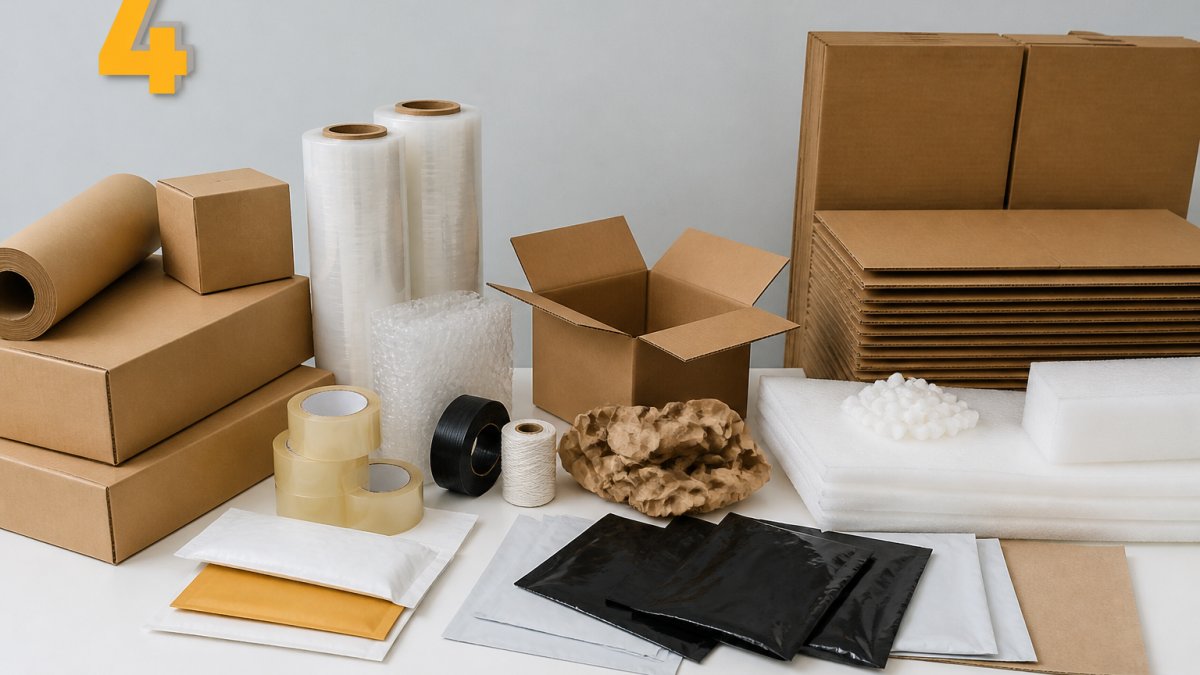
Common categories include small, medium and large single-wall boxes, plus double-wall versions of each. Most suppliers list dimensions clearly so you can match a box to your measured parcel. Always check whether listed dimensions are internal or external, as this affects whether your item actually fits.
Reading a size listing correctly
A box listed as 300 x 200 x 150mm is almost always quoting internal dimensions in that order, length, width, depth. If the listing says "external", subtract roughly 5-8mm per dimension to account for board thickness before you trust the fit. This is the single most common reason a box arrives and the item won't go in.
A worked sizing example
Say you're posting a ceramic mug that measures 90mm tall and 80mm across. Wrapped in two layers of bubble wrap, it becomes roughly 110 x 100 x 110mm. Adding the 5cm cushioning allowance on each dimension gives a target internal size of about 160 x 150 x 160mm. A standard 150 x 150 x 150mm box is too tight; a 200 x 150 x 150mm box fits with room for void fill. That 50mm difference is the gap between a safe parcel and a damaged one.
Standard size bands worth knowing
While exact ranges vary by supplier, most stock ranges cluster around a few practical bands:
- Small: roughly 150-250mm on the longest side, jewellery, phone cases, small cosmetics
- Medium: roughly 250-400mm, books, clothing, small electronics
- Large: roughly 400-600mm, shoes, boxed goods, multi-item orders
- Extra large: 600mm and above, bulk orders, flat-pack items
Why internal vs external dimensions change your postage
If you size a box from external dimensions, you may buy one that's a band too small internally and end up forcing the item in, which weakens the board at the corners. If you oversize to be safe, you push the packed parcel into a higher postage band. The fix is simple: measure the packed item, add cushioning, then choose the smallest standard internal size that fits. That single habit controls both damage rates and per-parcel postage.
When Double Wall Cardboard Boxes Are Worth the Extra
Double wall cardboard boxes cost more per unit but prevent the losses that come from crushed or damaged deliveries. For heavy items, fragile goods, or anything travelling through multiple sorting centres, the extra strength pays for itself.
The trade-off is weight and cost. Double-wall boxes are heavier, which can nudge you into a higher postage band. For light clothing or soft goods, single-wall is usually sufficient and cheaper to send.
Custom Printed Mailer Boxes for Branded Unboxing
Custom printed mailer boxes turn a plain parcel into a branded unboxing experience. Printing adds cost and lead time, so plan ahead.
Minimum order quantities and lead times
Custom printed runs typically require minimum order quantities, often in the hundreds or thousands, because printing plates and setup are fixed costs. Lead times are longer than for plain stock, so order well before a busy season. For smaller sellers, plain mailer boxes with branded tape or stickers offer a cheaper route to a branded look.
Sustainable Postage Boxes: Recyclable and Compostable Options
Sustainable postage boxes are made from recyclable, compostable or biodegradable materials, and demand for them keeps rising as customers pay attention to packaging waste. Corrugated cardboard is widely recyclable and often made from recycled fibre.
Be careful with claims. Terms like "biodegradable" and "compostable" have specific meanings, and compostable packaging usually needs industrial conditions to break down. If you make environmental claims, keep them accurate and specific. Check current guidance from MyWaste Ireland's packaging recycling guidance on what can go in household recycling.
How Postage Rules and Size Limits Affect Your Costs
Postage rules and size limits directly affect what you pay to send each parcel. Most postal services price by weight and by size category, so a box that pushes you into the next band costs more on every order. This is the part of box buying that most product pages ignore, and it's usually where the real money is won or lost.
The two levers: weight and dimensions
Carriers price on whichever is greater, actual weight or volumetric (dimensional) weight. Volumetric weight is calculated from the parcel's length x width x height divided by a carrier divisor. In practice this means a large, light box can be charged as if it were heavy, because it takes up space in the van. A box that's 5cm too big on every side can tip a parcel from one band into the next even when the contents weigh almost nothing.
How box choice moves you between bands
A common pattern is this: a seller ships soft goods in a box that's 100mm too long, and the volumetric weight crosses a threshold, adding cost to every single order. Switching to a right-sized box removes that cost permanently. The box itself might cost the same or slightly more, but the postage saving compounds across every parcel.
Key things to check before you buy boxes in bulk:
- Maximum dimensions for your chosen service, length, width and depth limits, and any combined length-plus-girth rule
- Weight bands and where your packed parcel lands, using volumetric weight, not just the scale reading
- Whether a lighter or smaller box keeps you in a cheaper band
- Whether your item is better sent as a large letter or small parcel, since the price gap between those categories is often significant
- Any surcharges for oversized or irregularly shaped parcels
A practical cost comparison
Before committing to a bulk order, price the same item in two box sizes using the carrier's online rate calculator. Compare the total landed cost, box unit price plus postage, not the box price alone. A cheaper box that adds postage on every order is the more expensive choice. Run this comparison once for your top three products and the right size usually becomes obvious.
Choosing a box that fits your item closely
Choosing a box that fits your item closely, without excess space, often saves more than the box itself costs. For current size and weight limits, check An Post's postal rates and size guide. For courier-specific volumetric divisors and surcharges, check the individual carrier's published rate card, as these differ between providers.
Packing and Cushioning: Protecting Items in Transit
Packing and cushioning protect items from the knocks and stacking pressure of transit. Good packing is not about using more material, it's about using the right material in the right places.
A simple method:
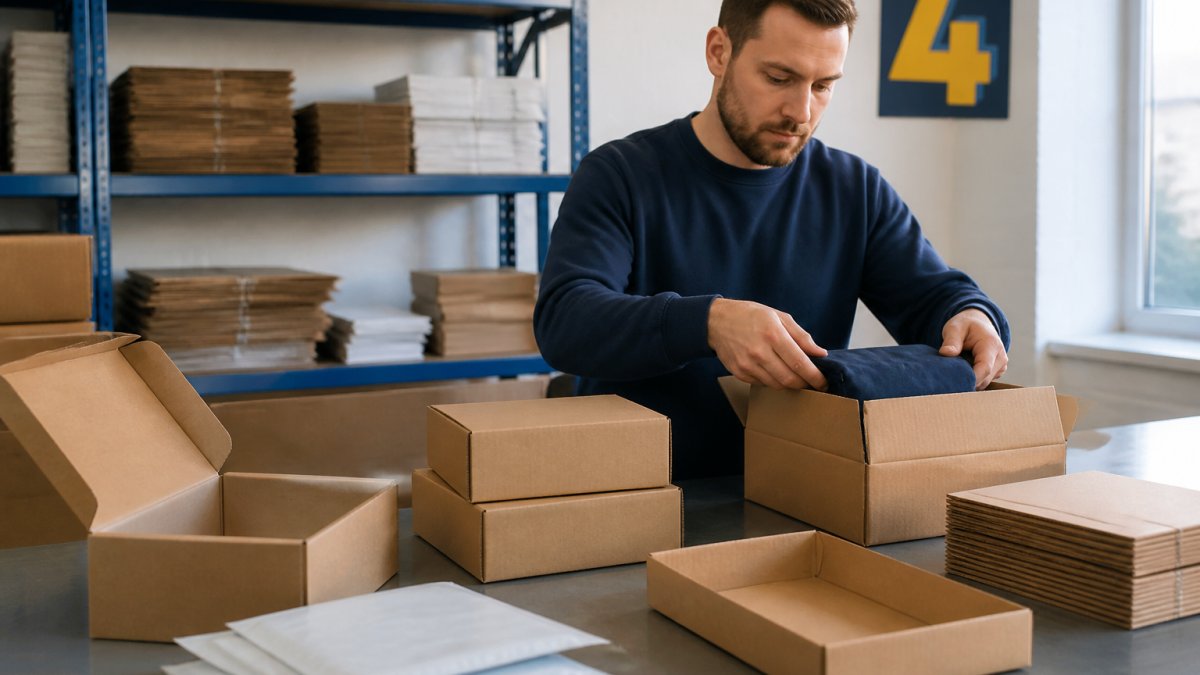
- Wrap the item in bubble wrap or paper, taping it secure
- Add a cushioning layer to the bottom of the box
- Place the item centrally, leaving even gaps on all sides
- Fill gaps with void fill so nothing shifts
- Seal with strong tape along all seams
Where to Buy Postal Boxes in Bulk
Buying postal boxes in bulk lowers your unit cost and keeps you stocked through busy periods. The right supplier offers a full range, reliable stock, and fast delivery so you're never caught short mid-fulfilment.
Shop4Rolls.ie carries a one-stop range of packaging and operational supplies, with over 3,000 products and a lowest price guarantee. You can order online in minutes and get hassle-free restocking backed by reliable stock from our purpose-built warehouse.
Frequently Asked Questions
What size postal box should I use for my products?
Measure your item's length, width and height, then add 2-3 cm on each dimension for cushioning. The box should be large enough to fit the item plus protective material, but not so large that the item moves around during transit. If you sell multiple product types, stock three or four core postal box sizes rather than dozens of variations. This keeps packing simple and reduces the risk of using the wrong box.
Are cardboard postal boxes recyclable?
Yes, plain cardboard postal boxes are widely recyclable through household and commercial recycling collections. Remove any plastic tape, labels or bubble wrap before placing them in the recycling bin. Some suppliers now offer compostable mailers and biodegradable padding alongside standard corrugated boxes. If sustainability matters to your customers, look for boxes made from recycled board and mention their end-of-life disposal on your packaging or website.
What is the difference between a postal box and a mailing box?
A postal box is a rigid corrugated container designed to protect items during shipping and meet postal size limits. A mailing box often refers to a lighter, flat-packed option such as a book wrap or a small pip box, suitable for thin or lightweight items. Both protect contents, but postal boxes generally offer more strength and stackability. Choose based on your product's fragility, weight and the level of transit protection required.
How do I choose a postal box that protects items in transit?
Match the board grade to the item's weight and fragility. Single-wall corrugated board suits lightweight, non-fragile goods. Double-wall cardboard boxes provide extra crush resistance for heavier or fragile items. Always fill empty space with void fill such as kraft paper or air pillows so the item cannot shift. Seal all seams with quality packing tape. For high-value items, consider a double-wall box with a fragile label and additional internal cushioning.
Getting packaging right is a running cost you can control, but only if your supplier keeps stock and delivers when promised. Shop4Rolls.ie offers a full range of postal boxes and packaging supplies, a lowest price guarantee, quick online ordering, and a customer care team that answers the phone. Sign up now and keep your fulfilment moving without the guesswork.