 comparison
Paper Void Fill vs Bubble Wrap for Shipping
Table of Contents
- Quick Comparison: Paper Void Fill vs Plastic Bubble Wrap
- Protective Capabilities and Cushioning Performance
- Cost of Sustainable Packaging vs Plastic Alternatives
- Eco-Friendly Packaging Supplies and Environmental Impact
- Storage Space and Warehouse Efficiency
- Packing Speed, Automation, and Unboxing Experience
- Which Packaging Should Your Business Choose?
- Conclusion
- Frequently Asked Questions
Last Updated: September 20, 2026
Quick Comparison: Paper Void Fill vs Plastic Bubble Wrap
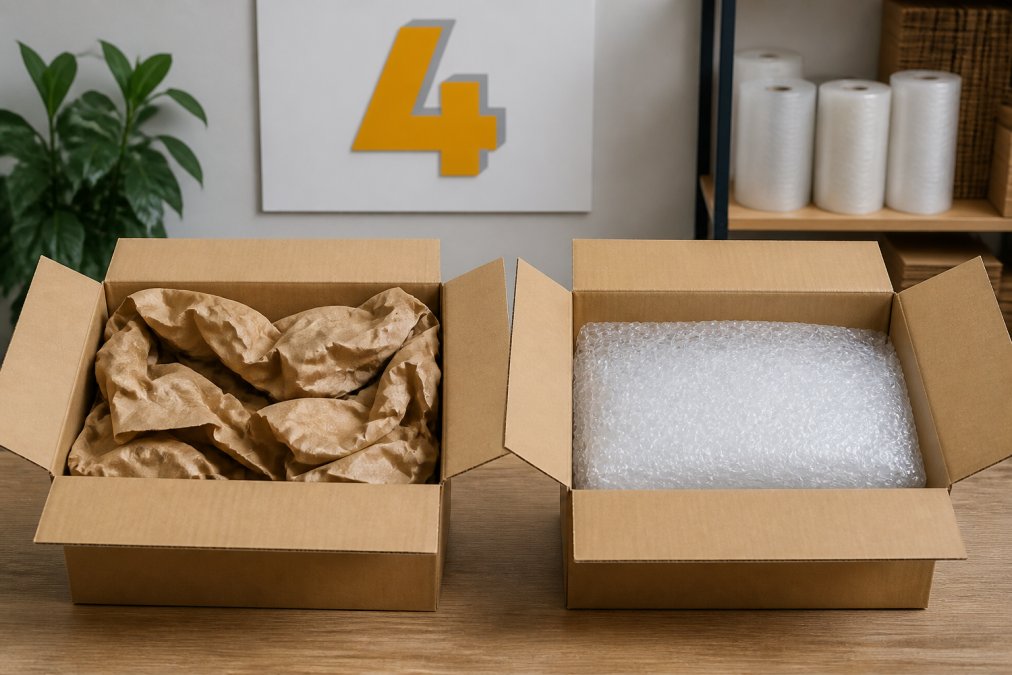
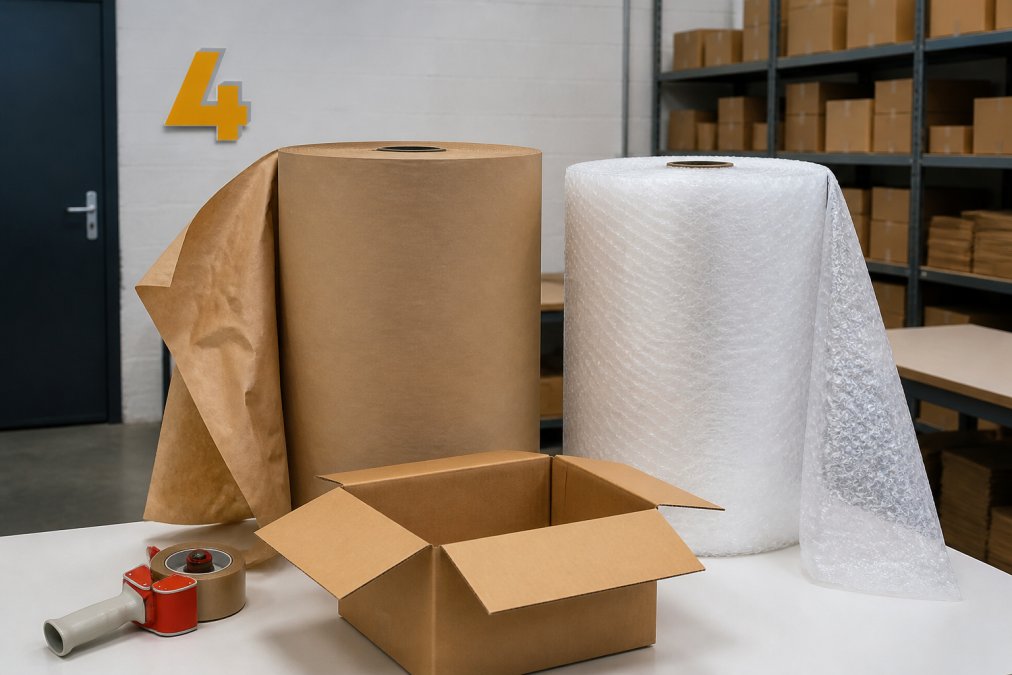
Choosing between void fill vs bubble wrap for shipping comes down to three variables: what you are sending, how you store packaging, and what your customers expect when they open the box. Paper void fill is a recyclable, paper-based material that fills empty carton space to stop items shifting in transit. Bubble wrap is a plastic cushioning material built around air-filled pockets that absorb impact.
| Factor | Paper Void Fill | Plastic Bubble Wrap |
|---|---|---|
| Protection style | Blocks movement, fills space | Absorbs direct impact |
| Weight added | Heavier per parcel | Very light |
| Storage space | Compact until crumpled | Bulky, pre-inflated |
| Cost per parcel | Lower | Higher |
| Recyclability | Standard paper recycling | Limited plastic streams |
| Best for | General goods, box fill | Fragile, breakable items |
Protective Capabilities and Cushioning Performance
Bubble wrap protects better against impact. Paper void fill protects better against movement. That distinction decides most packaging choices, and it is the part most guides gloss over. The useful question is not which material is stronger, but which failure mode you are actually trying to prevent.
Impact Resistance and Shock Absorption
Air pockets in bubble wrap compress on contact and spread the force of a knock across a wider area. The mechanism is straightforward: trapped air is a compressible cushion that deforms and recovers, so a single drop is absorbed rather than transferred to the item. For a ceramic mug or a glass bottle, that cushioning is the difference between a sale and a refund.
Best Void Fill for Fragile Items: A Suitability Matrix
Match the material to the item, not to habit. This is where the best void fill for fragile items stops being a general question and becomes a specific one. The matrix below is the one most packing benches converge on once they have measured their damage rates.
| Item type | Primary protection | Secondary fill | Why |
|---|---|---|---|
| Glassware, ceramics, screens | Bubble wrap (wrap) | Paper void fill | Impact is the dominant risk; air pockets absorb the drop |
| Boxed cosmetics, supplements | Paper void fill | None | Rigid primary packaging; the risk is movement, not impact |
| Small electronics (unboxed) | Bubble wrap (wrap) | Paper void fill | Static and impact sensitive; needs both wrap and immobilisation |
| Books, stationery, apparel | Paper void fill | None | No impact risk; fill stops shifting and keeps the carton square |
| Multi-item orders, mixed weights | Bubble wrap on heaviest | Paper fill for the rest | Heaviest item drives the impact risk; lighter items only need immobilisation |
| Liquids in rigid containers | Bubble wrap (wrap) | Paper void fill | Leak and impact risk; wrap contains, fill stabilises |
The Layering Principle
In the void fill vs bubble wrap decision, the strongest packing pattern for genuinely fragile goods is a two-material build: bubble wrap as the primary wrap in direct contact with the item, then paper void fill to immobilise the wrapped item inside the carton. The bubble wrap handles impact; the paper handles movement. Used together, each material does the job it is actually good at, and you use less of both than if you tried to make one material do everything.
Cost of Sustainable Packaging vs Plastic Alternatives
The cost of sustainable packaging is usually lower than retailers assume, because paper void fill is bought as compact rolls rather than pre-inflated plastic. You pay for material, not for trapped air. But the headline material price is only one of four costs that decide the real number, and the one most guides ignore is the one that shows up on every courier invoice.
- Material cost per parcel. Paper fill generally costs less per cubic metre of fill than bubble wrap, because you are not paying to ship and store air.
- Storage cost. A pallet of bubble wrap occupies far more floor space than the equivalent fill value in paper rolls. In a small stockroom, that is rent you are paying on air.
- Damage cost. Bubble wrap's higher price is often cheaper than replacing broken stock. This is the cost that flips the decision for fragile lines.
- Chargeable weight cost. The interaction between paper's weight and bubble wrap's volume, which is where most cost comparisons go wrong.
Dimensional Weight and Postage Bands
Dimensional weight is the chargeable weight couriers apply based on parcel volume, not just actual weight. A carton that is 40cm x 30cm x 20cm is charged on its size even if it weighs very little. The volumetric divisor varies by courier and service, but the principle is consistent: once a parcel exceeds a certain size-to-weight ratio, you are paying for the space it takes up in the van, not the mass on the scale.
Worked Example: Which Material Actually Costs More to Ship?
Take a carton with internal dimensions of 40cm x 30cm x 20cm. That is 24,000 cubic centimetres, or 0.024 cubic metres. Under a typical volumetric divisor of 5,000 (common for many courier services), the dimensional weight is 24,000 / 5,000 = 4.8kg. If the parcel's actual weight is below 4.8kg, you are charged on 4.8kg.
Now pack it two ways:
- Paper void fill. The paper adds perhaps 300-500g of actual weight, but because it is bought compact and crumpled to fill, it does not force the carton to grow. The parcel stays at 40cm x 30cm x 20cm. Chargeable weight: 4.8kg.
- Bubble wrap. The bubble wrap itself is very light, perhaps 100-200g. But pre-inflated bubble wrap is bulky, and to protect the same item you often need a carton one size up, say 45cm x 35cm x 25cm. That is 39,375 cubic centimetres, or 0.0394 cubic metres. Dimensional weight: 39,375 / 5,000 = 7.9kg. Chargeable weight: 7.9kg.
How to Control Both Variables
The rule is simple: pack tight, keep the carton close to the item's size, and you control both weight and volume. Three practical habits follow from it:
- Size the carton to the item, not to the material. If your bubble wrap is forcing you into a larger carton, you are paying for that choice on every parcel.
- Crumple paper firmly. Loose paper needs more volume to do the same job, which defeats the storage and dimensional-weight advantages.
- Measure your most common parcel sizes against your courier's volumetric divisor. A parcel that sits just under a band boundary is worth redesigning; one that sits well under it is not.
Eco-Friendly Packaging Supplies and Environmental Impact
Eco-friendly packaging supplies now influence buying decisions as much as price. Paper void fill is recyclable in standard household paper recycling and biodegrades in commercial composting. Bubble wrap is a plastic film, and most kerbside collection schemes will not take it.
Carbon Footprint and Circular Economy
A carbon footprint comparison is not as simple as paper good, plastic bad. Paper is heavier to transport and takes energy to produce. Plastic film is light but persists for decades.
Storage Space and Warehouse Efficiency
Storage space is where paper void fill quietly wins. Kraft paper arrives on compact rolls that stack on a shelf. Bubble wrap arrives pre-inflated, so you are storing air, and air takes up a lot of room.
Packing Speed, Automation, and Unboxing Experience
Packing speed depends on your setup, not the material. Hand-crumpling paper is slower per parcel than pulling a sheet of bubble wrap. Add a paper dispenser and the gap closes, then reverses on high-volume lines.
Which Packaging Should Your Business Choose?
Choose paper void fill for general goods, box fill, and any brand that leans on sustainability. Choose bubble wrap for genuinely fragile items where impact damage is the real risk.
Most retailers should stock both:
- Paper void fill for the bulk of everyday orders
- Bubble wrap for the fragile minority
- A dispenser to keep paper packing fast
Conclusion
The right packaging mix protects your stock, controls your postage bands, and tells customers something about how you run your business. Getting it wrong shows up as breakages, wasted warehouse space, and refunds.
Frequently Asked Questions
Is paper void fill more cost-effective than bubble wrap?
Paper void fill often works out cheaper per parcel because the material itself costs less and you can adjust the density by crumpling it to fit different box sizes. Bubble wrap costs more per roll and you tend to use more of it for the same volume of empty space. That said, bubble wrap is lighter, so postage can be lower on heavier items. Run both figures together, material cost plus postage, before deciding.
Does paper void fill provide the same protection as bubble wrap?
Not identical protection, but close for most items. Crumpled kraft paper creates a dense cushion that absorbs shock and stops movement inside the box, which suits ceramics, glassware, and boxed goods. Bubble wrap still wins for items with delicate surfaces or very thin glass, because the air bubbles deflect impact directly. For the best void fill for fragile items, many businesses wrap the item in bubble wrap and fill the remaining space with paper.
How does paper void fill impact my business's sustainability goals?
Paper void fill is recyclable in standard household paper bins and biodegrades in commercial composting, so it supports plastic-free and circular economy targets. Choosing eco-friendly packaging supplies like kraft paper void fill reduces the volume of plastic your customers have to dispose of, which matters if you publish sustainability claims or report on packaging waste. Check that your supplier confirms the material is uncoated and plastic-free before you count it toward those goals.
Is bubble wrap recyclable in household bins?
Generally no. Most household recycling collections do not accept plastic bubble wrap because the film type clogs sorting machinery, and many recycling centres ask you to bring soft plastics to a designated drop-off point instead. This is one of the main reasons businesses switch to paper void fill: customers can put paper straight into their normal recycling bin without a trip to the recycling centre. Always check the accepted materials list for your local collection service.
Which packaging material is easier to store in a small warehouse?
Paper void fill rolls store flat and compact before use, so they take up far less floor space than an equivalent volume of pre-inflated bubble wrap. Bubble wrap arrives already full of air, which means you are paying to store air until it ships. If warehouse storage is tight, paper rolls on a wall-mounted dispenser free up packing bench space and keep the material within reach. On-demand air cushion systems solve the same problem but need power and equipment.