 comparison
Paper2Paper Alternatives for Retail: 2026 Guide
Table of Contents
- Why Retailers Switch from Paper2Paper
- Key Alternatives to Paper2Paper for Till Rolls and Receipt Paper
- Wholesale Till Rolls in Ireland: What to Look For
- Minimum Order Quantity for Retail Supplies: How Much Do You Actually Need?
- Cost-Effective Retail Operational Supplies: Making the Switch
- Performance and Durability: What Matters in Receipt Paper
- Conclusion
Last Updated: August 25, 2026
Why Retailers Switch from Paper2Paper
Most retail businesses stick with their current supplier longer than they should, mistaking inertia for genuine fit. Paper2Paper alternatives have emerged because the traditional model doesn't match how modern stores operate. Retailers need flexibility, smaller minimum orders, faster delivery, wider product ranges, and transparent pricing.
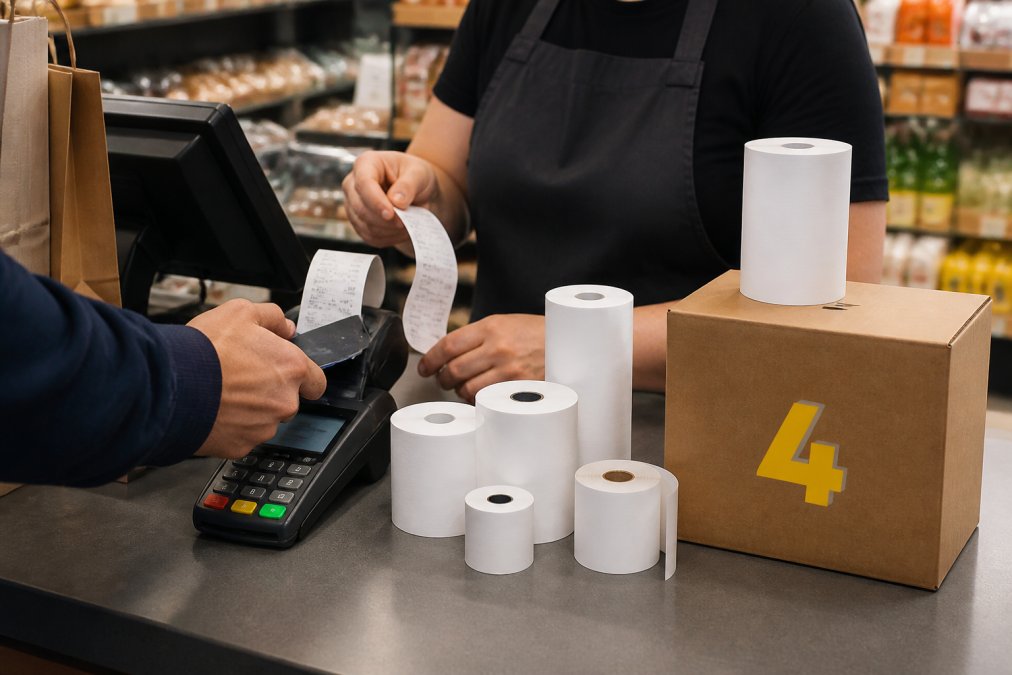
The shift accelerates when you realise three things: your supplier's minimum order quantities force excess stock that ties up capital; their delivery reliability has declined; and you're paying more than necessary because you've never shopped around. The real reason to explore alternatives isn't dissatisfaction with one feature, it's recognising your business has outgrown a one-size-fits-all model. You need a supplier that understands retail specifics: till roll sizing, card machine compatibility, cash-and-carry convenience, and wholesale pricing that reflects volume.
Key Alternatives to Paper2Paper for Till Rolls and Receipt Paper
The market for till rolls and receipt paper has fragmented significantly, offering genuine choice based on your volume, delivery needs, and product range requirements.
One-Stop Supplier Model
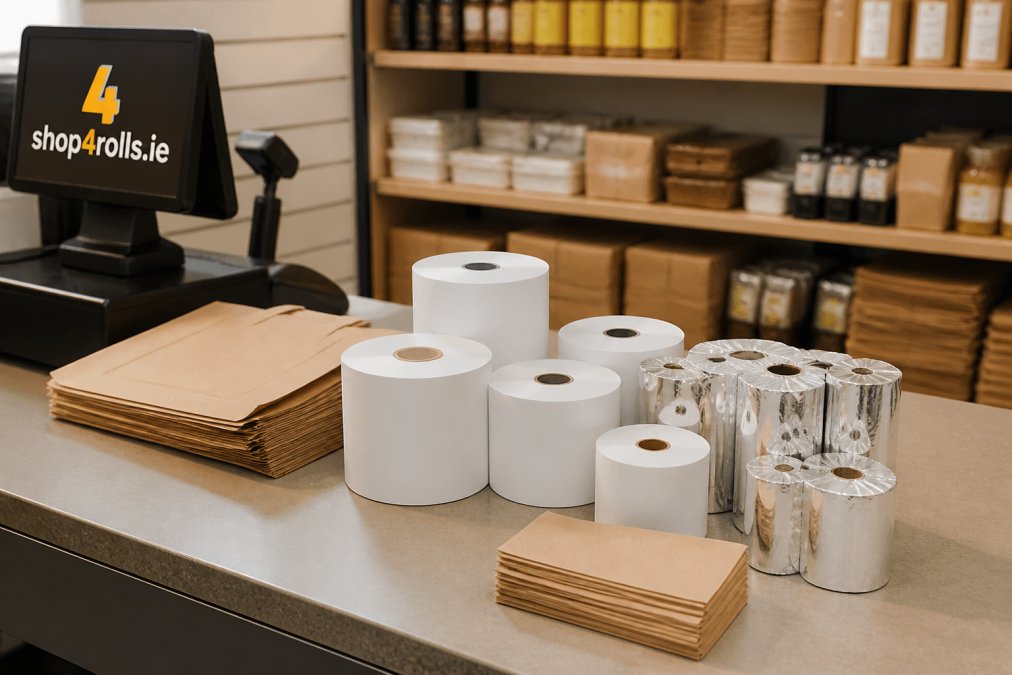
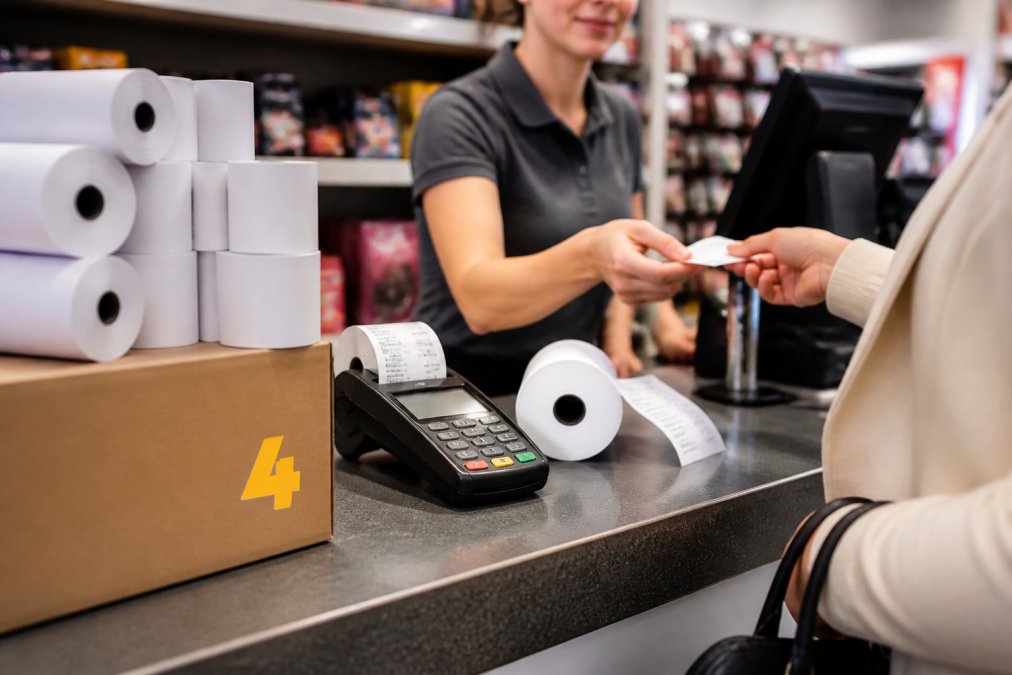
Shop4Rolls.ie operates as a comprehensive one-stop supplier, stocking over 3,000 products across till rolls, card machine receipt rolls, packaging supplies, and operational consumables. This consolidates ordering, invoicing, and delivery into a single relationship, eliminating the frustration of juggling multiple suppliers.
The advantage is straightforward: compatibility issues become manageable, and you benefit from Ireland's largest range of till rolls and card machine receipt rolls. The hybrid cash-and-carry and e-commerce model lets you order online for next-day delivery or visit in person for immediate needs. The lowest price guarantee and reliable stock availability remove two major operational headaches, whilst a human customer care team answers phones to verify specifications or resolve urgent issues.
Specialist Thermal Roll Providers
Some retailers prefer specialists who focus exclusively on thermal paper and till roll products, offering deeper technical expertise in thermal printing standards, moisture resistance, and POS system compatibility.
Specialist providers offer narrower product ranges but compensate with superior technical support for high-volume operations. If your business relies on specific thermal roll specifications across multiple locations with different card machines, a specialist provides detailed guidance on sizing, coating, and performance. The trade-off is scope: they won't stock packaging supplies or other consumables, so you'll still manage multiple suppliers.
Sustainable Packaging Alternatives
An emerging category focuses on eco-friendly and sustainable packaging options, including recyclable fibre-based alternatives and plastic-free solutions designed to reduce your carbon footprint.
This appeals to retailers with sustainability commitments or facing consumer demand for environmentally responsible packaging. Sustainable alternatives typically carry premium pricing but align with circular economy principles. The limitation is breadth: these suppliers excel at packaging innovation but may not carry the full range of thermal till rolls and card machine receipt rolls you need daily.
Wholesale Till Rolls in Ireland: What to Look For
Evaluating a wholesale till roll supplier requires looking beyond price. Three factors determine whether a supplier will serve your business well: product range, delivery reliability, and ordering flexibility.
Product range clarity matters more than you'd think. Not all till rolls are identical. Verify compatibility with your specific POS system, whether that's an older Sweda terminal, a modern iPad-based system, or Shopify POS. A supplier stocking multiple roll widths (57mm, 80mm), thermal sensitivities, and paper qualities removes guesswork. Shop4Rolls.ie's range of over 3,000 products includes this breadth, but any supplier should answer compatibility questions immediately.
Delivery reliability is non-negotiable. The cost of a till roll is trivial compared to till downtime during peak trading. Look for suppliers offering next-day delivery as standard. Equally important: what happens when they're out of stock? Transparent stock visibility prevents operational surprises.
Ordering flexibility determines whether the supplier reduces your workload. Can you order quantities matching your actual usage, or are you forced to buy in bulk? Do they accept ad-hoc orders? The best Irish suppliers now offer hybrid models: online ordering for convenience, cash-and-carry for urgency, and flexible minimum order quantities for small businesses.
Minimum Order Quantity for Retail Supplies: How Much Do You Actually Need?
Many small retailers assume wholesale suppliers require large minimum orders that rule them out. The reality is more nuanced, and understanding this gap is where switching decisions are won or lost.
Understanding MOQ variation is the first step. Some suppliers still require 100 rolls of thermal paper for a discount; others serve small cafés and independent shops flexibly. This reflects how suppliers manage inventory risk. Flexible MOQ suppliers absorb complexity by accepting smaller orders at slightly higher per-unit prices or using dynamic pricing that rewards larger orders without penalising small ones.
Shop4Rolls.ie's approach reflects this flexibility. Small businesses, a café ordering 2-3 till rolls monthly or a retail shop restocking quarterly, are served without artificial minimums that force excess inventory.
Calculating your actual MOQ requirement requires three steps:
-
Measure your current usage. Track how many till rolls or packaging items you actually use per month over three months to account for seasonal variation. If you're new, use comparable businesses' data and add a 20% buffer.
-
Calculate a safe reorder cycle. Multiply your average monthly usage by three. This gives you a three-month supply, the sweet spot for most small retail operations. For example, if you use 10 till rolls monthly, order 30 rolls. This absorbs demand spikes or delayed deliveries without excessive inventory.
-
Compare against supplier MOQs. If a supplier's MOQ is 100 rolls and you need 30, you're forced to hold 70 excess rolls. Calculate the cost: storage space, potential spoilage, and tied-up capital. For most small retailers, excess inventory costs more than any per-unit discount.
Negotiating MOQ with suppliers is often possible:
-
Lead with volume commitment, not price. Offer to order the same total quantity yearly in smaller, regular shipments. A supplier prefers 12 orders of 10 rolls to one order of 120 rolls because it spreads inventory risk and ensures steady cash flow.
-
Offer payment terms in exchange for flexibility. Some suppliers reduce MOQ if you pay upfront or within 7 days instead of 30 days, improving their cash flow.
-
Ask about tiered pricing instead of hard MOQs. A supplier might offer: orders under 20 rolls at a certain price per roll, 20-50 at a different price, and over 50 at another. This provides flexibility without penalising small orders.
Transitioning from a high-MOQ supplier requires planning:
-
Overlap your suppliers for one cycle. Place your first order with the new supplier (at your three-month buffer) whilst still using old supplier stock. This eliminates the risk of running out if delivery is delayed.
-
Stagger your old supplier's final order. Place a small final order covering only the overlap period, letting that stock deplete naturally.
-
Monitor the new supplier's first three deliveries. Track timeliness, product quality, and customer service. After three successful cycles, transition fully.
For most small retail operations, a monthly or quarterly reorder cycle works well. This keeps inventory fresh, minimises storage, maintains cash flow flexibility, and allows adjustment based on actual demand. The per-unit cost might be slightly higher than bulk buying, but total cost of ownership, including storage, spoilage risk, and tied-up capital, is typically lower.
Multiply your average monthly usage by three, then compare to supplier MOQs. If a supplier's MOQ significantly exceeds your three-month buffer, excess inventory will cost more in storage, spoilage, and tied-up capital than any discount offered.
Cost-Effective Retail Operational Supplies: Making the Switch
The decision to switch suppliers often hinges on cost, but cost analysis requires more than comparing unit prices. You must factor in ordering frequency, delivery charges, minimum order requirements, and the value of your time managing the relationship.
Many retailers discover their current supplier's pricing isn't competitive, they've simply never checked. Prices drift upward gradually whilst you're focused on running the business. A common pattern: you lock into a supplier years ago when pricing was reasonable, then incremental increases go unnoticed.
The switch calculation should include unit cost, delivery charges and frequency, minimum order values and inventory costs, time spent managing orders, and stock availability costs. Shop4Rolls.ie's lowest price guarantee addresses this friction directly. Combined with flexible ordering and next-day delivery, total cost of ownership typically favours consolidating to a single supplier.
The secondary benefit is operational simplification. Managing one supplier relationship instead of three or four frees up time for tasks that drive your business.
Performance and Durability: What Matters in Receipt Paper
Not all thermal paper performs equally, and differences directly affect till uptime, customer experience, and long-term costs.
Thermal sensitivity and print speed determine how quickly paper darkens when the print head contacts it. Higher sensitivity means faster printing and sharper receipts but more fading over time if exposed to heat or sunlight. For a busy café processing 200+ transactions daily, print speed matters; for retail shops where customers keep receipts for returns, durability matters more. A supplier should be able to provide guidance on matching paper sensitivity to your POS system's print head temperature.
Coating quality and moisture resistance determine how long receipts remain legible. Standard retail-grade thermal paper maintains legibility for 6-12 months under normal storage (15-25°C, 45-65% humidity) (peer-reviewed research). Premium-coated thermal paper maintains legibility for 2-3 years (peer-reviewed research). In humid retail environments, cafés near kitchens or coastal locations, moisture accelerates fading. Ask your supplier for compliance data; reputable suppliers provide this.
Roll width, diameter, and feed compatibility must match your POS system exactly. A 57mm roll won't fit an 80mm terminal. Confirm your system's specifications: roll width, core diameter (typically 12mm or 17mm), and maximum outside diameter (usually 25-28mm). A supplier stocking multiple options and confirming compatibility before dispatch prevents costly mistakes.
Load-bearing and tear resistance matter in high-traffic areas. Thermal paper thickness is measured in microns; standard retail-grade is 60-80 µm, premium-grade is 80-100 µm (iso.org). Thicker paper resists tearing but feeds slightly slower. For high-volume operations, the marginal cost difference is negligible, but operational benefits, fewer jams, fewer failures, compound across thousands of transactions.
Don't assume all till rolls are equivalent. A cheaper roll that fades within weeks or jams frequently costs more in frustration and till downtime than a slightly more expensive roll performing reliably across 6-12 months. Specify requirements upfront, request durability and compatibility data, and test samples in your actual environment before committing to a large order.
=== FAQ ANSWERS (audit these too, same rules) ===
[1] Q: What are the main advantages of switching from Paper2Paper to another supplier? A: Switching suppliers often provides access to a broader range of products in one place, potentially more competitive wholesale till rolls pricing, faster delivery options, and better customer support. Many retailers find that consolidating suppliers reduces administrative overhead, simplifies reordering, and improves stock reliability. The key is finding a provider that matches your volume requirements and delivery expectations without hidden minimum order penalties.
[2] Q: What is the typical minimum order quantity for retail supplies? A: Minimum order quantities vary significantly by supplier. Some specialise in serving small cafés and shops with modest requirements (as few as 5-10 rolls per order), whilst others focus on larger retail chains requiring 50+ rolls or more. The best suppliers offer flexible minimums that scale with your business size. Always confirm the minimum order quantity before committing, as this directly affects your cash flow and storage costs.
[3] Q: How do I know if a wholesale till rolls supplier in Ireland offers genuine value? A: Look beyond advertised prices: confirm they stock the specific roll sizes your machines require (thermal, 80mm, 57mm, etc.), verify next-day or reliable delivery timescales, check their stock availability guarantees, and ask about their lowest price promise. Request a quote for your typical monthly volume to compare actual cost-effectiveness. A reliable supplier should answer product questions clearly and have a straightforward returns policy if you order the wrong specification.
[4] Q: Are sustainable packaging alternatives more expensive than standard till rolls? A: Sustainable alternatives such as recyclable kraft paper and biodegradable thermal rolls often cost slightly more per unit than standard plastic-coated paper. However, the price gap is narrowing as demand increases. When evaluating cost-effectiveness, consider the full lifecycle impact: reduced waste disposal costs, potential regulatory compliance benefits, and growing consumer preference for eco-friendly businesses. Many retailers find the modest premium justified by brand reputation and waste reduction.
Frequently Asked Questions
What are the main advantages of switching from Paper2Paper to another supplier?
Switching suppliers often provides access to a broader range of products in one place, potentially more competitive wholesale till rolls pricing, faster delivery options, and better customer support. Many retailers find that consolidating suppliers reduces administrative overhead, simplifies reordering, and improves stock reliability. The key is finding a provider that matches your volume requirements and delivery expectations without hidden minimum order penalties.
What is the typical minimum order quantity for retail supplies?
Minimum order quantities vary significantly by supplier. Some specialise in serving small cafés and shops with modest requirements (as few as 5-10 rolls per order), whilst others focus on larger retail chains requiring 50+ rolls or more. The best suppliers offer flexible minimums that scale with your business size. Always confirm the minimum order quantity before committing, as this directly affects your cash flow and storage costs.
How do I know if a wholesale till rolls supplier in Ireland offers genuine value?
Look beyond advertised prices: confirm they stock the specific roll sizes your machines require (thermal, 80mm, 57mm, etc.), verify next-day or reliable delivery timescales, check their stock availability guarantees, and ask about their lowest price promise. Request a quote for your typical monthly volume to compare actual cost-effectiveness. A reliable supplier should answer product questions clearly and have a straightforward returns policy if you order the wrong specification.
Are sustainable packaging alternatives more expensive than standard till rolls?
Sustainable alternatives such as recyclable kraft paper and biodegradable thermal rolls often cost slightly more per unit than standard plastic-coated paper. However, the price gap is narrowing as demand increases. When evaluating cost-effectiveness, consider the full lifecycle impact: reduced waste disposal costs, potential regulatory compliance benefits, and growing consumer preference for eco-friendly businesses. Many retailers find the modest premium justified by brand reputation and waste reduction.
This article was written using GrandRanker