 ultimate-guide
What Is a Non-Thermal Till Roll? A 2026 Guide
Table of Contents
- What Is a Non-Thermal Till Roll?
- Thermal vs Bond Paper: Key Differences
- How to Tell If Paper Is Thermal: A Simple Test
- Dot Matrix Printer Rolls and Impact Printer Compatibility
- Benefits of Non-Thermal Till Rolls for Your Business
- Environmental Impact and Archival Quality
- Troubleshooting Common Print Quality Issues
- Conclusion
- Frequently Asked Questions
Last Updated: September 18, 2026
What Is a Non-Thermal Till Roll?
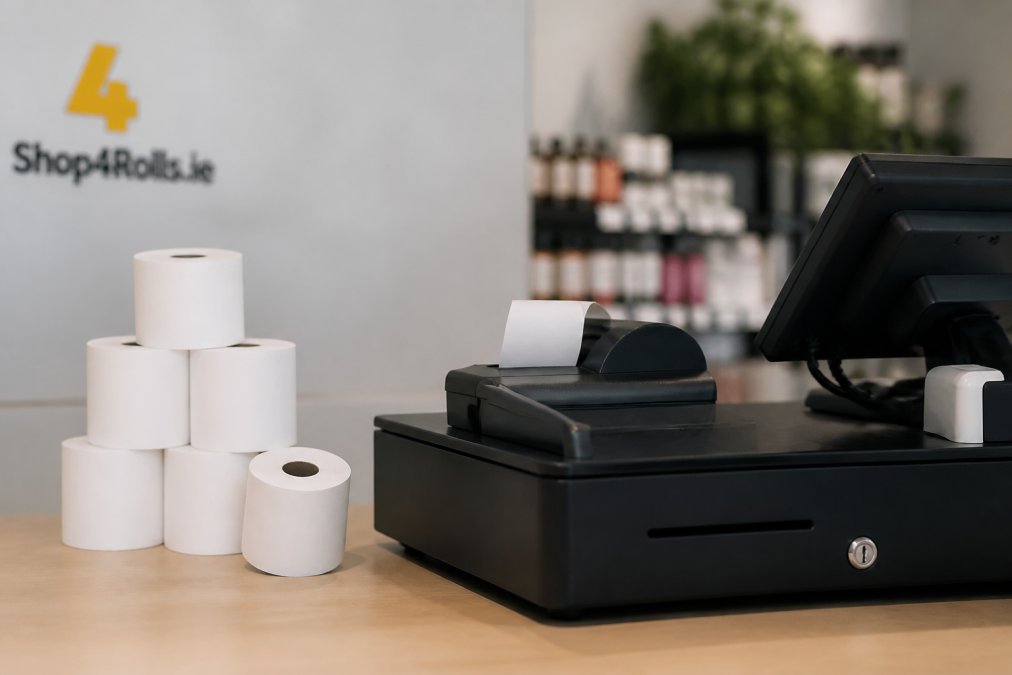
A non-thermal till roll is a plain paper receipt roll that carries no heat-sensitive coating, so it only produces print when an ink ribbon or impact mechanism strikes the surface. This guide from Shop4Rolls.ie explains how these rolls differ from thermal paper, which printers they suit, and how to choose the right size and ply for your counter.
Most people never think about till roll paper until a roll runs out mid-transaction. Then the questions arrive fast: why has the print faded, why is the machine jamming, and why did the last box of rolls feel different from the one before it? The answer usually comes down to one thing nobody told you at setup: your printer is either thermal or impact, and the paper is not interchangeable. Citizens Information guide to consumer rights and receipts is a useful reminder that a receipt is a legal record, which makes choosing the right paper more than a housekeeping detail.
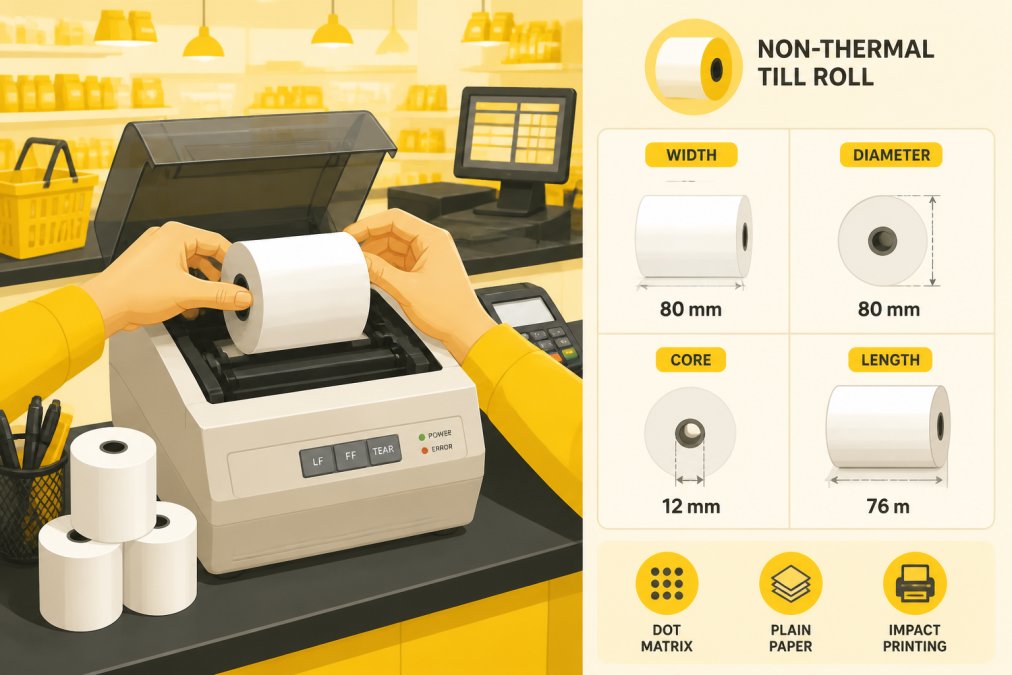
How Non-Thermal Printing Works
Non-thermal printing relies on physical impact rather than heat. An ink ribbon sits between the print head and the paper, and when the print head strikes, it transfers ink onto the surface. The mechanism is the same family as an old typewriter, scaled down and driven by a till or kitchen printer.
That matters because it changes everything about how the paper behaves. There is no chemical coating to darken, no heat element to wear out, and no sensitivity to sunlight or friction. The trade-off is mechanical: ribbon cartridges need replacing, and the print head itself is a moving part that eventually wears.
Thermal vs Bond Paper: Key Differences
Thermal paper is coated with a heat-sensitive layer that turns black when the print head warms it. Bond paper, also called non-thermal paper, is uncoated and needs an ink ribbon to receive an image. That single difference drives every practical distinction between the two.
| Feature | Thermal Paper | Non-Thermal (Bond) Paper |
|---|---|---|
| Printing method | Heat-sensitive coating | Ink ribbon and impact |
| Image durability | Fades with heat and light | Long-lasting, archival |
| Printer type | Thermal receipt printer | Dot matrix or impact printer |
| Consumables | Paper only | Paper plus ink ribbon |
| Coating | Often contains developers | None, plain paper |
| Best for | Fast, quiet POS printing | Long-term records, multi-part copies |
The practical consequence is simple. If your receipt needs to survive a year in a glovebox or a filing cabinet, bond paper wins. If you need fast, silent printing at the till, thermal usually wins. Neither is universally better, and anyone who tells you otherwise has not had to argue with a tax inspector about a faded receipt.
Understanding Ply Counts: 1-Ply, 2-Ply, and 3-Ply
Ply refers to how many layers of paper are bonded into a single roll. A 1-ply roll has one sheet, a 2-ply roll has two sheets that separate after printing so one copy goes to the customer and one stays in the till, and a 3-ply roll splits into three copies for businesses that need an extra record for accounts or the kitchen.
Only impact printers can produce multi-part copies. A thermal printer cannot print through multiple layers, which is why any business needing duplicate or triplicate receipts is locked into non-thermal paper by default. Hospitality venues running a kitchen printer alongside the till are the classic example: the customer gets one copy, the till keeps one, and the kitchen gets one that will not fade under a hot lamp.
How to Tell If Paper Is Thermal: A Simple Test
The fastest way to tell if paper is thermal is the scratch test. Drag a coin or your fingernail firmly across the surface. Thermal paper darkens along the scratch mark because the friction generates enough heat to trigger the coating. Bond paper stays completely unchanged.
Two other checks work just as well. Hold the paper up to a light: thermal paper often has a slightly glossy or slick feel, while bond paper feels like ordinary writing paper. You can also tear a corner. Thermal paper tends to tear with a smoother, more coated edge, whereas bond paper tears like standard printer stock.
If you are still unsure, check the printer itself. Look for a ribbon cartridge or a fabric ribbon path. A printer with a ribbon is an impact printer and needs non-thermal rolls. A printer with a smooth metal bar and no ribbon is thermal and needs coated rolls. Getting this wrong is the single most common ordering mistake, and it is entirely avoidable.
Dot Matrix Printer Rolls and Impact Printer Compatibility
Dot matrix printer rolls are the standard consumable for impact printers, and they are built to survive the mechanical punishment those machines deliver. The paper needs enough tensile strength to feed through a print head striking it thousands of times per shift without tearing.
Compatibility comes down to three measurements, and all three must match your printer:
- Paper width: the roll's width in millimetres, measured across the face
- Roll diameter: the overall size of the wound roll, which determines how much paper fits
- Core size: the inner tube diameter, which must seat correctly on the spindle
Some impact printers also use pin feed or sprocket holes along the edges, where small perforations engage a tractor mechanism to pull the paper through. Friction feed printers rely on rollers instead and use plain-edged rolls. Check your printer's manual or the label inside the paper compartment before ordering, because a roll that is 1mm too wide will jam, and a core that is too large will not seat at all.
Benefits of Non-Thermal Till Rolls for Your Business
Non-thermal rolls solve problems that thermal paper creates. The most obvious is longevity: because there is no heat-sensitive coating, the print does not fade when exposed to sunlight, heat, or everyday handling. Records stay legible for years rather than months.
There is also a compliance angle. Businesses that must retain transaction records for accounting or audit purposes need receipts that remain readable. A faded thermal receipt is functionally useless as a record, and reprinting is not always possible.
Environmental Impact and Archival Quality
This is the section most till roll guides skip entirely, and it is where the choice between thermal and non-thermal paper has consequences that outlast the receipt itself.
Why Bond Paper Recycles More Cleanly
Bond paper rolls are uncoated, which means they enter the standard paper recycling stream without special handling. Thermal paper is different: its heat-sensitive layer relies on developers and dyes that are not part of ordinary paper furnish. Leuco dye and developer coatings can contaminate a paper recycling batch, and many facilities either reject thermal paper or downgrade it to lower-value output.
What Determines Archival Life
Archival quality is the other half of the story, and it is more nuanced than 'thermal fades, bond does not.'
Troubleshooting Common Print Quality Issues
Faded or patchy print on a non-thermal roll almost always traces back to the ink ribbon rather than the paper. A worn or dry ribbon produces light, inconsistent output, and the fix is a fresh cartridge.
- Blank receipts: the ribbon is missing, installed backwards, or exhausted
- Streaky print: the print head needs cleaning, or the ribbon is creased
- Paper jams: the roll width or core size does not match the printer
- Print only on one side: the ribbon is misaligned in its cartridge
- Faint multi-part copies: the ribbon is low and cannot strike through all plies
Conclusion
Running out of the right till roll at the wrong moment is one of the small failures that quietly costs a retail business time and money. Matching your paper to your printer, and keeping a spare box on the shelf, removes that risk entirely.
Frequently Asked Questions
What are the downsides of thermal paper?
Thermal paper fades over time, especially when exposed to heat, light, or friction. It can also discolour if stored poorly. Some thermal papers contain BPA or BPS, which is why BPA-free options are now common. Unlike non-thermal till rolls, thermal paper cannot be used with impact printers and may smudge if handled roughly. For long-term record keeping, non-thermal paper is more reliable.
How can you tell if a till roll is thermal or non-thermal?
Scratch the paper with a coin. If a dark mark appears, it is thermal. Non-thermal till rolls will not react. You can also check the packaging or your printer type. Dot matrix or impact printers use non-thermal rolls, while most modern receipt printers use thermal paper. If you are unsure, check the printer manual or look for the print head mechanism.
Do dot-matrix printers require non-thermal paper?
Yes. Dot matrix printers use an ink ribbon and physical impact to form characters, so they require non-thermal paper such as bond paper rolls. Thermal paper only works with thermal print heads and will not produce a printout in an impact printer. If you run a dot matrix printer, always order dot matrix printer rolls or bond paper rolls designed for impact printing.
Is non-thermal paper more durable than thermal paper?
Yes, non-thermal paper is generally more durable. It resists fading, heat, and light far better than thermal paper. Bond paper used in non-thermal till rolls can last for years when stored correctly, making it suitable for receipts that need to be kept for accounting or warranty purposes. Thermal receipts often fade within months, especially if left in a warm environment.