 comparison
Is Custom Printed Packaging Worth It? A Small Business Guide
Quick Summary
Custom printed packaging is worth it for a small business when the extra cost per parcel is repaid by sales you can measure. Work out the one-off setup costs, divide them by the extra cost per unit, and test with a small run before committing to a full print order.
- Add setup fees, minimum order quantities, storage and labour to the unit price before judging the cost.
- Divide one-off setup costs by the extra cost per unit to find the number of orders needed to break even.
- Start with a limited test run, or branded stickers on one product line, to limit your risk.
- Plain mailers with a branded sticker or insert often deliver much of the brand benefit at lower cost.
- Track repeat purchases, damage reports and customer comments before and after the change to measure results.
Table of Contents
- Setup costs, minimum order quantities and per-unit price
- Custom Versus Plain Packaging: Where Each One Wins
- Options Compared: Boxes, Mailers, Stickers and Inserts
- Small Business Packaging ROI: A Break-Even Calculator You Can Use
- Testing Before a Full Print Run to Limit Your Risk
- Choosing the Right Supplier and Wholesale Packaging Sources
- Your Next Step: Work Out Your Break-Even Figure This Week
- Frequently Asked Questions
What Custom Printed Packaging Actually Costs a Small Business
Custom printed packaging can be worth it for many small businesses, but only once you have worked out what it really costs. The sticker price on a printed box is rarely the full figure. Setup fees, minimum order quantities, storage and delivery all add to the bill before a single parcel goes out, so the sums need doing properly.
Pricing depends on quantity, box size, material, print colours and delivery. Pricing depends on quantity, box size, material, print colours and delivery, so check the Shop4Rolls.ie website for current prices or request a quote before you commit.
Setup costs, minimum order quantities and per-unit price
Custom printing commonly carries a one-off setup charge, which is spread across the whole run, so a larger order can bring the per-unit price down.
Minimum order quantities are the other trap. A supplier may only print in batches of several hundred or thousand units. If you sell 40 parcels a month, a 1,000-unit run could leave you holding stock for two years. Ask every supplier for their minimum, the setup fee and the price at two or three different quantities, then compare the cost per unit at the volume you actually ship.
Watch out: a low headline price per box often hides a high minimum order. Always calculate the total outlay for the smallest run you would realistically order.
Landed cost: shipping, storage and labour
The landed cost is what each box really costs you once it is in use. It includes the printed unit price, delivery to your premises, storage space, and the time your staff spend assembling and packing. Bulk orders need somewhere dry to sit, and that space has a cost even if it is only a corner of a stockroom.
Labour is easy to overlook. Hand-applied stickers or inserts take minutes per parcel, and across a busy week that adds up. Add the landed cost to the unit price before you judge whether custom packaging makes financial sense for your business.
Custom Versus Plain Packaging: Where Each One Wins
Custom printed packaging tends to win when your product is sold on presentation, when repeat customers matter, or when your parcels are the main way people meet your brand. Plain packaging wins on cost, flexibility and speed. You can change product lines without throwing away stock printed with an old design.
The honest answer for most small businesses is a mix. Plain mailers for everyday orders, with a branded sticker or insert for a first-order touch, often gives much of the brand benefit at a fraction of the cost. Keep fully custom boxes for gift lines or premium products where the unboxing moment earns its price.
Options Compared: Boxes, Mailers, Stickers and Inserts
Each format suits a different job, and the cheapest option is not always the right one.
| Option | Best for | Setup effort | Typical trade-off |
|---|---|---|---|
| Custom boxes | Premium or gift products | High | Highest unit cost, needs storage |
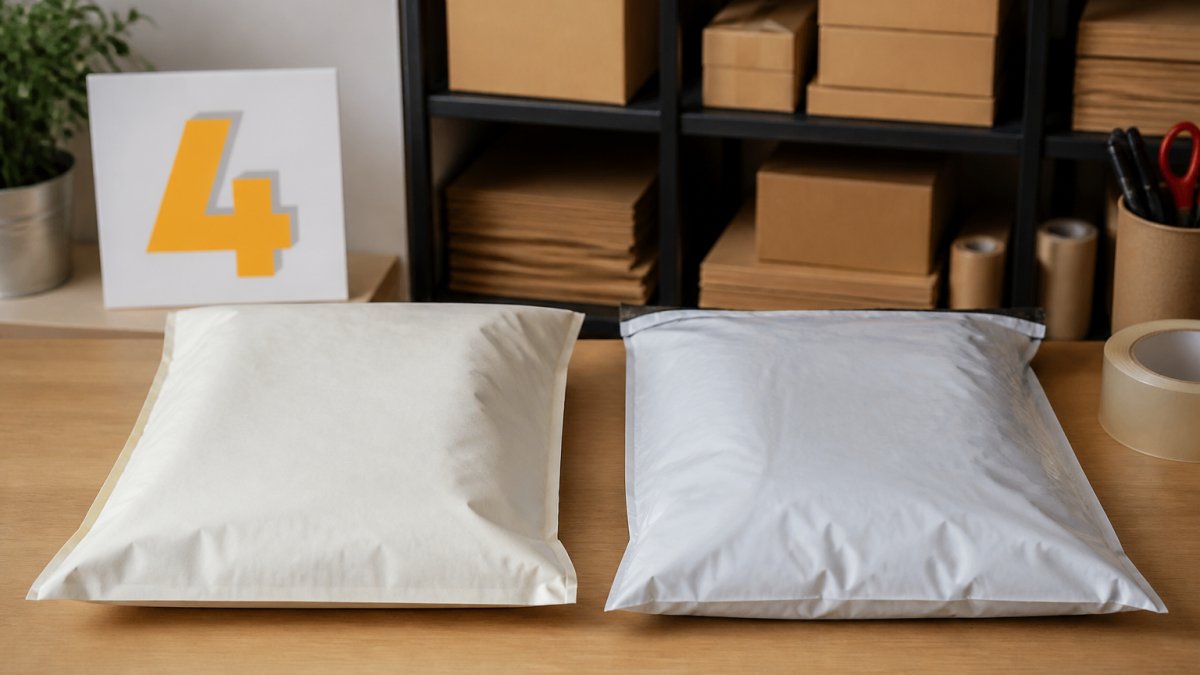
| Printed mailers | Clothing, accessories, lightweight goods | Medium | Limited protection for fragile items |
| Stickers or labels | Branding plain stock | Low | Manual application on every parcel |
| Branded inserts | Thank-you notes, offers, repeat-purchase prompts | Low | Adds weight and packing time |
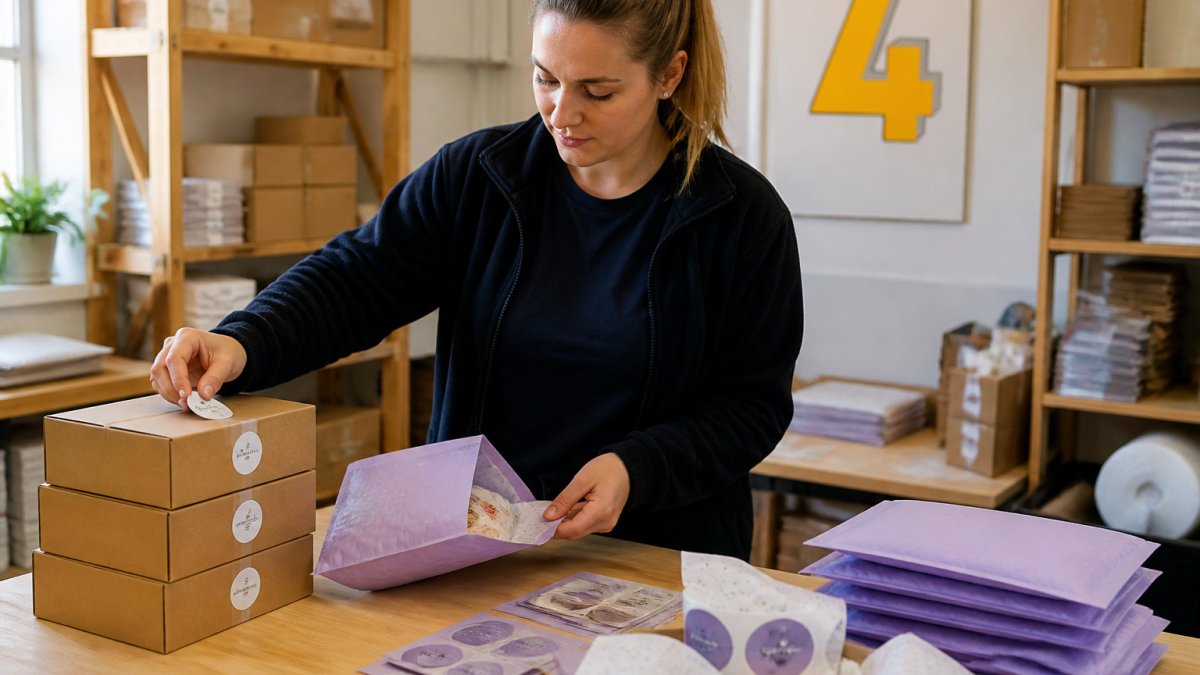
Stickers are often the most cost-effective entry point. They let you brand ready-made boxes you already buy in bulk. The downside is that someone has to apply them, so factor in that labour.
Small Business Packaging ROI: A Break-Even Calculator You Can Use
To judge whether custom packaging pays, work out the break-even point and then test the assumptions behind it. Use this method:
- Total the one-off costs: setup fee, design time, and any initial stock you will not recover if the design changes.
- Work out the extra cost per unit compared with plain packaging, including labour for stickers or inserts.
- Divide the one-off costs by the extra cost per unit. The result is the number of orders you need before the investment pays back.
- Estimate the extra sales or repeat orders the custom packaging is likely to generate, and compare.
Example in plain terms: if setup costs come to €300 and custom packaging adds €0.40 per parcel, you need 750 parcels to recover the setup cost. If you ship 250 parcels a month, that is around three months.
A break-even figure is only as good as the assumptions you feed it. Build a simple table with four rows: average order value, repeat-purchase rate, referral rate, and damage or return rate. Record the current figures for a typical month, then record them again for a month after the packaging change. The difference in those four metrics, multiplied by your monthly order count, gives you a measurable return rather than a guess.
Watch out: a small uplift in average order value can look impressive until you subtract the extra packaging cost and the labour to apply it. Always compare the net figure, not the gross sales increase.
When custom packaging makes sense by business stage
A new seller shipping fewer than 50 parcels a month rarely benefits from a full print run. The setup cost and minimum order quantity usually outweigh the brand gain. At this stage, branded stickers on plain mailers or a printed insert give most of the unboxing benefit at a fraction of the outlay.
A growing business shipping 100 to 500 parcels a month can justify a short run of custom boxes for its best-selling or gift line, while keeping plain stock for everyday orders. The break-even period is short enough to test without tying up cash.
A high-volume operation shipping more than 500 parcels a month usually finds the per-unit price falls enough to make full custom printing economic, provided storage and fulfilment labour are already accounted for. At this stage, the decision shifts from whether to print to which format and supplier give the best landed cost.
The assumptions behind the numbers
The figures above are illustrative, not a promise. Your setup fee, minimum order, and per-unit price will differ by supplier, box size, material, and print colours. Treat the break-even calculation as a framework for your own quotes, not as a fixed answer. Track repeat purchase rate and referrals for a few months before and after you switch, so the figure rests on your own data rather than a guess.
Testing Before a Full Print Run to Limit Your Risk
You do not have to commit to a large order to find out whether custom packaging works. Start with a small test: print a limited run, or apply branded stickers to one product line for a month. Compare repeat purchases, damage reports and customer comments against the period before.
A test also shows you practical problems early, such as whether the box fits your product snugly or whether a sticker peels in transit. Fixing those on 100 units costs far less than fixing them on 5,000.
Choosing the Right Supplier and Wholesale Packaging Sources
Compare suppliers on total cost, minimum order, lead time and how they handle mistakes. Ask whether they print in-house or subcontract, and whether they will send a physical proof before the full run goes ahead.
For the plain stock you will still need alongside any branding, it helps to shop from one reliable wholesale source. Shop4Rolls.ie supplies packaging and operational consumables, so you can keep your everyday stock in one place. Check the current range and pricing on the Shop4Rolls.ie website.
Your Next Step: Work Out Your Break-Even Figure This Week
Custom printed packaging is worth it when the extra cost per parcel is repaid by sales you can measure. Pull together your current packaging cost, two or three supplier quotes at realistic volumes, and your monthly order count. Run the break-even calculation above, then decide whether a small test run makes sense.
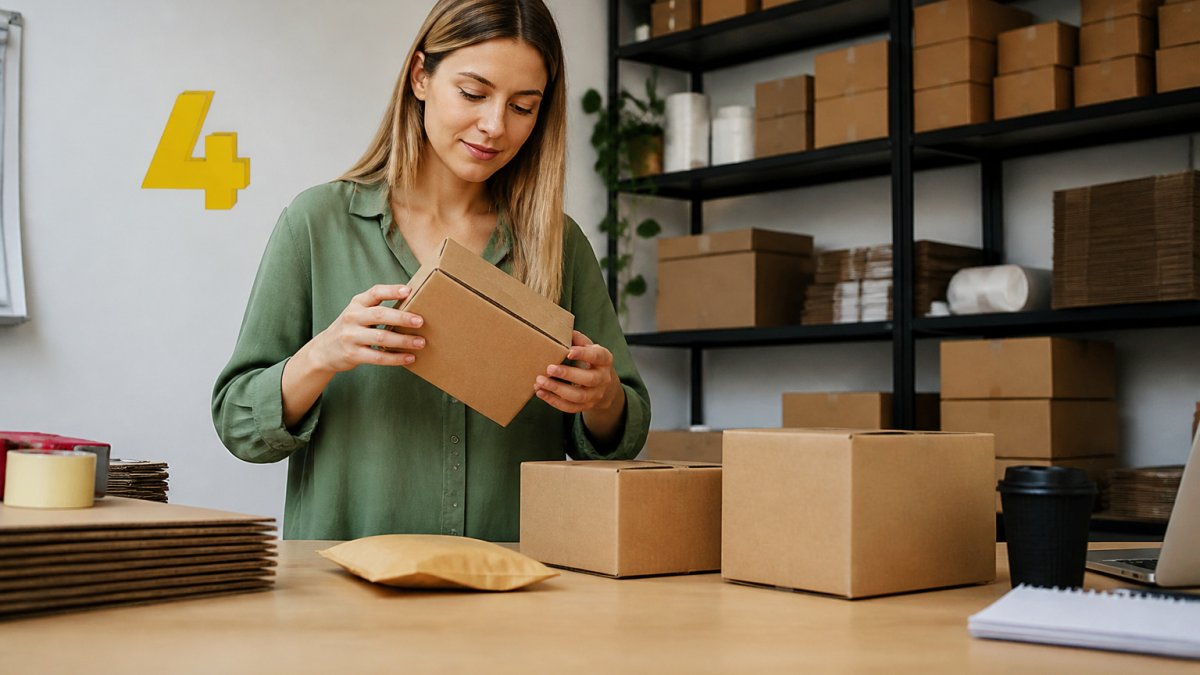
If you want to compare plain packaging options before you decide, cardboard boxes and mailing bags each suit different products, and it is worth knowing which fits yours. Shop4Rolls.ie can supply everyday packaging stock while you test. Get in touch with our customer care team for help choosing the right size and quantity.
Frequently Asked Questions
Does custom packaging increase customer loyalty?
It can, mainly through the unboxing experience and the impression it leaves when a customer receives an order. Packaging alone rarely creates loyalty, but a well-presented order makes a repeat purchase more likely and makes referrals easier. The practical test is to track repeat purchase rate for a month before and after a branded packaging change, using the same products and a similar customer base, so you can see whether the change made a measurable difference to your business.
What is the minimum order quantity for custom printed packaging?
It varies by supplier and format. Some online printers let you order very small runs of mailers or boxes, while traditional print runs often start in the hundreds or thousands. Check each supplier's minimum order quantity and setup charges before comparing prices, because a low per-unit price can be offset by a high setup cost on a small run. Pricing depends on quantity, specification and delivery, so request a quote for your exact spec.
Are branded stickers a cost-effective alternative to printed boxes?
Often, yes. Stickers or labels let you brand plain, ready-made packaging, which avoids large print runs and keeps your stock flexible. The trade-off is that each sticker is applied by hand, so labour time per order rises. For many small businesses with modest order volumes, a sticker on standard packaging gives a good balance of brand presence and cost control.
How can I tell whether custom packaging is paying for itself?
Compare the extra cost per order against the extra margin it earns. Add up the packaging cost difference, any extra shipping or storage cost, and the labour to pack. Then estimate the additional sales, repeat orders or reduced damage claims the packaging produces, and check whether that gain covers the extra cost. If you cannot measure the gain, test the packaging on a single product line first before rolling it out across the whole range.